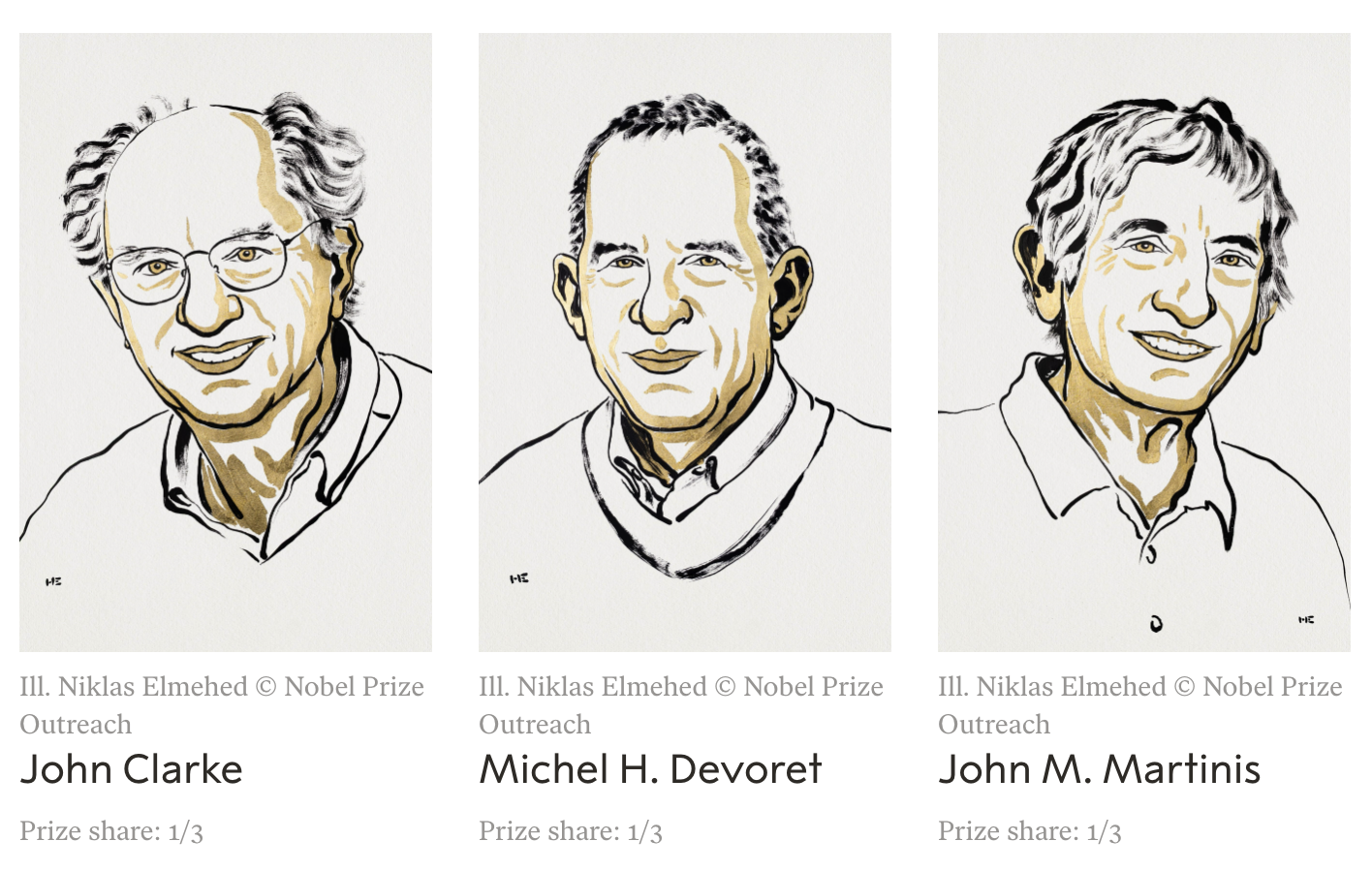
Leon Cooper’s Groundbreaking Legacy in Physics
Introduction to a Physics Titan

Physics is built upon the shoulders of giants who dared to look beyond classical mechanics and into the counter-intuitive realm of the very small. Among these visionaries, American physicist Leon Cooper stands out for his profound contributions to quantum mechanics and condensed matter physics. Most famous for co-authoring the revolutionary theory of superconductivity, his work reshaped how scientists understand the behavior of electrons at absolute zero temperatures.
When studying the history of twentieth-century science, Leon Cooper’s groundbreaking legacy: Nobel-winning ideas that shook modern physics! remains a cornerstone of academic inquiry. His theoretical breakthroughs did not merely solve a long-standing academic puzzle; they opened the door to modern technological applications that power high-speed transit, advanced medical imaging, and quantum computing today.
The Mystery of Superconductivity
Discovered in 1911 by Dutch physicist Heike Kamerlingh Onnes, superconductivity is a phenomenon where certain materials exhibit zero electrical resistance and expel magnetic fields when cooled below a critical temperature. For decades, this behavior baffled the brightest minds in theoretical physics. Classical physics predicted that electrons moving through a metallic lattice would constantly collide with vibrating atoms, generating electrical resistance and heat.
Yet, at cryogenic temperatures, these collisions mysteriously ceased. Electrons flowed freely, maintaining an electrical current indefinitely without a power source. Scientists knew quantum mechanics had the answer, but putting the mathematical pieces together proved extraordinarily difficult until the mid-1950s.
The Birth of the BCS Theory
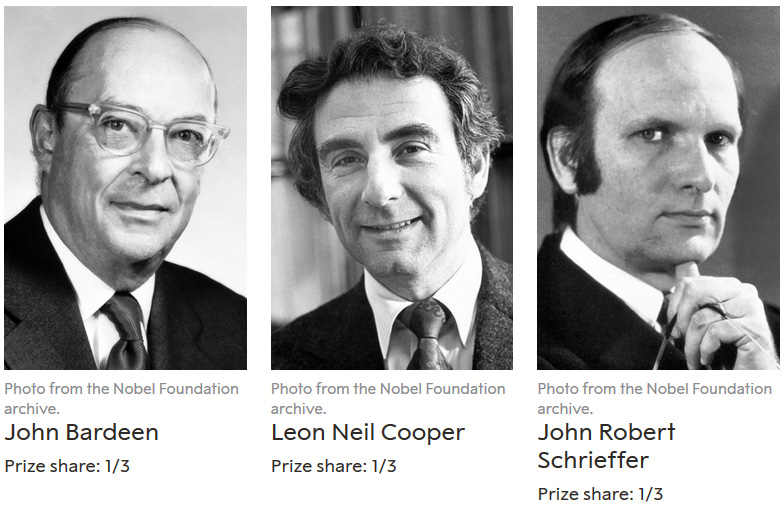
The breakthrough came when Leon Cooper joined forces with John Bardeen and John Robert Schrieffer at the University of Illinois. Together, they developed what is now universally known as the BCS theory—named after their initials. Published in 1957, this elegant mathematical framework finally explained the microscopic mechanisms driving superconductivity.
Understanding Cooper Pairs
At the heart of the BCS theory lies one of the most famous concepts in modern physics: the Cooper pair. In a normal state, electrons—which are fermions—repel one another because they share the same negative electrical charge. However, Cooper discovered a fascinating exception to this rule inside a cold crystal lattice.
As a negatively charged electron moves through the positively charged ionic lattice of a metal, it attracts the surrounding ions, causing a slight distortion in the lattice. A second electron can then interact with this lattice distortion. This creates an indirect, attractive force between the two electrons that overcomes their natural electrostatic repulsion.
Key characteristics of Cooper pairs include:
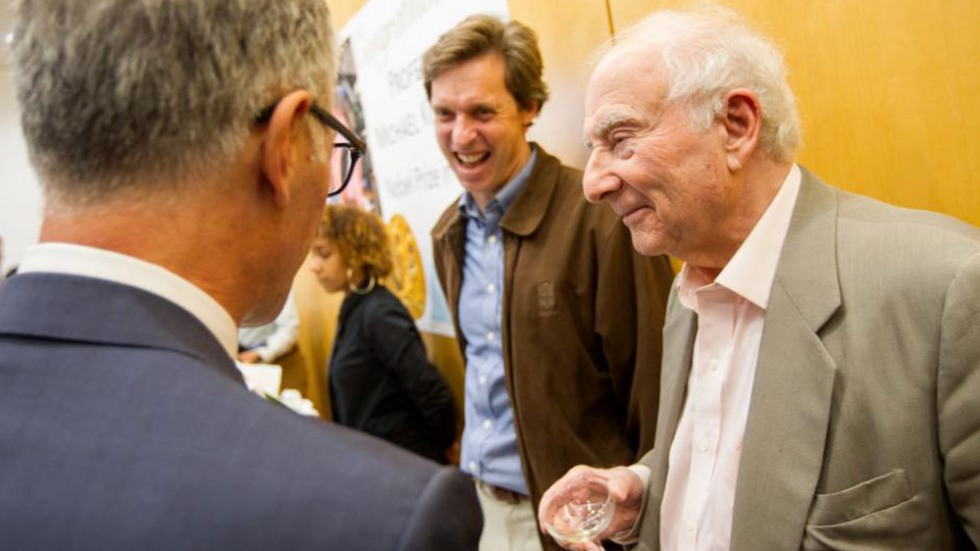
Video: Leon Cooper, Nobel Prize in Physics 1972: Interview
- Momentum coupling: They consist of two electrons with equal and opposite momenta and spins.
- Bosonic behavior: While individual electrons are fermions, a bound Cooper pair acts as a boson.
- Macroscopic quantum state: Because they behave as bosons, millions of Cooper pairs can occupy the exact same quantum state, moving together cohesively without scattering.
The 1972 Nobel Prize in Physics
The impact of the BCS theory was immediate and profound. It provided a complete, microscopic explanation for type-I superconductors and laid the groundwork for understanding more complex quantum phenomena. In recognition of this monumental achievement, Leon Cooper, John Bardeen, and John Robert Schrieffer were awarded the Nobel Prize in Physics in 1972.
For Bardeen, this marked his second Nobel Prize in Physics (having previously won in 1956 for the invention of the transistor), making him one of the few individuals in history to achieve such a rare double honor. For Cooper, the award solidified his status as a premier theoretical physicist of his generation.
Beyond Superconductivity: Cooper’s Diverse Contributions
While the BCS theory remains his most famous contribution, Leon Cooper’s intellectual curiosity extended far beyond condensed matter physics. Throughout a long and distinguished academic career, he made significant contributions to neuroscience and the study of human memory.
Neural Networks and the BCM Theory
In the 1970s and 1980s, Cooper turned his attention to biophysics and cognitive science. Alongside Elie Bienenstock and Paul Munro, he formulated the BCM theory of synaptic plasticity. This theoretical model describes how neurons modify the strength of their connections based on experience and neural activity.
The BCM theory became a foundational concept in computational neuroscience and artificial neural networks. It helped researchers understand how the brain processes, stores, and retrieves information, demonstrating Cooper’s rare ability to apply rigorous quantum-level thinking to complex macroscopic biological systems.
The Lasting Legacy in Modern Technology
The practical applications of Cooper’s theoretical work are vast and transformative. What began as an abstract quantum mechanics problem now underpins critical pieces of modern infrastructure:
- Medical Imaging: Superconducting magnets are the essential core of Magnetic Resonance Imaging (MRI) machines, allowing doctors to non-invasively view internal body structures.
- Particle Physics: Particle accelerators, such as the Large Hadron Collider (LHC), rely on superconducting magnets to steer beams of particles at near-light speeds.
- Quantum Computing: Modern superconducting circuits form the basis for qubits in cutting-edge quantum computers, promising a revolution in data processing.
Conclusion
Leon Cooper passed away leaving behind a legacy that bridges abstract theoretical physics with tangible technological innovation. By demonstrating how microscopic interactions could generate macroscopic quantum coherence, he permanently changed how we view the physical world. From the depths of absolute zero to the complexities of human cognition, Leon Cooper’s ideas continue to inspire new generations of scientists and engineers.