Leon Cooper’s Nobel-Winning Quantum Coupling
Introduction to Leon Cooper’s Nobel-Winning Quantum Coupling Mastery!

In the mid-20th century, physics faced a profound puzzle: how could electricity flow through certain materials without encountering any electrical resistance whatsoever? While experimentalists observed superconductivity at extremely low temperatures, a robust theoretical framework remained elusive. The breakthrough came when physicist Leon Cooper, alongside John Bardeen and John Robert Schrieffer, unlocked the mechanics of this phenomenon. Today, understanding Leon Cooper’s Nobel-Winning Quantum Coupling Mastery! means diving into one of the most elegant breakthroughs in the history of condensed matter physics.
This article explores the mechanics behind Cooper pairs, the mathematics of low-temperature quantum states, and why this discovery earned a Nobel Prize that still reverberates through modern technology, from particle accelerators to quantum computing.
The Problem of Superconductivity Before Cooper
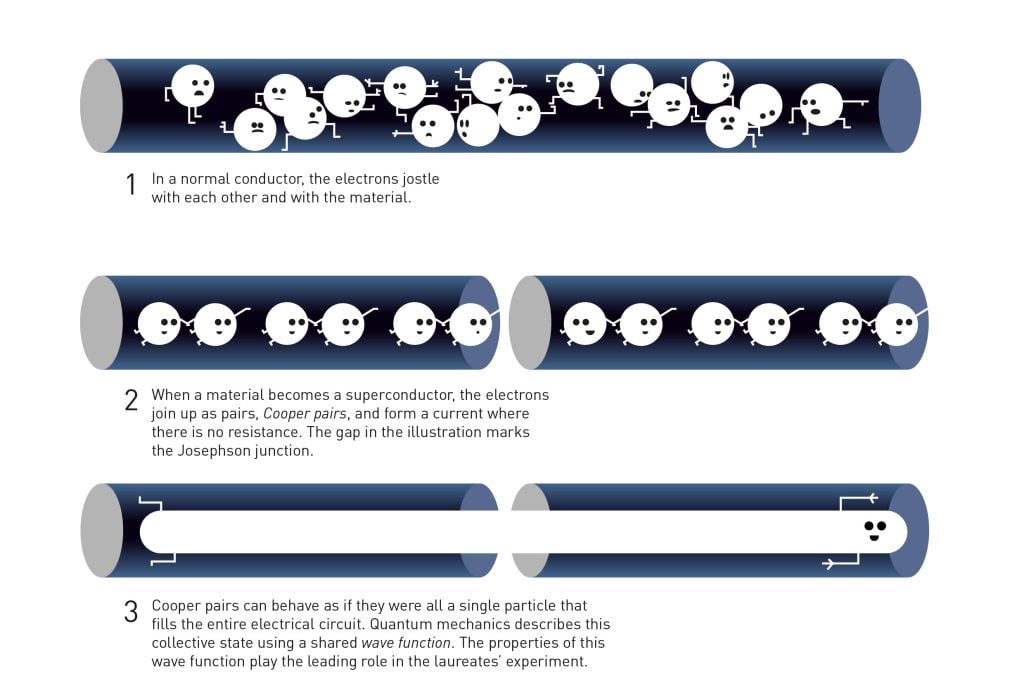
To appreciate the significance of Cooper's work, we must first understand the roadblock physicists faced in the 1950s. When electrons travel through a standard crystal lattice in a metal, they constantly collide with vibrating atoms (phonons) and impurities. These collisions cause resistance, generating heat and draining electrical energy.
Standard quantum mechanics predicted that electrons—which are fermions—would repel one another due to their negative electrical charges. Mainstream thought assumed individual electrons moved independently through a lattice. However, experimental data on superconductivity showed that at temperatures near absolute zero, some materials entered a frictionless phase that defied classical scattering models.
Fermions vs. Bosons in Solid-State Physics
The core of the challenge lay in particle statistics. Electrons belong to a class of particles called fermions, which obey the Pauli Exclusion Principle. This principle dictates that no two identical fermions can occupy the same quantum state simultaneously.
Conversely, particles known as bosons can crowd into the exact same quantum state, moving in complete unison. To achieve superconductivity, nature needed a way to make electrons behave more like collective bosons. Leon Cooper found the ingenious mechanism that made this possible.
The Birth of Cooper Pairs
In 1956, Leon Cooper published a groundbreaking paper demonstrating that an attractive force could exist between two electrons under specific conditions inside a metal, overcoming their mutual electrostatic repulsion. This discovery formed the foundation of what the scientific community now celebrates as Leon Cooper’s Nobel-Winning Quantum Coupling Mastery!
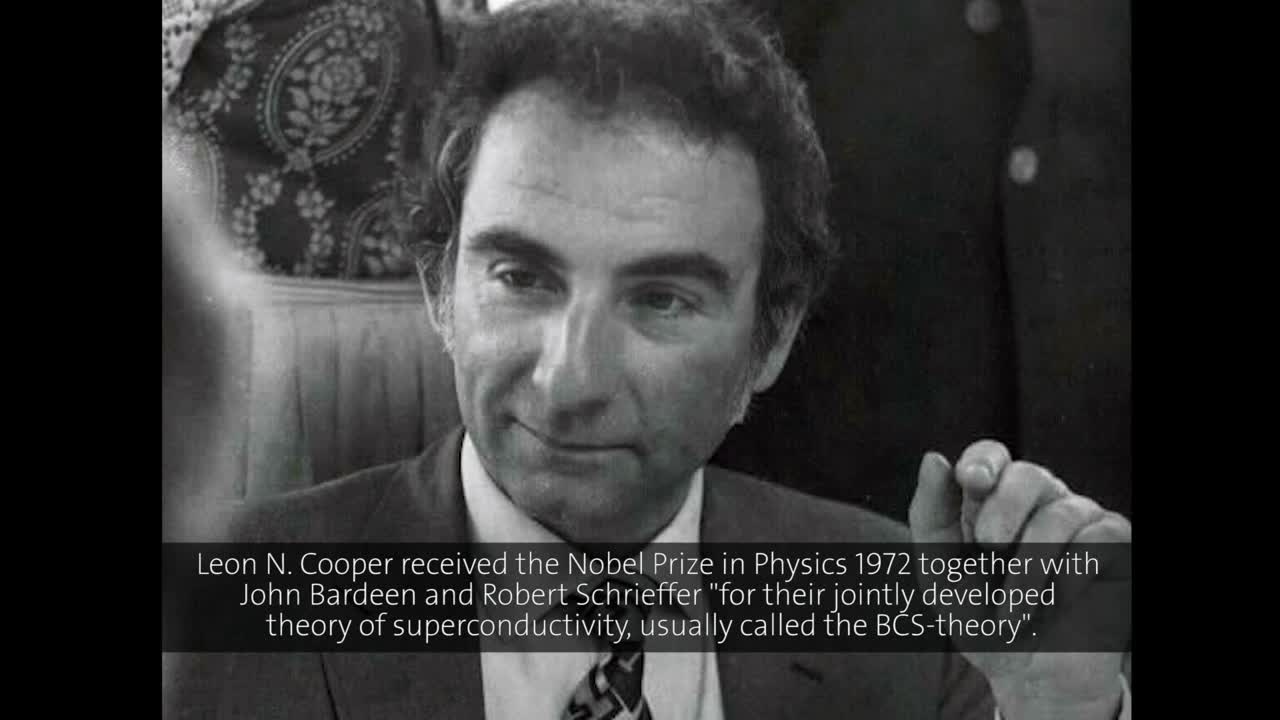
Video: Leon Cooper, Nobel Prize in Physics 1972: Interview

How Lattice Vibrations Create Attraction
So, how can two negatively charged particles attract each other? The secret lies in the interaction between the electrons and the positively charged atomic lattice:
- The Passing Electron: As a fast-moving electron travels through the crystal lattice, its negative charge pulls slightly on the surrounding positive ions.
- The Lattice Distortion: This creates a localized area of higher positive charge density behind the electron, acting like a momentary wake in water.
- The Second Electron: A second electron is subsequently drawn into this positive wake, effectively binding the two electrons together through an exchange of phonons (lattice vibrations).
This bound state of two electrons is known as a Cooper pair. Though the electrons remain relatively far apart—often spanning hundreds of nanometers—they are quantum-mechanically linked.
From Pairs to BCS Theory and the Nobel Prize
While Cooper discovered the foundational pairing mechanism, scaling this concept to describe a macroscopic superconductor required a complete theory. Cooper joined forces with John Bardeen and John Schrieffer to formulate the famous BCS Theory in 1957.
In a BCS superconductor, trillions of Cooper pairs overlap and form a collective macroscopic quantum state. Because these pairs act collectively like bosons, they condense into a single quantum wave function. When an electric field is applied, all the pairs move together. Because scattering off impurities would require breaking up countless tightly bound pairs, the material offers zero resistance to the flow of current.
In recognition of this monumental achievement, Cooper, Bardeen, and Schrieffer were awarded the Nobel Prize in Physics in 1972. It was a triumph that bridged microscopic quantum interactions with macroscopic thermodynamic properties.
Modern Applications of Quantum Coupling
The implications of Cooper's work extend far beyond theoretical physics. Today, quantum coupling mastery forms the backbone of several advanced technologies:
- Superconducting Magnets: Used in MRI machines and particle accelerators like the Large Hadron Collider at CERN to generate immense magnetic fields without power loss.
- SQUIDs (Superconducting Quantum Interference Devices): Ultra-sensitive magnetometers capable of detecting minute magnetic fields, used in geophysics and medical imaging.
- Quantum Computing: Many modern qubits rely on superconducting circuits and Josephson junctions, which are direct engineering descendants of Cooper-pair physics.
Conclusion
Leon Cooper’s insights fundamentally changed how we manipulate matter at the quantum level. By demonstrating that electrons can overcome mutual repulsion to form harmonious, bound states, he opened the door to frictionless electrical transport. Today, as engineers race to build scalable quantum computers and improve power grids, the legacy of Cooper pairs remains as vital and revolutionary as the day it was first published.