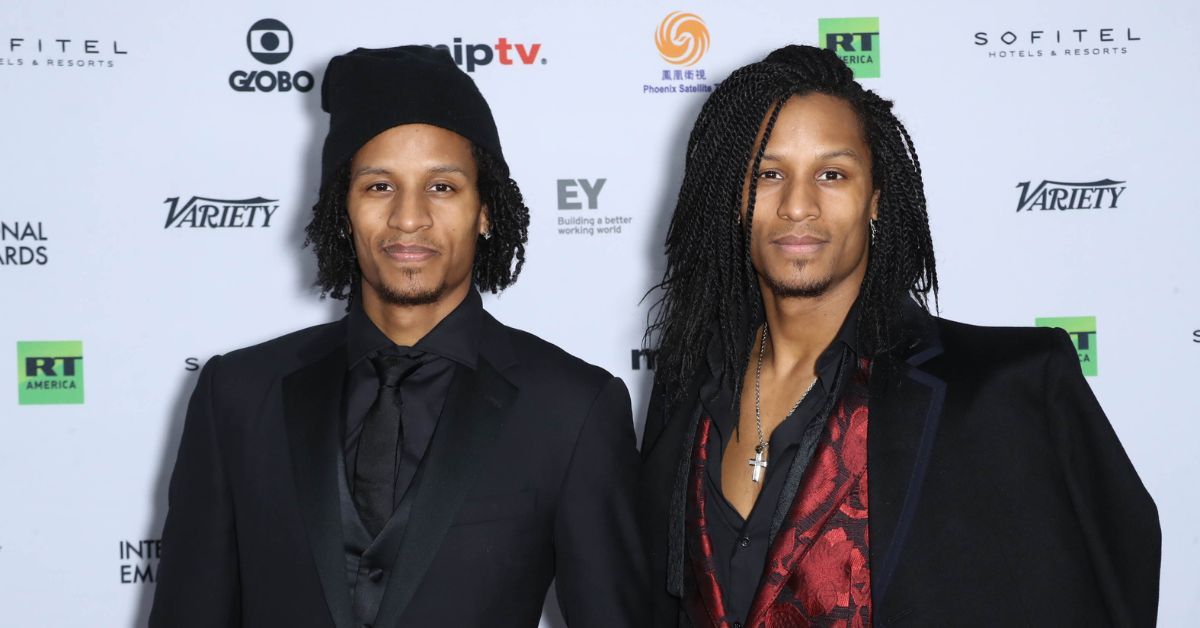
Les Twins Who Is Who: Inside the Viral Phenomenon
Few dance duos have commanded the global stage quite like French brothers Laurent and Larry Bourgeois. For over a decade, dance enthusiasts, casual viewers, and industry legends have marveled at their near-telepathic synchronization. Yet alongside their gravity-defying musicality, a parallel curiosity gripped the internet. Unpacking why ‘Les Twins who is who’ became the most viral twins story ever reveals how raw talent, identical genetics, and the dawn of viral video culture collided to create an enduring pop-culture obsession.

The 2010 Explosion: How the Mystery Began
Before they were international icons, Laurent and Larry grew up in Sarcelles, a northern suburb of Paris, in a large Guadeloupean family. Self-taught dancers, they developed a bespoke hybrid style blending hip-hop, locking, popping, and classical movement, which they termed "New Style."
Their true global breakthrough arrived in 2010 at a World of Dance tour stop in San Diego. Performing in matching oversized button-down shirts, backwards pants, and voluminous afro hairstyles, the brothers unleashed an improvised performance that felt less like choreography and more like two halves of a single brain sharing neural impulses.
When the video hit YouTube, it accumulated tens of millions of views almost overnight. Viewers were not merely entertained; they were baffled. Because both brothers moved with identical timing and mirrored each other's complex micro-movements, comment sections transformed into forensic investigation boards. Everyone asked the exact same question: Which twin is which?
Why ‘Les Twins Who Is Who’ Became a Global Obsession
The quest to tell the brothers apart did not fade as their stardom grew; it intensified. Several cultural and psychological factors turned their identity puzzle into an internet sensation:
- The "Twin Telepathy" Illusion: Most twin acts lean on synchronized, pre-rehearsed routines. Les Twins pride themselves on heavy improvisation. Watching two identical men anticipate each other's spontaneous choices in real time convinced audiences they were witnessing genuine mental telepathy.
- The Video Breakdown Craze: As platforms like YouTube and later TikTok evolved, creators began producing frame-by-frame breakdowns. Entire channels dedicated themselves to tagging Larry in red and Laurent in blue, dissecting everything from pinky placements to facial tics.
- High-Profile Endorsements: When Beyoncé scouted the duo in 2011 after discovering their viral clips, she placed them front and center on The Mrs. Carter Show World Tour and subsequent stadium runs. Performing alongside one of the world's most scrutinized pop stars amplified their visibility a thousandfold, prompting mainstream media to take up the "who is who" debate.
- Deliberate Ambiguity: The brothers frequently leaned into the confusion. They often swapped signature accessories, dressed identically, and answered interview questions in tandem, turning their indistinguishable appearance into a brilliant branding masterclass.
How to Tell Laurent and Larry Apart
While casual viewers may see mirror images, seasoned fans know that Laurent and Larry have distinct physical traits, contrasting personalities, and subtly different dance signatures.
Larry Bourgeois ("Ca Blaze")
Larry, the older twin by just a few minutes, is often regarded as the structural backbone of the duo's choreography.
Video: LES TWINS | LIFE STORY
- Dance Style: Larry's movement tends to be more grounded, precise, and rhythmic. He excels in footwork, tutting, and sharp, percussive isolations. When a beat drops heavily, Larry is usually the one anchoring the groove with power.
- Physical Markers: Larry often keeps his facial hair trimmed slightly differently, frequently sporting a clean goatee or a more defined jawline outline. He is slightly taller by a fraction of an inch and has a slightly broader frame.
- Mannerisms: On stage, Larry frequently projects an intense, focused demeanor. While he smiles and jokes, he often plays the "serious" foil during performances.
Laurent Bourgeois ("Lil Beast")
Laurent earned the nickname "Lil Beast" for a reason: his movement feels unpredictable, wild, and seemingly devoid of skeletal limitations.
- Dance Style: Laurent is known for insane, liquid-like flexibility and boneless body rolls. His style features erratic, high-energy bursts, theatrical pauses, and mime-like facial storytelling. He frequently takes dramatic risks with balance and floorwork.
- Physical Markers: Laurent's face is subtly narrower, and he has a distinct, expressive smirk that rarely leaves his face during battles. Fans often look at his hair styling, which frequently features tighter cornrows or a slightly looser afro pick than Larry's.
- Mannerisms: Laurent is widely viewed as the more theatrical, eccentric sibling. He is prone to breaking the fourth wall, winking at cameras, and playfully teasing opponents during battles.
The Visual Codes: Backward Pants and Signature Style
Beyond natural genetics, part of what fueled the identity puzzle was their unified fashion sense. Early in their career, Les Twins adopted the habit of wearing their jeans backwards. What started as a functional choice to avoid belt buckles catching during floor maneuvers quickly became an iconic visual signature.
They also coordinate accessories down to the millimeter:
- Wristbands and Watches: Larry and Laurent often wear accessories on opposite wrists, giving observant fans a quick cheat sheet during live shows.
- Knee Pads: One brother often wears a single knee pad on his left leg, while the other wears it on his right, or one leaves both legs uncovered depending on their solo floorwork routines.
- Footwear Choices: While they almost always wear the same model of sneaker—typically Jordan 1s or custom high-tops—they regularly alternate lace colors or wear contrasting colorways that balance each other out visually.
Dominating Mainstream Media: The NBC World of Dance Triumph
In 2017, the brothers entered the inaugural season of NBC’s World of Dance, executive produced by Jennifer Lopez. Competing against elite choreographers from across the globe, Les Twins were forced to step outside the safety of underground cyphers and onto primetime American television.
The competition raised the stakes of the identity narrative dramatically. Midway through the season, Laurent suffered an injury that confined him to a wheelchair. Rather than withdrawing, the brothers adapted, crafting routines where Larry danced around, through, and in harmony with Laurent's seated isolations.
This forced viewers and judges to evaluate each twin's individual contribution rather than viewing them as a single blurred entity. Their eventual victory cemented their place not just as a viral novelty, but as master choreographers who turned their identical identity into fine art.
The Lasting Cultural Impact of the Mystery
Most viral twin stories burn bright and vanish within a single algorithm cycle. Les Twins endured because their physical similarity is only the hook; the payoff is unmatched artistic mastery. By allowing audiences to play detective, Laurent and Larry built an interactive relationship with millions of fans across the globe.
Today, whether appearing in Hollywood films like Men in Black: International, fronting high-fashion campaigns for brands like Balmain, or staging dance workshops worldwide, the brothers remain a peerless cultural force. The ongoing question of "who is who" isn't a distraction from their art—it is the lens through which audiences learned to appreciate just how extraordinary both brothers truly are.