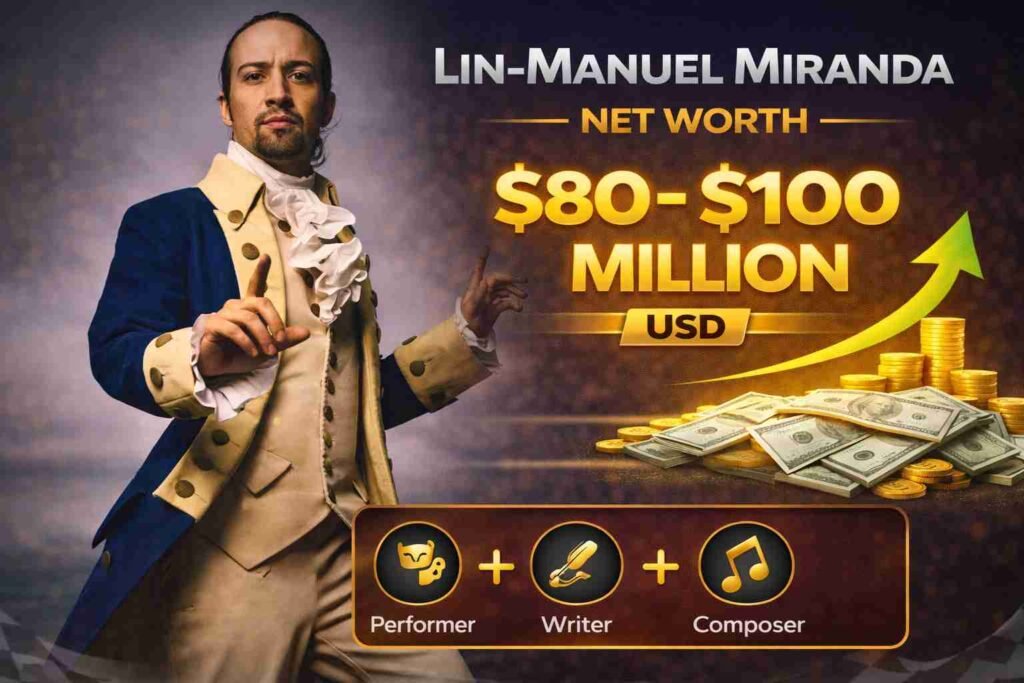
Lin-Manuel Miranda Net Worth & Economic Impact
When Lin-Manuel Miranda stepped onto the stage at the Richard Rodgers Theatre in 2015 to debut Hamilton, he wasn't just launching a cultural phenomenon. He was igniting an economic engine that would redefine the financial landscape of modern theater. Today, understanding the economics behind his success requires looking past a simple ledger of ticket sales. The economic impact of Lin-Manuel Miranda’s creative genius—his net worth story—is a masterclass in modern intellectual property ownership, cross-media distribution, and cultural entrepreneurship.

The Early Struggles and the Genesis of In the Heights
Long before earning membership in the elite club of multi-millionaires, Miranda was a struggling teacher and writer in New York City. He began writing the earliest iterations of In the Heights while a sophomore at Wesleyan University in 1999. It took years of work, workshops, and rejections before the show finally made it to Broadway in 2008.
While In the Heights was a critical darling—winning four Tony Awards, including Best Musical—it did not instantly yield generational wealth for its creator. Broadway shows are notoriously risky investments. However, the production served a vital economic function: it established Miranda's brand, proved his commercial viability, and built a loyal industry network that would back his subsequent, more ambitious gambles.
Hamilton: The Billion-Dollar Cultural Monopoly
The true turning point in Miranda's financial trajectory arrived with Hamilton. The hip-hop musical about Alexander Hamilton became the hottest ticket in Broadway history, consistently commanding face-value ticket prices that soared into the hundreds of dollars, while resale markets fetched thousands.
The Equity and Back-End Deal
Unlike many traditional playwrights who accept a flat fee or a standard percentage of box office receipts, Miranda negotiated an unprecedented deal. By retaining a share of the back-end profits and licensing rights, he positioned himself to capture the immense upside of the show's runaway success.
- Broadway Grosses: The original Broadway production grossed well over $600 million during its pre-pandemic run alone, generating substantial weekly royalties.
- Touring Companies: Multiple simultaneous national and international tours multiplied these revenue streams across North America, London's West End, and beyond.
- The Disney+ Deal: In a landmark 2020 move, The Walt Disney Company paid $75 million for the distribution rights to a filmed version of the original Broadway cast production, injecting millions directly into the creators' pockets right when live theater was shut down globally.
Diversification Beyond Broadway
Miranda’s creative output extends far beyond the stage, translating into lucrative Hollywood partnerships and diversified income streams that protect his wealth from the volatility of live theater.
Disney Animation Partnerships
Video: How Lin-Manuel Miranda Creates MAGIC! The Untold Story of Hamilton

Miranda became a key musical architect for modern Disney animation. He co-wrote the songs for 2016's Moana, which earned him an Academy Award nomination and generated massive streaming royalties worldwide. He followed this up by writing the music for 2021's Encanto. The breakout hit song "We Don't Talk About Bruno" topped the Billboard Hot 100 chart, creating a massive secondary wave of revenue through digital streaming, physical soundtrack sales, and merchandise.
Film Directing and Producing
Expanding his repertoire, Miranda made his feature film directorial debut with Netflix’s tick, tick… BOOM! in 2021. He also produced the feature film adaptation of In the Heights. These projects cement his status as a multi-hyphemans studio creator capable of driving greenlights across multiple entertainment sectors.
Estimating Lin-Manuel Miranda’s Net Worth
Financial analysts and entertainment publications routinely estimate Lin-Manuel Miranda’s net worth to be between $80 million and $100 million. While precise figures remain private, this wealth accumulation stems from a combination of:
- Upfront advances for writing, composing, and performing.
- Ongoing royalties from global theatrical productions of Hamilton and In the Heights.
- Lucrative streaming distribution payouts, notably from Disney.
- Film scoring, songwriting fees, and music publishing rights.
Crucially, a significant portion of his wealth is tied up in intellectual property. As long as regional theaters, schools, and professional companies continue to license his works, Miranda's catalog will generate passive income for decades to come.
Philanthropy and Economic Empowerment
Miranda’s financial story is also defined by how he leverages his economic power. Following the devastation of Hurricane Maria in Puerto Rico, he moved the touring production of Hamilton to the island, starring in the lead role himself. He used the run to raise millions of dollars for the Flamboyán Arts Fund, directly supporting local artists, arts education, and cultural institutions.
By investing back into the communities that inspire his work, Miranda demonstrates that creative genius can generate not only personal wealth, but sustainable economic ecosystems for others.
The Legacy of a Modern Mogul
The economic impact of Lin-Manuel Miranda’s creative genius—his net worth story—proves that artistic excellence and astute financial structuring can coexist. By betting on himself, demanding equity in his creations, and expanding into global digital markets, Miranda has transformed from an off-Broadway underdog into one of the most influential financial figures in modern entertainment history.