Lincoln Kennedy Penny: Value, History, and Facts
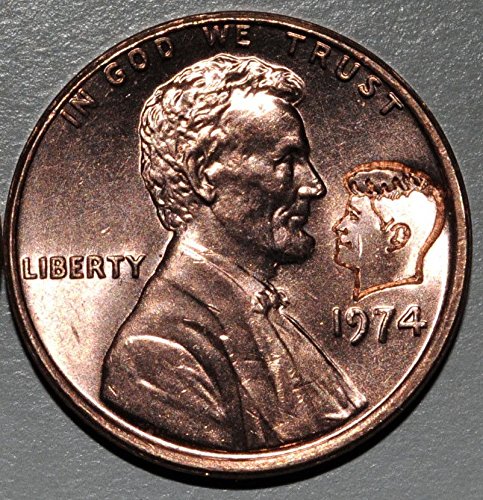
If you have ever sorted through a jar of old change or looked through an inherited coin collection, you may have spotted a peculiar sight: a standard Lincoln Memorial cent with a miniature, raised bust of John F. Kennedy stamped directly onto Lincoln’s shoulder or face. This unusual piece is widely known as the lincoln kennedy penny. At first glance, many discoverers believe they have stumbled upon a rare United States Mint striking error worth thousands of dollars. However, the reality of this coin is rooted in American marketing history, popular culture, and a fascination with historical coincidences.

What Is a Lincoln Kennedy Penny and Who Made It?
The Lincoln Kennedy penny is not an official United States Mint product. It is a counterstamped (or countermarked) coin produced entirely outside the Mint by private commercial firms. The base coin is an authentic, legal-tender Lincoln Memorial copper cent—most commonly dated between the late 1960s and mid-1970s—that was mechanically altered after leaving federal circulation.
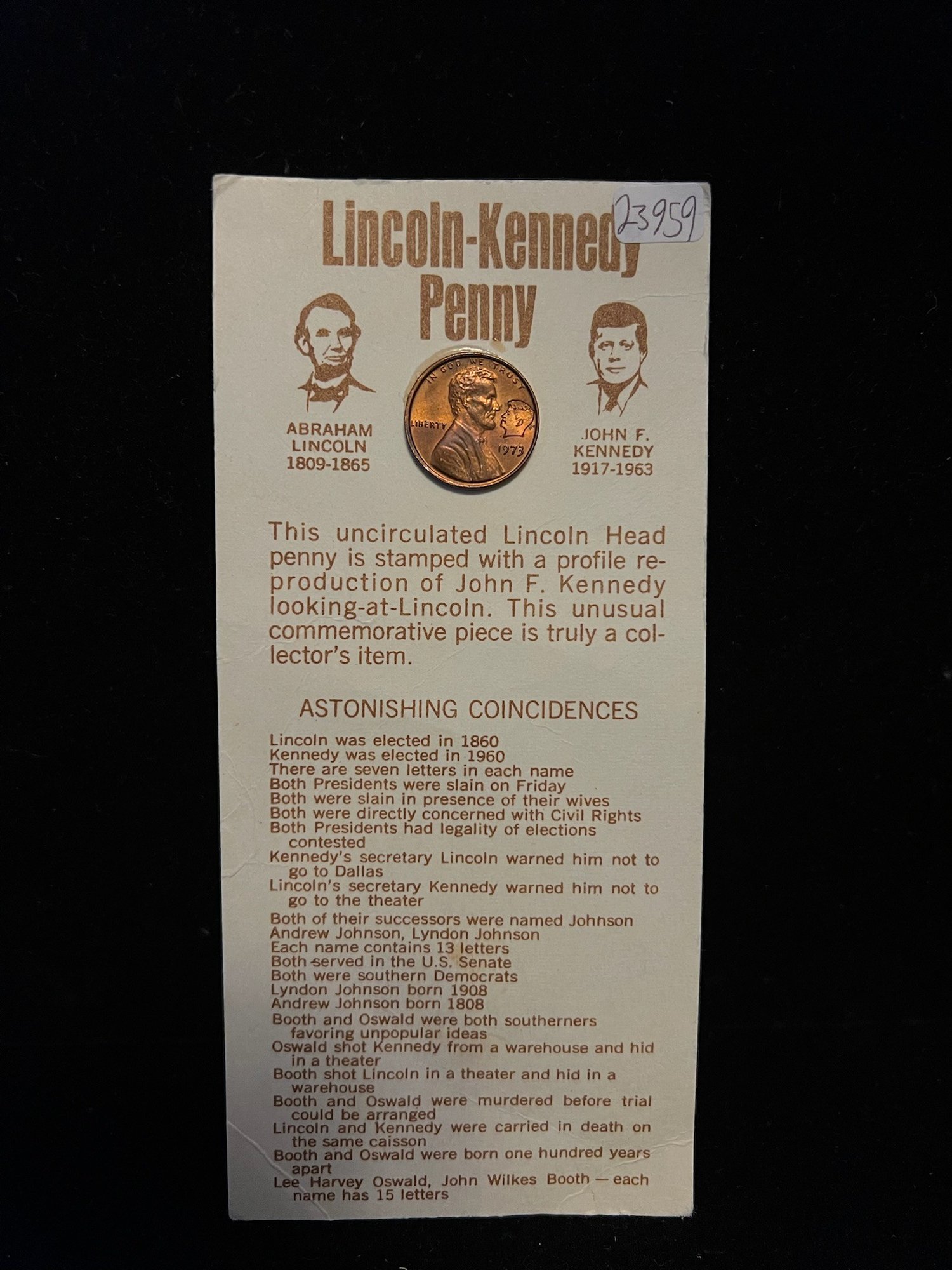
During the early 1970s, private novelty and coin-marketing companies, most notably the Littleton Coin Company and various mail-order novelty suppliers, created a steel die featuring a tiny profile portrait of President John F. Kennedy facing President Abraham Lincoln. Using a mechanical punch press, workers struck the Kennedy profile onto standard Lincoln cents. These modified cents were then mounted onto commemorative cards and sold directly to consumers through magazine advertisements, mail-order catalogs, and Sunday newspaper inserts.
The Legend of the Lincoln-Kennedy Coincidences
The primary selling point of the Lincoln Kennedy penny was not numismatic rarity, but a legendary list of historical parallels between America’s two most famously assassinated presidents. Sold on small cardboard display cards, the coins were marketed as physical symbols of an uncanny cosmic link.
While some of the coincidences circulated on these cards were slightly exaggerated or selective, several genuine historical parallels captured the public’s imagination:
- Election Dates: Abraham Lincoln was elected to Congress in 1846 and to the presidency in 1860. John F. Kennedy was elected to Congress in 1946 and to the presidency in 1960—precisely 100 years apart.
- Successors: Both men were succeeded by southern vice presidents named Johnson: Lincoln by Andrew Johnson (born in 1808) and Kennedy by Lyndon B. Johnson (born in 1908)—again, exactly 100 years apart.
- Assassins: Both presidents were shot on a Friday, and both were shot in the head. Lincoln’s assassin, John Wilkes Booth, was born in 1838 (often incorrectly cited as 1839 on the cards), and Kennedy’s accused assassin, Lee Harvey Oswald, was born in 1939.
- Fateful Locations: Lincoln was shot in Ford’s Theatre. Kennedy was shot while riding in an open-top Lincoln convertible manufactured by the Ford Motor Company.
- Flight and Capture: Booth shot Lincoln in a theater and fled to a tobacco barn (often described as a warehouse). Oswald shot Kennedy from a book warehouse and was apprehended inside a movie theater.
This striking compilation of historical folklore made the novelty penny a massive commercial success throughout the 1970s. Thousands of Americans purchased them as keepsakes, gifts, or educational souvenirs.
How Much Is a Lincoln Kennedy Penny Worth?
Because the Lincoln Kennedy penny was altered after it left the United States Mint, mainstream numismatists classify it as Post-Mint Damage (PMD) rather than an official error. From a strictly technical standpoint, the coin has no precious metal value beyond its copper melt value, and serious coin grading services (such as PCGS or NGC) will not certify it as an official mint error.

However, the coin has genuine value in the realm of exonumia—the collecting of tokens, medals, badges, and novelty coins. Here is what you can realistically expect on the secondary market:
- Loose Coin in Circulated Condition: If you find a loose coin with the JFK counterstamp in your pocket change, it typically sells online for between $1.00 and $3.00.
- Uncirculated Loose Coin: A bright, uncirculated red copper cent with a crisp punch usually fetches between $3.00 and $5.00.
- Original Carded Coin: An original, undamaged 1970s marketing card containing the coin and the printed list of presidential coincidences commands the highest premium, generally trading for $8.00 to $15.00.
Online auction listings occasionally post these coins for hundreds or even thousands of dollars with sensationalized titles claiming they are "ultra-rare mint mistakes." Be aware that these listings reflect seller wishful thinking rather than completed sales. The vast majority change hands for modest pocket-change sums.
How Was the Counterstamp Applied?
Understanding how the penny was created helps explain why it is classified as an alteration rather than a mint error. When the United States Mint strikes a coin, both the obverse and reverse dies strike the blank planchet simultaneously inside a retaining collar under tens of tons of pressure.
In contrast, a counterstamp is added later using a hand punch or a secondary hydraulic press. You can usually confirm this by examining the reverse of the coin:
- Look closely at the reverse (the Lincoln Memorial side) directly behind where Kennedy’s head is stamped on the front.
- You will almost always notice a faint flattening, indentation, or distortion in the Memorial design.
- This flattening occurs because the force required to impress Kennedy’s face into the front pushed through the metal, flattening the pre-existing design details on the back against the work surface.
Is It Illegal to Deface Currency This Way?
A common question surrounding the coin is whether stamping a president’s face onto legal tender violates federal law. Under 18 U.S. Code § 331, it is illegal to alter, deface, or mutilate United States coinage with fraudulent intent—such as altering a date to deceive a collector or shaving precious metal from silver coins. Because novelty companies were not attempting to pass these pennies off as higher-denomination currency or counterfeit coins, the practice does not violate federal law.
Should You Keep It?
While the coin will not fund your retirement, finding one is still an enjoyable experience. It represents a distinctive chapter in twentieth-century American pop history and remains one of the most recognizable countermarked coins ever distributed. If you discover one, keep it in a small coin flip or protective holder as a conversation piece, or pass it on to a young collector just beginning their journey into numismatics.