Linus Torvalds’ Billion-Dollar Mystery: How a Programmer Made Billions!
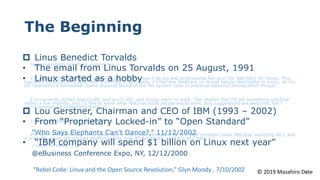
Open any discussion board about software wealth, and you will eventually encounter the viral phrase: Linus Torvalds’ Billion-Dollar Mystery: How a Programmer Made Billions! It sounds like the plot of a Silicon Valley thriller. A lone computer science student at the University of Helsinki writes an operating system kernel in 1991, gives it away completely free of charge, and somehow walks away with a ten-figure fortune. But how much of that narrative is truth, and how much is internet folklore?

The reality of Linus Torvalds’ financial life is far more interesting than the clickbait myths. Torvalds did not make billions of dollars—yet the code he wrote and stewarded has generated trillions of dollars in commercial value across the global economy. By examining how open-source software actually monetizes, how Torvalds earned his real wealth, and why he chose code over corporate dominance, we can unravel the true story behind this enduring tech legend.
Linus Torvalds’ Billion-Dollar Mystery: How a Programmer Made Billions!
To solve the mystery, one must first confront the core claim: Is Linus Torvalds actually a billionaire? The short answer is no. Most reputable financial estimates place Linus Torvalds’ actual net worth between $50 million and $150 million. While that makes him extraordinarily wealthy by any conventional standard, it falls far short of the multi-billion-dollar fortunes amassed by tech titans like Bill Gates, Steve Ballmer, or Mark Zuckerberg.
Why, then, do people continually assume he is a billionaire? The confusion stems from a fundamental misunderstanding of the software industry. People look at the world around them and observe a simple fact: Linux runs the modern planet. It powers:
- 100% of the world's 500 fastest supercomputers.
- More than 70% of all public cloud infrastructure and enterprise web servers.
- Over three billion active Android smartphones worldwide.
- Critical systems across modern automotive dashboards, avionics, routers, and IoT devices.
- The core trading engines of Wall Street exchanges like the NYSE.
Observers naturally assume that the creator of the world's most ubiquitous computing foundation must have retained equity or charged licensing fees that produced billions in dividends. The "mystery" exists solely because people project the closed-source business model of Microsoft onto the collaborative ecosystem of open source.
How Linus Torvalds Actually Built His Multi-Million Dollar Fortune
Linus Torvalds did not achieve financial independence by charging for software licenses. Instead, his multi-million dollar net worth was built through two primary mechanisms: early corporate equity grants and a high-paying, independent foundation fellowship.
The 1999 Red Hat and VA Linux Windfall
During the height of the dot-com bubble in the late 1990s, several pioneering tech companies built commercial business models around Linux. Companies like Red Hat and VA Linux Systems recognized that their multi-billion-dollar market valuations were directly enabled by Torvalds’ personal creation and leadership.
Out of gratitude—and to acknowledge his irreplaceable role in software history—both companies granted Torvalds pre-IPO stock options:
- Red Hat IPO (1999): When Red Hat went public in August 1999, Torvalds was granted a significant allocation of stock options. When exercised, these shares provided him with an estimated windfall of roughly $20 million.
- VA Linux Systems (1999): VA Linux had one of the most explosive IPOs in NASDAQ history, jumping nearly 700% on its first day of trading. Torvalds also held options here, securing another massive payday.
These equity distributions transformed Torvalds from a comfortably employed engineer into a multimillionaire almost overnight, freeing him from financial anxiety for the rest of his life.
The Linux Foundation Fellowship
Rather than working for a commercial vendor like IBM, Google, or Intel—which could create severe conflicts of interest regarding kernel development—Torvalds has long served as a Fellow at the Linux Foundation. The Linux Foundation is a nonprofit consortium funded by hundreds of tech enterprises that rely on Linux stability.
In this role, Torvalds receives an annual salary reported to be between $1.5 million and $2 million. This compensation allows him to direct kernel development full-time with complete independence. He does not answer to shareholders, corporate marketing teams, or venture capitalists. His sole job is to maintain code quality, manage pull requests, and keep the Linux kernel architecture clean.

The Trillion-Dollar Ecosystem Linux Created
While Torvalds personally did not make billions, the economic impact of his decision to open-source Linux under the GNU General Public License version 2 (GPLv2) cannot be overstated. By requiring that modifications to the kernel remain open and reciprocal, Torvalds prevented any single corporation from privatizing his work while encouraging global collaboration.
Consider the immense wealth Linux created for others:
- Cloud Giants: Amazon Web Services (AWS), Google Cloud Platform, and Microsoft Azure generated hundreds of billions in revenue running virtualized Linux instances.
- Red Hat Acquisition: In 2019, IBM acquired Red Hat for approximately $34 billion—a transaction based entirely on an enterprise software distribution built atop Torvalds’ kernel.
- The Android Ecosystem: Google built Android on top of the Linux kernel, enabling an ecosystem that supports trillions in smartphone hardware sales, mobile commerce, and app store transactions.
If Torvalds had licensed Linux commercially like proprietary Unix systems in the 1990s, it almost certainly would have faded into obscurity, outcompeted by proprietary giants. Linux succeeded precisely because its creator did not extract direct rent from every user.
Why Linus Never Chose the Billionaire Path
Torvalds has spoken candidly about money throughout his career. In interviews and his autobiography, Just for Fun, he has made it clear that massive personal wealth was never his primary goal.
Turning Down Steve Jobs
In 2000, Steve Jobs invited a young Torvalds to Apple’s Cupertino headquarters. Jobs offered Torvalds a lucrative position working on Mac OS X, provided that Torvalds abandon development on Linux. Torvalds declined immediately. He valued autonomy and open collaboration far more than a corporate executive salary or Apple stock packages.
The Psychological Burden of Corporate Empires
Running a billion-dollar company requires skill sets that Torvalds actively avoids: negotiating contracts, pitching investors, managing office politics, and speaking to financial analysts. Torvalds has consistently described himself as an engineer who prefers quiet rooms, technical problems, and strict code review.
By settling for a net worth in the tens of millions rather than chasing billions, Torvalds retained complete control over his daily life, his schedule, and his legacy. He avoided the public scrutiny and legal battles that plagued contemporaries like Bill Gates.
Key Lessons for Software Developers
The story of Linus Torvalds provides several critical insights for engineers and entrepreneurs navigating the modern technology landscape:
- Open Source Can Provide Real Wealth: You do not need to lock your source code in a vault to build personal financial security. Providing immense public value often creates unique, lucrative opportunities.
- Equity Matters More Than Hourly Pay: Torvalds’ largest single liquidity events came from equity allocations granted by companies that benefited from his ecosystem.
- Independence Trumps Maximization: There is a distinct difference between having enough money to live entirely on your own terms and maximizing every single penny. Torvalds chose autonomy over endless accumulation.
Conclusion: The Real Wonder of Linux
The true intrigue behind Linus Torvalds is not that he secretly harbored billions of dollars in offshore accounts. The real wonder is that a programmer deliberately chose to create something that belonged to everyone. In doing so, he sparked the largest collaborative engineering project in human history, paved the way for the modern internet, and still secured tens of millions of dollars along the way. Linus Torvalds may not be a billionaire, but his code rules the digital world.