Listcrawler TS: What Baltimore Residents Need to Know
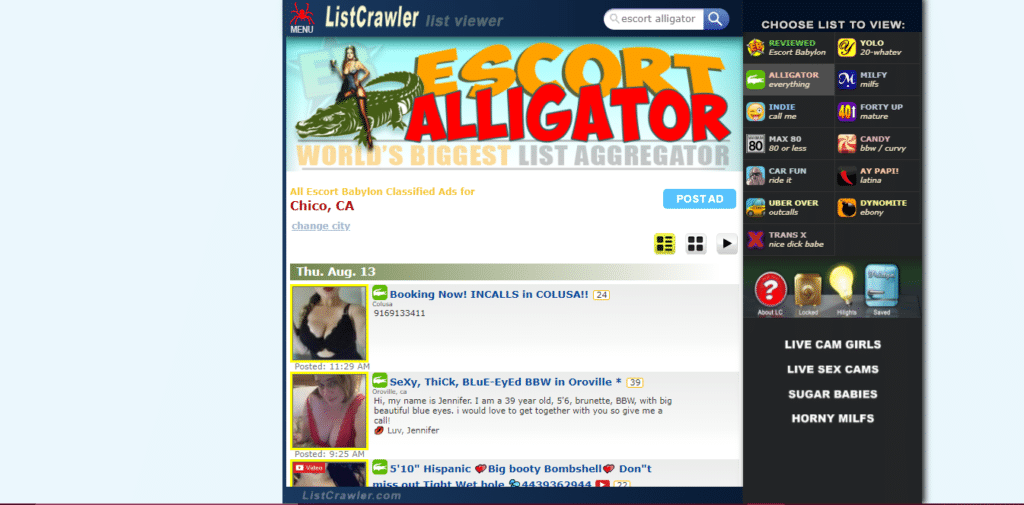
When navigating local online classifieds, understanding what every Baltimore resident needs to know about Listcrawler TS is essential for personal safety, financial security, and legal awareness. The internet has fundamentally shifted how adult classifieds and personal advertisements operate, particularly over the last decade. Following major federal legislative shifts, websites like Listcrawler emerged to fill the vacuum left by defunct classified boards, hosting classified listings across various categories, including its transgender adult service section ("TS").

For individuals residing in Baltimore City, Baltimore County, and the broader central Maryland corridor, engaging with or simply researching these platforms carries distinct legal, financial, and digital risks. This guide breaks down the operational nature of Listcrawler TS, the legal landscape in Maryland, common cyber threats, and local support resources.
What Every Baltimore Resident Needs to Know About Listcrawler TS
To understand the current digital environment, one must look at recent history. In 2018, the United States Congress passed the Fight Online Sex Trafficking Act (FOSTA) and the Stop Enabling Sex Traffickers Act (SESTA). These federal statutes stripped internet service platforms of their Section 230 safe harbor protections if they knowingly facilitated or assisted in sex trafficking or prostitution. The immediate fallout was the seizure of Backpage by federal authorities and the immediate removal of adult personal sections from major websites like Craigslist.
In response, platforms such as Listcrawler stepped in to aggregate and display adult-oriented ads. The "TS" section specifically indexes advertisements marketed by transgender individuals offering escort or adult entertainment services. Unlike legacy domestic platforms, many modern classified aggregator sites operate across offshore hosting networks, utilizing proxy domains and loose content moderation practices.
For Baltimore residents, this lack of oversight creates a breeding ground for fraudulent activity, automated scrapers, impersonation schemes, and serious legal liabilities.
The Legal Landscape in Baltimore and Maryland
Anyone interacting with adult classified platforms in Maryland must understand the state and local statutes governing prostitution, commercial solicitation, and related activities. Maryland state law maintains clear criminal definitions and strict enforcement mechanisms regarding commercial sex.
Maryland Solicitation and Prostitution Laws
Under the Maryland Criminal Code (Md. Code Ann., Crim. Law § 11-306), engaging in prostitution or solicitation is a misdemeanor. A conviction carries penalties including:
- Fines reaching up to $500 for a first offense.
- Imprisonment for up to one year.
- A permanent criminal record that can disrupt professional licensure, housing access, and employment opportunities.
Maryland law draws no distinction between transactions negotiated on physical street corners and those arranged through digital communication platforms, SMS, or encrypted messaging apps. Agreeing to exchange money, goods, or valuable consideration for sexual acts constitutes an illegal act under state law the moment an agreement is reached.
Local Law Enforcement Operations
Both the Baltimore Police Department (BPD) and the Baltimore County Police Department routinely conduct targeted sting operations. These initiatives often monitor online classified hubs like Listcrawler. Detectives frequently post decoy advertisements or respond to existing postings to apprehend individuals attempting to solicit services in local hotels, short-term rentals, or residential neighborhoods.

Law enforcement agencies also actively enforce human trafficking statutes (Md. Code Ann., Crim. Law § 11-303). Unregulated online platforms often inadvertently or deliberately host ads tied to coercion and human trafficking syndicates, exposing users to severe criminal investigations.
Prevalent Scams Targeting Baltimore Users
The vast majority of listings found on unmoderated classified sites are not legitimate service providers. Instead, they are sophisticated fraud operations designed to exploit unsuspecting users. Cybercriminals frequently target local residents using several well-documented tactics:
1. The Advance-Fee or Deposit Scam
In this common scheme, the poster requests an upfront "deposit," "screening fee," or "verification payment" via non-refundable peer-to-peer payment platforms like Cash App, Zelle, Venmo, or Apple Pay. Once the victim transfers the money, the poster immediately blocks the phone number, deletes the conversation, and vanishes with the funds. Peer-to-peer payment apps offer virtually no fraud protection for transactions categorized as personal transfers.
2. The Cartel / Blackmail Extortion Scam
This aggressive scam typically begins after a user sends an inquiry text or phone call to a phone number listed on Listcrawler. Even if the user decides not to proceed, they receive intimidating messages within hours or days. The sender claims to represent a violent criminal syndicate or cartel, alleging that the user "wasted their provider's time" and owes thousands of dollars in damages.
Scammers use public record lookups to find the user’s real name, home address, and names of family members, threatening physical harm or public embarrassment if money is not immediately wired via cryptocurrency or gift cards. Law enforcement agencies across Maryland consistently warn residents that these threats are fabricated extortion schemes orchestrated by overseas call centers.
3. Phishing and Identity Verification Traps
Some advertisements direct users to external websites to obtain "safety passes" or "client verification IDs." These third-party websites are malicious phishing operations created to steal credit card details, Social Security numbers, and personal credentials. Entering payment information into these portals typically leads to unauthorized recurring charges and identity theft.
Physical Safety and Crime Risks
Attempting to meet individuals from unregulated online classifieds poses acute physical dangers. In Baltimore, law enforcement has documented multiple instances of "set-up" robberies originating from classified ads.
- Ambush Robberies: Victims are lured to unfamiliar residential addresses or secluded parking lots, only to be confronted by armed accomplices who demand wallets, phones, vehicle keys, and banking passwords.
- Hotel and Motel Risks: Commercial corridors such as Pulaski Highway (Route 40), areas near security Blvd, and interstate-adjacent motels often see transient criminal activity where unauthorized meetings lead to assault or theft.
- Stolen Identities: The photos displayed on Listcrawler TS listings are almost universally stolen from adult performers, transgender social media influencers, or
Image Gallery