Little Stevie's Early Jazz Soul Mastery
When people think of Stevie Wonder, they usually picture the legendary 1970s hitmaker behind classics like "Superstition" and "Sir Duke." However, the foundation of his genius was laid a decade earlier. Long before he was a multi-GRAMMY-winning icon, a blind boy from Detroit was dazzling audiences with virtuosic harmonica playing, dazzling piano runs, and an uncanny knack for syncopated rhythm. Understanding **The Soulful Story Behind Stevie Wonder: Little Stevie’s Early Jazz Soul Mastery!** requires looking back at a time when raw instinct and relentless practice collided in the studio.

The Genesis of a Prodigy in Detroit
Born prematurely in Saginaw, Michigan, in 1950, Stevland Hardaway Judkins (later Morris) lost his sight due to retinopathy of prematurity, a condition exacerbated by excess oxygen in an incubator. Rather than retreating, young Stevie leaned entirely into the auditory world. Sounds became his texture, color, and geography.
By age four, his family had relocated to Detroit. Music was everywhere in the motor city, but young Stevie gravitated toward the radio and local church pews. He absorbed everything—gospel shuffles, blues bends, and the sophisticated chord changes of early jazz. Before he even entered adolescence, he had taught himself to play the harmonica, piano, drums, and bass.
From the Streets to Hitsville U.S.A.
Stevie's breakthrough came when he was discovered by Ronnie White of The Miracles. White brought the eleven-year-old prodigy to the doorstep of Motown Records. Berry Gordy, the visionary head of the label, was famously hesitant to sign children, but Stevie’s audition changed his mind instantly. He played piano and drums with the ferocious energy of a seasoned jazzman.
- Signed to Motown's Tamla label in 1961 at just eleven years old.
- Given the moniker "Little Stevie Wonder" by Berry Gordy himself.
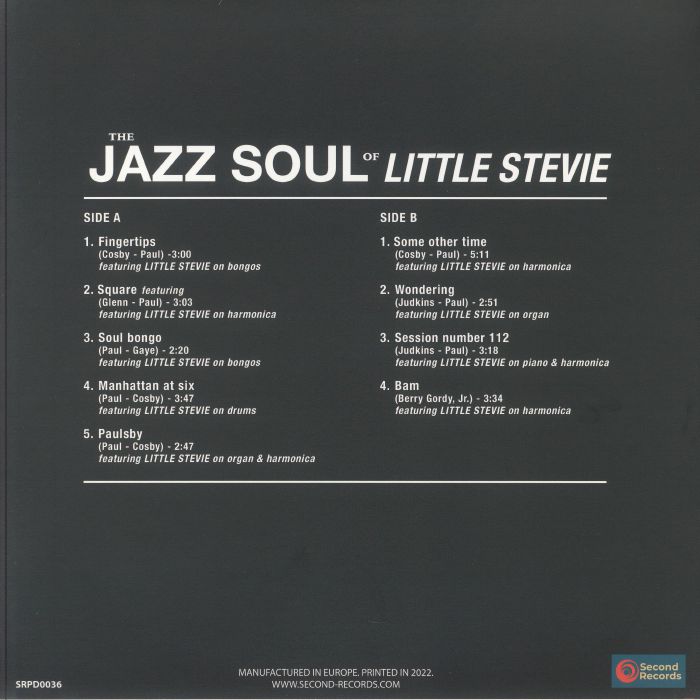
- Released his debut album, *The Jazz Soul of Little Stevie*, in 1962.
Unpacking "The Jazz Soul of Little Stevie"
While most child stars are groomed to sing bubblegum pop, Motown recognized that Stevie’s talents defied standard categories. His debut instrumental album wasn't just a novelty record; it was a legitimate statement of **Little Stevie's Early Jazz Soul Mastery**. Backed by top-tier session musicians, the album showcased a young boy holding his own in complex musical arrangements.
Instrumental Virtuosity Beyond His Years

The album featured tracks like "Soul Rustle" and "Wonderland," where Stevie switched effortlessly between piano, organ, and his signature chromatic harmonica. His harmonica playing, in particular, channeled the bebop sensibilities of jazz greats like Toots Thielemans and the blues grit of Sonny Boy Williamson. He played with a fiery, unpredictable swing that completely bypassed the rigid structures often forced upon young performers.
The Transition to Vocal Expression
Though his first album was largely instrumental, Stevie’s voice was developing in parallel. He studied the vocal inflections of Ray Charles, Sam Cooke, and Jackie Wilson. He learned how to bend notes to express deep emotional nuance, blending the secular urgency of soul music with the improvisational freedom of jazz. When he finally sang on record, his voice carried a weathered, soulful maturity that shocked listeners who realized it belonged to a twelve-year-old.
The Blueprint for Future Greatness
The groundwork laid during Little Stevie’s early jazz and soul period directly fueled his later artistic revolution. The complex chord progressions he mastered in his youth formed the backbone of his 1970s masterpiece albums like *Innervisions* and *Songs in the Key of Life*.
Stevie didn't just learn songs; he learned the mechanics of music. He understood how jazz harmony could elevate a soul melody, and how rhythm could drive a pop hook. This hybrid style gave him the creative independence to eventually renegotiate his Motown contract at age twenty-one, demanding—and winning—complete artistic control.
Legacy of a Musical Pioneer
The story of Stevie Wonder is often told through his golden era of the 1970s, but his origins are just as vital. **The Soulful Story Behind Stevie Wonder: Little Stevie’s Early Jazz Soul Mastery!** is a testament to natural brilliance nurtured by curiosity and grit. He proved that age and physical limitations are meaningless when paired with boundless passion. From the streets of Detroit to the halls of musical immortality, Little Stevie remains the ultimate definition of a true musical prodigy.