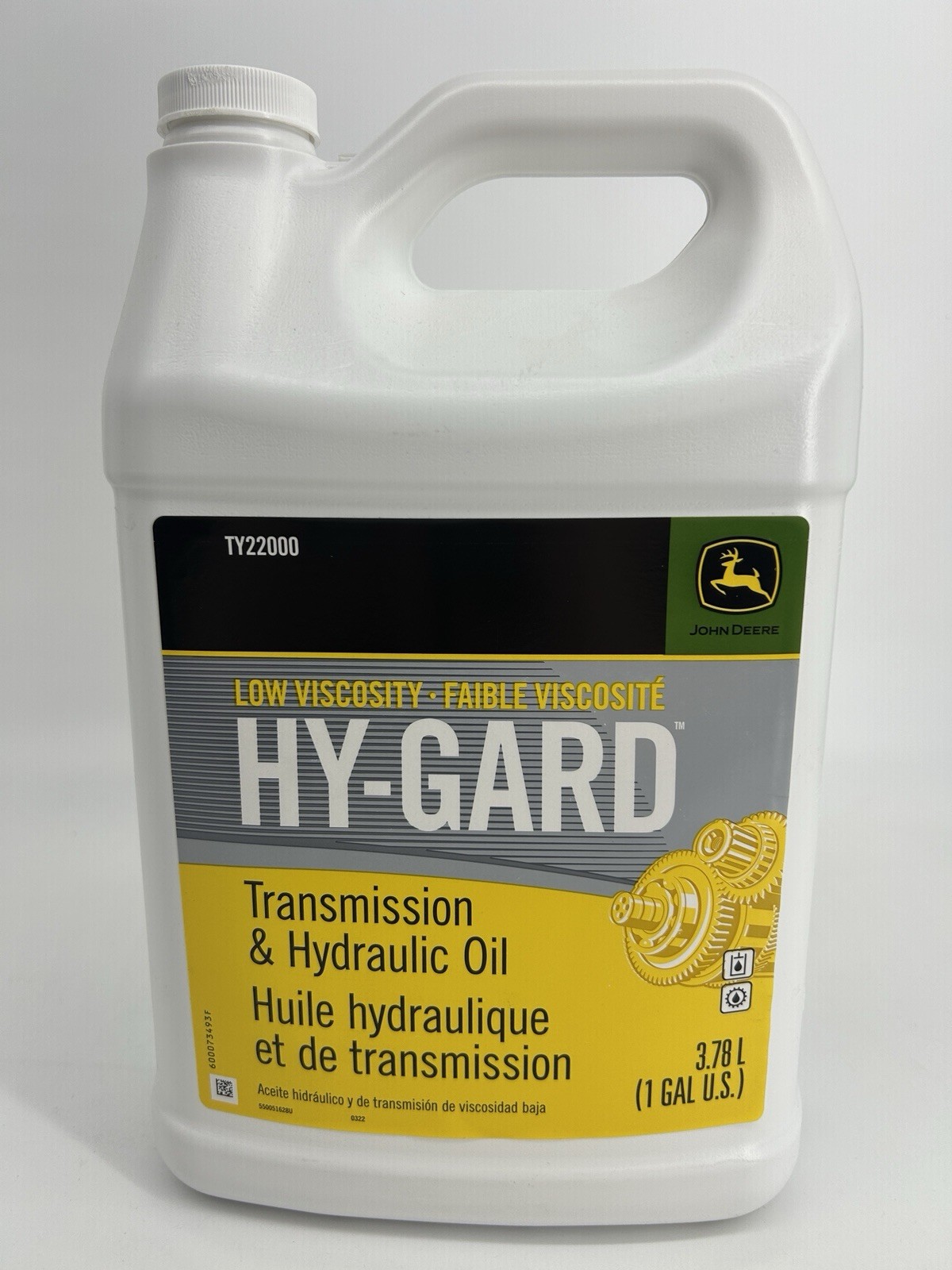
Low Viscosity Hy-Gard: Specs, Uses, & Guide
When maintaining John Deere tractors, commercial mowers, and compact utility equipment, selecting the right fluid for your hydrostatic drive and hydraulic system is critical to longevity. Low viscosity Hy-Gard is an OEM-engineered universal tractor transmission oil (UTTO) formulated specifically for machines operating in colder ambient conditions or systems requiring lighter fluid dynamics. Using the wrong fluid can lead to sluggish operation, hydraulic pump cavitation, and premature component wear.

Whether you are prepping your machine for winter snow removal or evaluating seasonal fluid changes, understanding the formulation, temperature thresholds, and specific applications of this oil ensures your equipment runs at peak performance.
What Is Low Viscosity Hy-Gard?
John Deere Low Viscosity Hy-Gard is a multi-functional fluid designed for transmissions, wet clutches, wet brakes, and hydraulic reservoirs. Unlike generic hydraulic oils that only transfer pressure, a UTTO must lubricate heavy gear sets, provide thermal dissipation, prevent brake chatter, and maintain precise friction characteristics for clutch plates.
Low Viscosity Hy-Gard meets John Deere’s rigorous JDM J20D specification. In contrast, standard Hy-Gard meets the JDM J20C specification. The fundamental difference lies in the base stock and viscosity index improvers used to keep the fluid thin enough to flow smoothly at extreme sub-zero temperatures while maintaining film strength under mechanical load.
Low Viscosity vs. Standard Hy-Gard: How They Compare
The primary factor separating these two fluids is their viscosity grade and rated operating temperature window.
- Low Viscosity Hy-Gard (JDM J20D): Engineered for operating temperatures ranging from -40°F (-40°C) to 86°F (30°C). It correlates roughly to an ISO 32 or SAE 5W-20 fluid profile, offering low flow resistance during cold starts.
- Standard Hy-Gard (JDM J20C): Engineered for operating temperatures between -13°F (-25°C) and 122°F (50°C). It corresponds roughly to an ISO 46/68 or SAE 10W-30 weight, providing a thicker fluid film for heavier loads in warm environments.
In equipment with shared reservoirs, hydraulic pumps rely on immediate fluid draw upon startup. If standard Hy-Gard is used in deep winter, the thick oil cannot reach the pump intake fast enough. This starvation causes cavitation—a phenomenon where air bubbles collapse under intense pressure, pitting metal pump components and creating excessive noise.
Key Benefits of Low Viscosity Hy-Gard
1. Rapid Cold-Start Flow
In sub-freezing conditions, hydrostatic transmissions filled with standard oils feel stiff, unresponsive, or completely locked up until the machine idles for an extended period. Low Viscosity Hy-Gard flows instantly down to -40°F, protecting hydrostatic swash plates, pistons, and charge pumps from friction damage during the vulnerable warm-up phase.
2. Elimination of Wet Brake Chatter
Tractors and commercial utility vehicles frequently use oil-immersed wet brakes. Standard fluids or improper aftermarket equivalents can cause dynamic stick-slip behavior, resulting in loud squealing or “chattering” during braking. Low Vis Hy-Gard contains specialized friction modifiers calibrated to keep braking smooth, quiet, and predictable without sacrificing holding capacity.
3. Superior Water and Sludge Tolerance
Equipment working in cold climates experiences heavy condensation within the transmission case as hot hydraulic components cool down in freezing air. Low Viscosity Hy-Gard is formulated with high-performance dispersants that hold microscopic water droplets in suspension rather than allowing them to settle at the bottom of the reservoir, preventing rust, emulsion sludge, and internal corrosion.
4. Oxidation Stability at Peak Pressures

Although it is a light fluid, it resists thermal breakdown. High-quality base oils prevent shearing when the oil is forced through relief valves and tight hydrostatic orifices, ensuring consistent system pressure even as the transmission warms up during extended chores.
Common Equipment Applications
While machine manuals should always serve as your definitive guide, John Deere specifies Low Viscosity Hy-Gard across several common machine categories:
- Sub-Compact & Compact Utility Tractors: Popular models in the 1-Series (e.g., 1025R), 2-Series, and 3-Series often come factory-filled with Low Vis Hy-Gard or recommend it for northern climates where machines perform double duty for mowing in spring and snow blowing in winter.
- Lawn & Garden Tractors: Premium garden tractors like the X500 and X700 series equipped with Tuff Torq hydrostatic transaxles frequently call for Low Vis Hy-Gard to ensure fast drive response and smooth hydraulic deck lifting.
- Gator Utility Vehicles: Selected hydrostatic and heavy-duty transmission setups in John Deere Gator UTVs use low-viscosity fluid to balance mechanical protection with low parasitic drag.
- Commercial Snow Removal Machinery: Any John Deere loader, skid steer, or utility tractor tasked with regular winter work in northern states or Canada benefits from a switch to J20D-rated fluid.
Can You Run Low Vis Hy-Gard Year-Round?
One of the most common questions equipment owners ask is whether they must drain low-viscosity fluid before summer arrives. The answer depends heavily on your region and your machine’s workload.
If you live in a moderate northern climate where summer ambient temperatures rarely exceed 85°F (30°C), many compact tractors and lawn tractors can run Low Viscosity Hy-Gard year-round without issue. Modern hydraulic systems with efficient oil coolers keep bulk fluid temperatures well within safe limits.
However, if you use a tractor for continuous heavy ground engagement (such as rotary tilling, heavy plowing, or round baling) in ambient heat above 90°F (32°C), low-viscosity fluid will thin out excessively. In those circumstances, the fluid cannot maintain the hydrodynamic barrier necessary to protect heavy transmission reduction gears, and transitioning to Standard Hy-Gard is recommended.
Frequently Asked Questions
Can I mix standard Hy-Gard with Low Viscosity Hy-Gard?
Yes. Both fluids use compatible additive chemistry and base oils. If you are low on fluid and only have standard Hy-Gard on hand, adding a small amount to a system running low-vis oil will not cause chemical clumping or foaming. However, mixing the two increases the overall viscosity, which compromises the fluid’s extreme cold-weather flow ratings.
Can I use a generic “universal” tractor fluid instead?
Only if the generic fluid explicitly states that it meets or exceeds John Deere JDM J20D. Most budget farm-store hydraulic oils are rated to older J20A or current J20C specs (standard viscosity) or lower 303-type specs. Pouring a generic high-viscosity fluid into a system engineered for J20D in winter will lead to sluggish hydraulics, hydro whine, and potential cavitation damage.
How often should Low Vis Hy-Gard be changed?
Always follow the maintenance schedule in your operator’s manual. For most compact tractors, John Deere recommends a transmission/hydraulic fluid change every 200 to 400 operating hours or every 12 to 24 months, whichever comes first. Always change the hydraulic suction filter whenever draining and refilling the fluid.
Final Thoughts
Protecting your equipment’s hydraulic and transmission systems requires matched lubrication. John Deere Low Viscosity Hy-Gard is uniquely suited for cold-weather reliability, quick hydrostatic engagement, and anti-wear protection across wet clutch and brake systems. By adhering to the factory JDM J20D specification, you safeguard expensive hydrostatic pumps and drive motors against premature failure.