Lowe's 3/4 Plywood 4x8: Types, Prices, and Uses
Understanding Lowe's 3/4 Plywood 4x8 Options

When you are tackling a serious building project, cabinet making, or heavy-duty shelving, standard thin plywood just won't cut it. You need rigidity, strength, and durability. That is why DIYers and contractors frequently search for Lowe's 3/4 plywood 4x8 panels. Measuring a nominal three-quarters of an inch thick and standard four by eight feet in surface area, these sheets form the backbone of countless construction and woodworking builds.
Lowe's stocks a wide variety of these large panels, ranging from construction-grade sheathing to premium hardwood furniture boards. Navigating the aisle can be overwhelming if you do not know the difference between exterior ratings, cabinet grades, and softwood options. This guide breaks down everything you need to know before loading up your cart.
Common Types of 3/4-Inch Plywood at Lowe's
Not all plywood is created equal. The inner plies, the quality of the face veneer, and the type of glue used all dictate how a specific sheet will perform. Here are the most common variants you will encounter:
CDX Plywood (Construction Sheathing)
CDX is a utility-grade panel meant primarily for rough construction. The 'C' and 'D' designations refer to the quality of the front and back veneers, which often contain knots, small voids, and patches. The 'X' stands for exterior, meaning the glue used to bond the layers is waterproof and can withstand temporary exposure to the elements during a build. It is ideal for subflooring, roof decking, and temporary ramps, but it is not meant to be seen.
Sandished Softwood Plywood (BCX or ACX)
If your project requires a smoother surface that will be painted or lightly stained, sanded softwood is the standard choice. Panels rated ACX feature one high-grade, sanded 'A' face with virtually no knots, while the back is a lower 'C' grade. BCX features two usable, sanded sides. These are commonly used for utility shelving, workbench tops, and garage storage carcases.
Hardwood Plywood (Birch, Oak, and Maple)
For fine woodworking, built-in cabinetry, and high-end furniture, you will want to look at Lowe's selection of hardwood plywood. These sheets typically feature a hardwood face veneer—such as birch, red oak, or maple—over a stable core. They offer a gorgeous grain pattern that takes stain and polyurethane exceptionally well. However, they are generally meant for indoor use only, as the interior glues are not rated for wet outdoor environments.

Current Pricing and Budgeting Factors
Plywood prices fluctuate based on lumber market trends, transportation costs, and global supply chains. As a general baseline, expect to pay anywhere from $45 to over $100 per sheet for a standard 4x8 panel of 3/4-inch thickness.
- Construction Sheathing (CDX): Typically the most budget-friendly option, usually sitting on the lower end of the price spectrum.
- Sanded Pine/Fir: Mid-tier pricing, offering a balance between structural integrity and surface smoothness.
- Hardwood Plywood (Birch/Oak): The most expensive category, with prices scaling upward depending on the chosen hardwood species and core quality (such as veneer core vs. MDF core).
When budgeting for your project, remember to factor in sales tax and potential delivery fees if your vehicle cannot transport full 4x8 sheets safely.
Key Specifications to Check Before You Buy
Before pulling a sheet off the rack at Lowe's, take a moment to inspect the label and the physical board. Checking a few key details will save you headaches later:
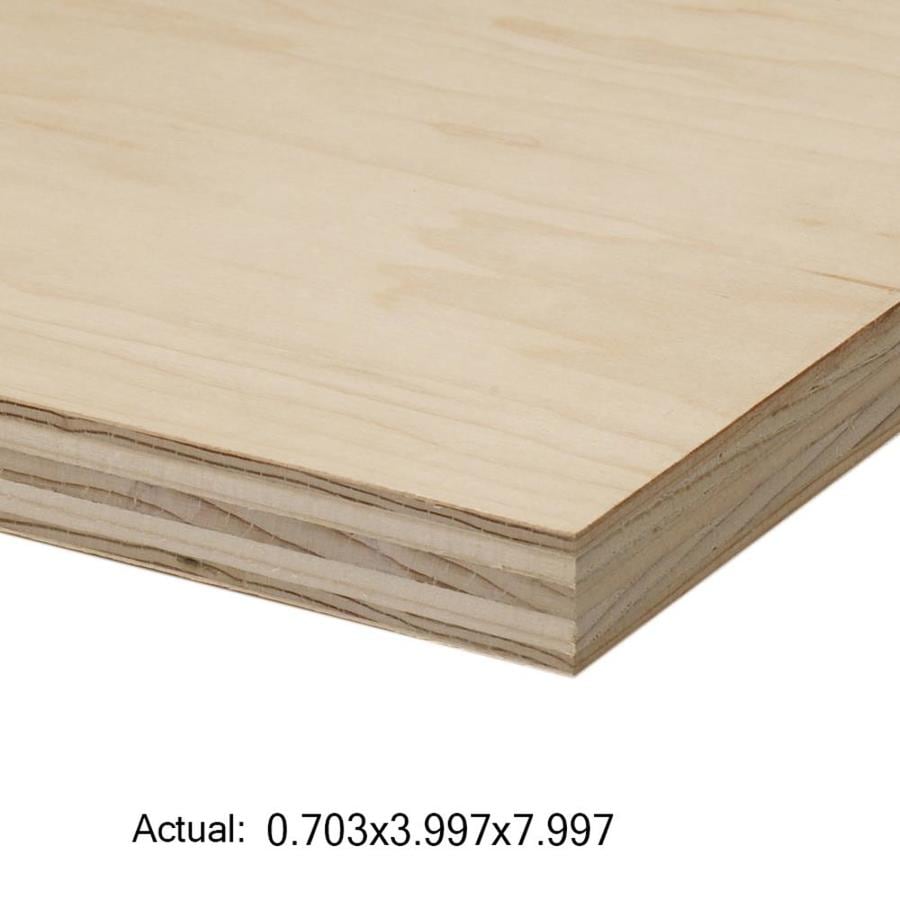
- Actual Thickness: Due to manufacturing standards, "3/4-inch" plywood actually measures around 23/32 of an inch (or roughly 18mm for metric-sized panels). If you are cutting joints that rely on exact tolerances, measure the actual board with calipers rather than assuming it is a full 0.750 inches.
- Veneer Core vs. MDF Core: Traditional veneer cores are lightweight and hold screws well. MDF (Medium Density Fiberboard) or particle board cores offer an ultra-flat surface with zero internal voids, making them fantastic for cabinet doors, but they are significantly heavier.
- Edge Quality: Look down the edges of the board while it is still on the stack. Ensure the sheet is not excessively bowed, warped, or twisted. A warped sheet will make building square boxes nearly impossible.
Transporting and Cutting 4x8 Sheets
Hauling a full 4x8 sheet of 3/4 plywood requires some planning. A single 3/4-inch sheet can weigh anywhere from 50 to 75 pounds depending on the wood species, making it unwieldy to handle alone.
If you drive a standard sedan or small SUV, the sheets will not fit inside. You will need a pickup truck, a utility trailer, or a roof rack with proper tie-downs. Fortunately, most Lowe's locations feature a panel saw in the back of the store. While associates are generally happy to make a few rough cuts to help the wood fit into your vehicle, keep in mind that these cuts are rarely precision woodworking cuts. It is usually best to ask them to cut the sheet in half so it fits in your car, leaving an extra quarter-inch for final trimming at home with your own circular saw or table saw.
Final Verdict: Is It Right for Your Project?
Lowe's 3/4 plywood 4x8 panels offer a reliable, accessible solution for builders of all skill levels. Whether you are laying down a sturdy subfloor with CDX or crafting heirloom-quality bookcases using birch hardwood, choosing the right grade makes all the difference. Always inspect your boards for flatness and surface quality in the store, plan your cuts carefully, and select the appropriate core type to ensure your finished project stands the test of time.