Lowe's Bagged Concrete: Types & Buying Guide
When tackling a backyard patio, setting a fence post, or pouring footings for a new deck, buying pre-mixed dry concrete in bags is the most convenient route for DIYers and small contractors. Walking down the masonry aisle, you will find several varieties of lowes bagged concrete—primarily from industry-leading brands like Quikrete and Sakrete. Choosing the right bag comes down to understanding PSI ratings, cure times, and aggregate sizes, as well as knowing how many bags your vehicle and project can handle.

Types of Lowe's Bagged Concrete and When to Use Them
Not all bagged concrete performs the same role. While every standard mix blends Portland cement, sand, and gravel, the ratios and additives vary significantly depending on the intended use.
1. Standard Concrete Mix
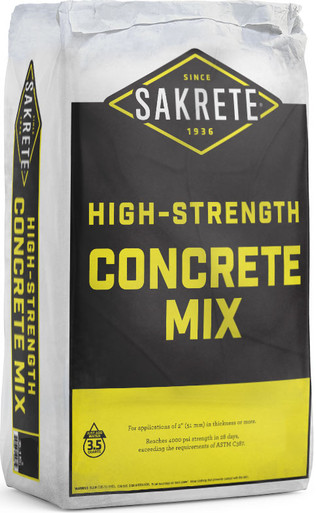
Often packaged in yellow or gray bags, standard all-purpose concrete is engineered for general pours greater than 2 inches in depth. It reaches a compressive strength of around 4,000 PSI after 28 days. This mix is the default choice for garden borders, trash can pads, walkway slabs, and standard deck footings.
- Best for: Patios, sidewalks, footings, and curbs.
- Working time: Approximately 1 to 2 hours before initial set.
2. Fast-Setting Concrete
Distinguished by its red-labeled packaging at Lowe's, fast-setting concrete sets in roughly 20 to 40 minutes. Its standout feature is that it requires no pre-mixing in a wheelbarrow for post holes. You simply dig the hole, place the post, pour the dry mix directly around it, and pour water over the top. The water penetrates the mix, hydrating the cement in place.
- Best for: Mailboxes, fence posts, basketball hoops, and light poles.
- Note: Fast-setting mixes reach around 4,000 PSI, but because of their rapid hydration, they should not be used for large surface slabs where smooth troweling is needed.
3. High-Strength and Commercial Mixes (5000+ PSI)
For applications subject to heavy loads, such as vehicle driveways, equipment pads, and structural support columns, standard 4,000 PSI mixes may wear down prematurely. Lowe's stocks heavy-duty mixes like Quikrete 5000. These formulas feature high early strength (often reaching 2,500 PSI in just three days and 5,000 PSI at full cure), making them ideal for cold-weather placements or freeze-thaw climates.
- Best for: Driveway repairs, load-bearing slabs, machinery bases, and structural steps.
4. Sand Mix (Topping & Bedding Mix)
Unlike standard concrete, sand mix contains no coarse gravel—only fine aggregate sand and Portland cement. It can be applied in layers thinner than 2 inches without cracking. If you need to level an uneven subfloor, cap an existing damaged slab, or build a shower pan base, sand mix is the appropriate selection.
Bag Sizes and Coverage: How Many Bags Do You Need?

Lowe's typically stocks concrete in three standard bag weights: 50 lb, 60 lb, and 80 lb. To avoid under-buying or overloading your vehicle, you must convert cubic volume into bag counts.
Cubic Foot Yield by Bag Weight
- 50-pound bag: Yields approximately 0.375 cubic feet.
- 60-pound bag: Yields approximately 0.45 cubic feet.
- 80-pound bag: Yields approximately 0.60 cubic feet.
One cubic yard of concrete equals 27 cubic feet. Therefore, pouring a full cubic yard requires 45 eighty-pound bags, 60 sixty-pound bags, or 72 fifty-pound bags.
How to Calculate for Slabs
- Measure length and width in feet.
- Measure slab thickness in inches and divide by 12 to get feet (a 4-inch slab is 0.33 feet).
- Multiply: Length × Width × Depth = Total Cubic Feet.
- Divide the total cubic feet by the yield of your chosen bag size (e.g., 0.60 for an 80 lb bag).
- Add 10% to account for spillage, sub-base irregularities, and waste.
Example: For an 8-foot by 10-foot patio that is 4 inches thick: 8 × 10 × 0.33 = 26.4 cubic feet. Dividing 26.4 by 0.60 yields 44 bags (80 lb). Adding a 10% buffer brings the recommendation to 49 bags.
Logistics: In-Store Pickup vs. Lowe's Truck Delivery
The single biggest mistake DIYers make when buying bagged concrete is underestimating weight. A single pallet of 80-pound concrete contains 42 bags, totaling 3,360 pounds—far exceeding the payload capacity of a standard half-ton pickup truck (such as an F-150 or Silverado 1500, which usually max out between 1,500 and 2,200 pounds of payload).
- Hauling yourself: Check your vehicle's payload sticker inside the driver's door jamb. Subtract the weight of the driver, passengers, and gear. Divide the remaining capacity by the bag weight. If you need more than 15 to 20 bags, plan for multiple trips or rent a heavy-duty utility trailer.
- Lowe's flatbed delivery: If your project requires more than one pallet (or roughly 30+ bags), paying for Lowe's flat-rate truck delivery is almost always worth the expense. Flatbed trucks are equipped with a moffett (forklift) to place shrink-wrapped pallets directly on your driveway or staging area, sparing your back and your vehicle's suspension.
Mixing and Placement Best Practices
Bagged concrete is formulated to be forgiving, but precise execution ensures the slab reaches its intended strength and withstands weathering.
- Control water strictly: The most common error is adding excessive water to make the concrete flow easily. Every extra pint of water significantly weakens the cured slab and promotes surface dusting and cracking. The mixed concrete should hold its shape when formed into a mound—similar in consistency to thick oatmeal or peanut butter.
- Use a mechanical mixer for medium jobs: If your project requires more than 10 bags, hand-mixing in a wheelbarrow becomes exhausting and leads to inconsistent batches. Lowe's and local equipment shops rent barrel mixers for reasonable daily rates, speeding up placement and ensuring uniform hydration.
- Compact and float: Once placed in forms, consolidate the concrete using a screed board and tap the forms with a mallet to eliminate trapped air pockets. Smooth the top with a magnesium float, but avoid overworking the surface, which draws excessive moisture and cement paste to the top layer.
- Proper curing: Concrete does not dry; it cures through chemical hydration. Keep the slab damp by misting it with water and covering it with plastic sheeting for at least 3 to 5 days, or apply a liquid curing compound. Proper curing can increase finished surface strength by up to 50%.
Summary Checklist
Before heading to Lowe's, calculate your required volume accurately, verify whether standard or fast-setting mix aligns with your application, and ensure your transport plan matches the payload reality. With the right mix and controlled hydration, bagged concrete delivers commercial-grade durability to any residential build.