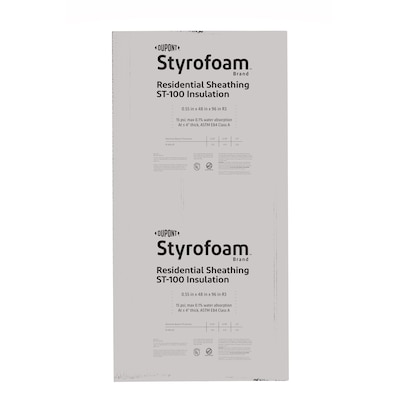
Lowe's Styrofoam Insulation: Types & Buying Guide
When you are looking to boost your home’s energy efficiency, sealing and insulating are among the highest-return investments you can make. Rigid foam boards—commonly referred to as styrofoam insulation—offer superior moisture resistance and higher R-values per inch compared to traditional fiberglass batts. If you are planning a trip to your local hardware store, navigating the selection of Lowe's styrofoam insulation requires understanding the different types, thicknesses, and R-values available so you can buy the exact material your project demands.

Understanding Rigid Foam Insulation at Lowe's
Rigid foam insulation generally falls into a few distinct material categories. While shoppers often use the word "styrofoam" as a catch-all term for any rigid plastic foam, true Styrofoam is a trademarked brand of extruded polystyrene (XPS) made by DuPont. At Lowe's, you will find several variations of rigid foam boards designed for specific applications, ranging from basement walls to exterior siding underlayment.
Expanded Polystyrene (EPS)
EPS is the most budget-friendly rigid foam option available at most home improvement centers. It is made of expanded plastic beads molded into lightweight blocks and sheets.
- Appearance: Typically white with a visible beaded texture.
- R-Value: Usually ranges around R-3.6 to R-4.0 per inch of thickness.
- Best Uses: Interior wall insulation, garage doors, roofing underlayment, and lightweight crafts or packaging.
- Moisture Resistance: Lower moisture resistance than XPS; it can absorb small amounts of water over time if exposed.
Extruded Polystyrene (XPS)
XPS boards are manufactured through an extrusion process that creates a closed-cell structure. This makes them much denser, stronger, and significantly more resistant to moisture than EPS boards.
- Appearance: Commonly blue, pink, or green, featuring a smooth, uniform surface.
- R-Value: Generally around R-5.0 per inch, providing superior thermal performance.
- Best Uses: Exterior walls, basement foundations, crawlspaces, and under concrete slabs.
- Moisture Resistance: Excellent. XPS acts as a vapor retarder and resists water absorption even in damp environments.
Polyisocyanurate (Polyiso)
Though not strictly styrofoam, Polyiso boards sit right alongside the foam panels in the Lowe's insulation aisle. They feature foil or glass-fiber facings.
- R-Value: The highest of the rigid boards, often hitting R-6.0 to R-6.5 per inch at moderate temperatures.
- Best Uses: Commercial roofing, cathedral ceilings, and thin exterior wall applications where maximum R-value in minimal space is required.
- Caveat: Its R-value can drop slightly in freezing winter temperatures.
Key Factors to Consider Before You Buy
Before loading foam boards into your cart at Lowe's, you need to evaluate a few core performance metrics to ensure code compliance and long-term durability.
R-Value Requirements
The R-value measures a material's resistance to heat flow. The higher the R-value, the greater the insulating power. Building codes vary widely depending on your geographic climate zone. For instance, northern climates require significantly higher R-values for exterior walls and basements than southern zones. Check your local building department guidelines before purchasing.

Most rigid boards at Lowe's are sold in thicknesses ranging from 1/2 inch to 2 inches. You can layer boards to achieve a higher total R-value, but always verify whether building codes require a specific vapor barrier installation between layers.
Board Thickness and Dimensions
Standard rigid foam boards at Lowe's are typically manufactured in 4x8 foot sheets. However, depending on your vehicle and project scale, finding 2x2 foot or 2x8 foot "project panels" with tongue-and-groove edges can make transport and installation much easier for DIYers working in tight spaces like crawlspaces or knee walls.
Common Applications for Lowe's Foam Boards
Rigid foam insulation is remarkably versatile. Here are the most common ways homeowners utilize these products:
- Basement Foundation Walls: XPS foam boards are glued or mechanically fastened to concrete basement walls to stop heat loss and prevent condensation issues.
- Exterior Sheathing: Wrapping a house in continuous rigid foam insulation eliminates thermal bridging through wood or steel studs, drastically lowering energy bills.
- Garage Door Insulation: Lightweight EPS kits or cut-to-fit XPS boards fit neatly into the recessed panels of metal garage doors to regulate garage temperatures.
- Shed and Outbuilding Upgrades: Thin foam boards provide an easy way to insulate a backyard workshop or storage shed without sacrificing interior floor space.
Tips for Buying and Working with Foam Insulation
Working with rigid foam insulation is straightforward, but a few pro tips will save you time and frustration during your project.
Transportation and Cutting
Standard 4x8 sheets will not fit in a standard sedan. If you do not own a truck or utility trailer, look for the smaller project-sized panels at Lowe's, or bring a utility knife to cut the large sheets down to size right in the parking lot. To cut rigid foam cleanly, score it deeply with a sharp utility knife along a straightedge, snap the board over a knee or table edge, and cut the remaining backing.
Adhesives and Tape
Never use standard solvent-based construction adhesives on expanded or extruded polystyrene; the chemicals will literally melt the foam. Look for adhesives explicitly labeled "foam-safe" or "foamboard adhesive." Similarly, seal your seams with house-wrap tape or specialized flashing tape recommended by the manufacturer to maintain an airtight thermal envelope.
Summary
Choosing the right styrofoam insulation at Lowe's comes down to balancing your budget, climate, and specific installation environment. Whether you opt for affordable EPS for a garage door or high-performance XPS for a basement remodel, rigid foam boards deliver reliable thermal resistance and moisture protection that will keep your home comfortable for years to come.