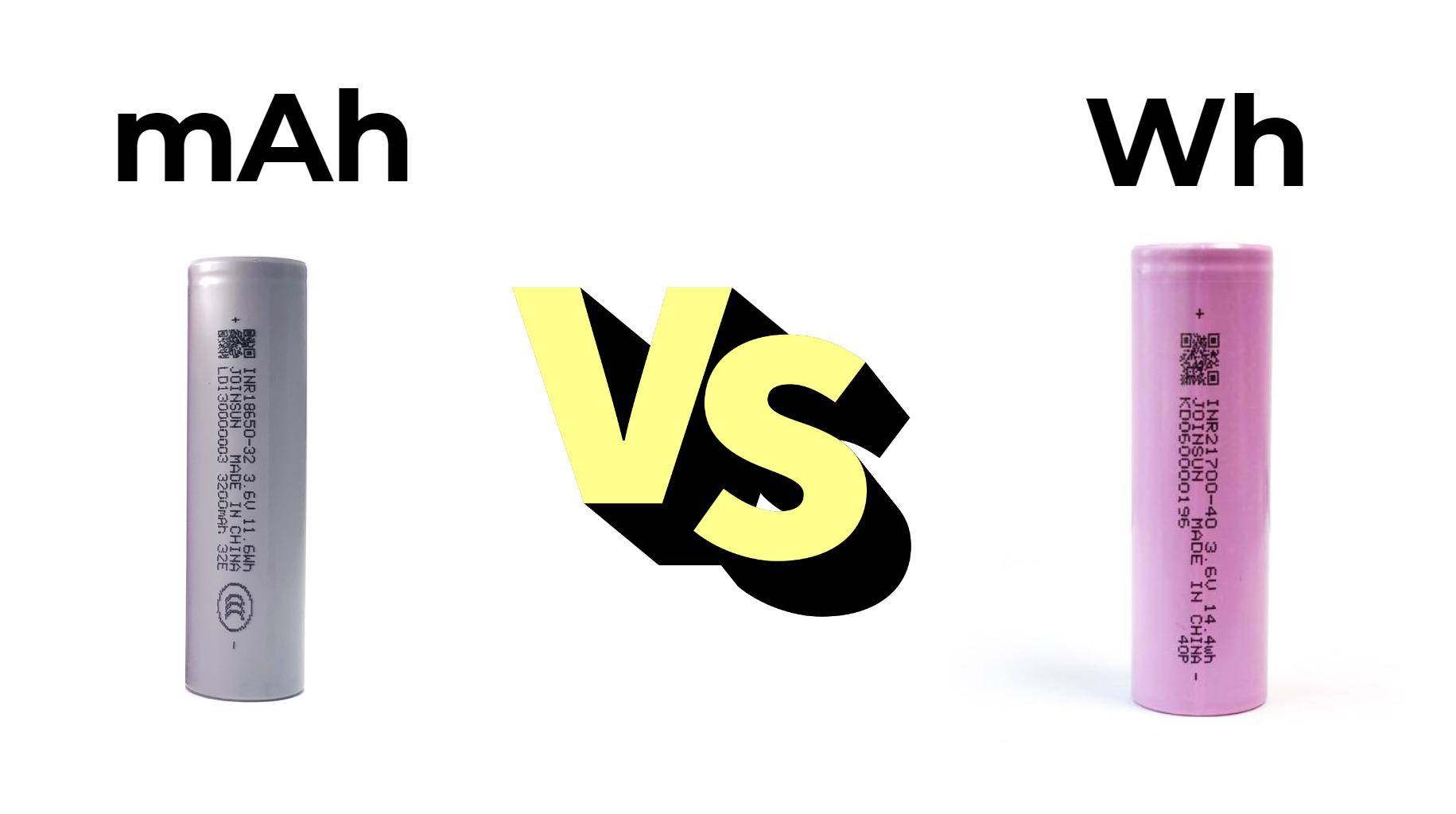
mAh vs MWh: What's the Difference?
When shopping for a new smartphone, a portable power bank, or even researching utility-scale solar energy systems, you will inevitably run into battery capacity specifications. Two of the most common measurements you will see are mAh and MWh. Understanding the debate of mAh vs MWh is essential for anyone looking to accurately compare how long different devices or energy systems will run.

While both metrics measure aspects of electricity, they quantify different properties. One measures electrical charge over time, while the other measures total energy output. Mixing them up can lead to poor purchasing decisions, especially when scaling from small consumer electronics to large-scale power stations.
Understanding mAh (Milliamp-Hours)
To understand mAh, we first need to break down the components. An ampere (amp) measures electrical current, which is the flow rate of electrons. A milliamp is simply one-thousandth of an amp. The hour represents time.
Therefore, a milliamp-hour (mAh) measures electrical charge. It tells you how many milliamps a battery can deliver for the span of one hour before it is depleted. For example:
- A battery rated at 3,000 mAh can theoretically deliver 3,000 milliamps (3 amps) for one hour.
- Alternatively, that same battery can deliver 300 milliamps for 10 hours.
Common Uses for mAh
You will almost exclusively see mAh used for small-scale consumer electronics. This includes smartphones, wireless earbuds, smartwatches, vaping devices, and small portable power banks. Because these devices operate at relatively standard, low voltages (usually around 3.7V for lithium-ion cell phones), manufacturers use mAh as a quick, shorthand way for consumers to compare battery sizes.
Understanding MWh (Megawatt-Hours)
Moving up the scale significantly, we encounter the megawatt-hour (MWh). Let's break this term down as well:
- Watt (W): A unit of electrical power, which combines current (amps) and voltage.
- Mega (M): A prefix meaning one million ($10^6$).
- Hour (h): The duration of time.
A megawatt-hour measures total energy. Specifically, it represents one megawatt (1,000,000 watts) of power being used or generated continuously for one hour. To put it into perspective, 1 MWh equals 1,000 kilowatt-hours (kWh).
Common Uses for MWh
You will never see MWh on a smartphone battery. Instead, this unit is reserved for heavy-duty applications. It is commonly used in:
- Grid-scale battery energy storage systems (BESS) for renewable energy grids.
- Industrial manufacturing facilities.
- Electric vehicle (EV) charging depots and large commercial operations.
- Total municipal or residential power consumption metrics.
The Core Differences Between mAh and MWh
To truly master the comparison of mAh vs MWh, you must look at how they relate to voltage. The fundamental flaw in using mAh alone is that it ignores voltage—the 'electrical pressure' pushing the current.
Think of electricity like water flowing through a pipe:

- Current (Amps/mA) is the volume of water flowing per second.
- Voltage (Volts) is the water pressure.
- Energy (Watts/Watt-hours) is the total capacity or work the water can perform.
A battery with a high mAh rating does not automatically hold more energy than a battery with a lower mAh rating if their voltages are vastly different. Energy is calculated using the following formula:
$$\text{Energy (Watt-hours)} = \text{Voltage} \times \text{Amp-hours}$$
Because mAh uses milliamps, we divide by 1,000 to get Amp-hours (Ah), or we use milliamp-hours to find milliamp-hours (mWh).
How to Convert mAh to mWh (and Wh)
If you want to compare two devices accurately—especially if they operate at different voltages—you need to convert your mAh measurements into watt-hours (Wh) or milliwatt-hours (mWh).
The Conversion Formula:
$$\text{mWh} = \text{mAh} \times \text{Voltage (V)}$$
Let’s look at a practical example:
- Device A: A smartphone battery rated at 4,000 mAh operating at 3.8 volts.
- $$\text{mWh} = 4,000 \text{ mAh} \times 3.8 \text{ V} = 15,200 \text{ mWh}$$ (or 15.2 Wh).
- Device B: A portable USB-C power bank outputting 5V, storing a battery pack with a nominal 3.7V internal cell structure. If it claims 10,000 mAh at the 3.7V cell level:
- $$\text{mWh} = 10,000 \text{ mAh} \times 3.7 \text{ V} = 37,000 \text{ mWh}$$ (or 37 Wh).
By converting to watt-hours, you can easily compare how much actual energy is stored, regardless of the internal voltage of the battery chemistry.
Bridging the Gap: Watt-Hours (Wh)
You might notice that while consumer tech uses mAh and industrial grids use MWh, everyday devices like laptops, power stations, and household solar generators usually rely on plain Watt-hours (Wh).
Watt-hours are the perfect middle ground. A power station rated at 500Wh can power a 50-watt appliance for roughly 10 hours. It bridges the gap because it accounts for both the electrical current (amps) and the electrical pressure (volts) without requiring the massive scale of megawatts or the tiny scale of milli-units.
Summary Checklist
- mAh (Milliamp-hours): Measures electrical charge. Best for small gadgets like phones and earbuds. Ignores voltage.
- Wh (Watt-hours): Measures total energy. Best for laptops, mid-size power stations, and household appliances. Accounts for voltage.
- MWh (Megawatt-hours): Measures massive energy blocks (1 million Wh). Best for power plants, electric grids, and industrial complexes.
Next time you are evaluating battery specifications, remember that mAh tells you how long a current flows at a specific baseline, but Wh or MWh tells you the true story of how much work the battery can actually accomplish.