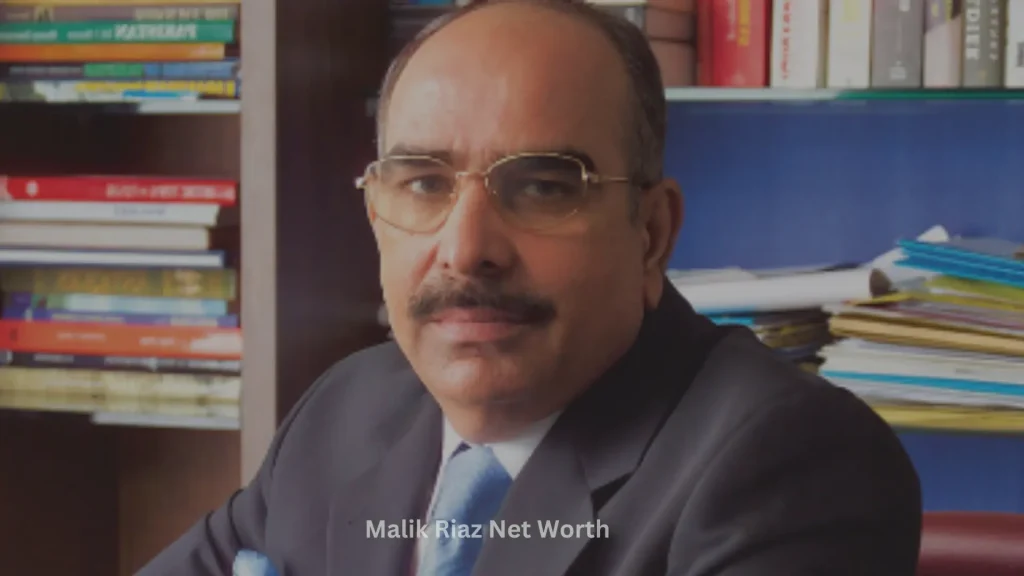
Malik Riaz’s Net Worth: A Billion-Dollar Perspective
When discussing real estate development in South Asia, few names evoke as much awe, controversy, and ambition as Malik Riaz. As the founder of Bahria Town, he transformed barren lands into sprawling, master-planned gated communities that redefined modern Pakistani living. Naturally, public curiosity frequently surrounds Malik Riaz’s net worth: a billion-dollar perspective unveiled through a lens of massive infrastructure projects, luxury developments, and fluctuating economic fortunes.

However, calculating the exact fortune of a privately held empire is notoriously difficult. Unlike publicly traded tech giants or corporate executives bound by strict disclosure laws, Riaz’s wealth is tied up in vast tracts of land, construction assets, and ongoing legal battles. This article breaks down his financial standing, the mechanics of his business model, and the realities behind his estimated net worth.
Understanding Malik Riaz’s Net Worth
Estimates regarding Malik Riaz’s net worth have varied wildly over the decades. At his peak, financial analysts and media reports often placed his personal wealth anywhere between $1 billion and $1.5 billion. However, calling him a traditional billionaire requires a closer examination of how real estate wealth operates in developing economies.
Unlike tech founders whose wealth sits in liquid stock options, Riaz’s fortune is asset-rich and cash-flow dependent. His primary vehicle, Bahria Town, operates on massive capital investments, pre-launch land acquisitions, and installment-based payment models. While the total asset valuation of Bahria Town projects in Lahore, Karachi, and Islamabad easily runs into billions of dollars, personal net worth is a different metric altogether.
The Bahria Town Empire
To understand Riaz's financial scale, one must look at the sheer magnitude of Bahria Town. Established in the late 1990s, the company revolutionized Pakistan's housing sector by introducing:
- Unprecedented security measures and gated communities.
- Reliable power grids, gas supplies, and water filtration plants.
- World-class leisure amenities, including golf courses, theme parks, and the iconic Grand Jamia Mosque.
- Commercial zones that attracted international fast-food chains and high-end retail brands.
By purchasing cheap, barren land on the outskirts of major metropolitan areas, converting it into prime real estate, and hyping its development value, Riaz generated massive profit margins. The land bank alone—spanning tens of thousands of acres across Pakistan—represents a staggering valuation.
From Humble Beginnings to Tycoon Status
Malik Riaz’s journey to immense wealth is a classic rags-to-riches narrative that adds to his public mystique. Born into a middle-class family in Rawalpindi, Riaz faced severe financial hardships in his youth, forcing him to drop out of higher education and take on odd jobs, including working as a clerk and a painting contractor.
His big break came through minor construction contracts with the military engineering services. These early connections and a sharp business acumen allowed him to scale up rapidly. By undercutting competitors and delivering projects faster, he built a reputation that eventually led to the founding of Bahria Town. His ability to navigate complex bureaucratic landscapes and leverage relationships became the cornerstone of his financial rise.
Controversies, Legal Hurdles, and Financial Impact
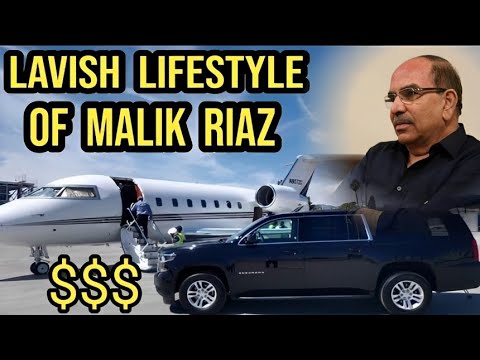
Video: How Malik Riaz Built a $2 Billion Empire: The Dark Secrets of Bahria Town’s Marketing! 🏙️💰
No discussion of Malik Riaz’s net worth is complete without acknowledging the legal and political controversies that have shadowed his career. Real estate development on this scale inevitably intersects with government policies, land acquisition disputes, and regulatory scrutiny.
Supreme Court Settlements
In recent years, Riaz and Bahria Town have faced significant financial pressure from legal settlements. Most notably, a 2019 Supreme Court settlement involving Bahria Town Karachi required the company to pay a staggering 225 billion Pakistani Rupees ($1.4 billion at the time) over a seven-year period to clear land acquisition titles.
While critics argued that this massive payout would cripple the tycoon's liquidity, Bahria Town managed to service the installments by aggressively ramping up commercial and residential sales. Nonetheless, such legal liabilities inevitably affect the liquid portion of Malik Riaz's net worth, shifting capital away from personal accumulation and toward debt servicing and legal compliance.
Philanthropy and Public Image
Beyond his business ventures, Riaz has cultivated a public persona centered on philanthropy. He frequently highlights his charitable endeavors, which include:
- Dastarkhwan Scheme: Providing free meals daily to thousands of underprivileged people across major Pakistani cities.
- Healthcare: Funding state-of-the-art hospitals that offer free or heavily subsidized medical treatments.
- Education: Establishing schools and scholarship programs for low-income students.
From a public relations standpoint, these initiatives help cement his legacy as a benefactor of the poor, contrasting sharply with criticisms regarding land grabs and environmental displacement leveled by activists.
Current Status and Outlook
Today, Malik Riaz has largely stepped back from day-to-day operations, handing over active leadership roles to his son, Ali Riaz. Despite aging, health challenges, and mounting economic headwinds in Pakistan—including high inflation, currency devaluation, and tightened credit markets—the Bahria Town brand remains a dominant force in local real estate.
While exact figures fluctuate due to currency depreciation and ongoing corporate restructuring, Malik Riaz remains one of the most financially influential figures in Pakistan’s history. His wealth is a testament to the lucrative nature of land development in developing nations, coupled with the immense risks inherent in operating at such a grand scale.
Conclusion
Evaluating Malik Riaz’s net worth requires looking beyond simple numbers on a spreadsheet. It is a complex story of aggressive entrepreneurship, massive land assets, socio-economic transformation, and legal resilience. Whether viewed as a visionary nation-builder or a polarizing tycoon, his impact on Pakistan's urban landscape and his standing as a multi-millionaire, if not billionaire, remains firmly cemented.