Mark 8 ESV: Feeding the Multitude and Confession
The eighth chapter of the second Gospel marks a crucial turning point in the earthly ministry of Jesus Christ. When reading Mark 8 ESV, you encounter a narrative transition moving away from extensive public miracles and toward intense discipleship training. Jesus shifts His focus toward Jerusalem, preparing His closest followers for the suffering and resurrection that await Him.

Whether you are studying for personal devotion, leading a small group, or preparing a sermon, understanding the literary and theological flow of this chapter brings remarkable clarity to the teachings of Jesus.
Key Events and Structure in Mark 8 ESV
Mark 8 can be divided into four distinct sections. Each segment builds upon the previous one, highlighting the gradual spiritual awakening of the disciples contrasted with the stubborn unbelief of the religious authorities.
1. The Feeding of the Four Thousand (Verses 1-13)
The chapter opens with a massive crowd gathered to hear Jesus teach. Just as He did earlier in the Gospel with the five thousand, Jesus looks upon the people with deep compassion. They have been with Him for three days and have nothing to eat.
- The Problem: The disciples wonder aloud how anyone could possibly feed such a large crowd in a desolate place (v. 4).
- The Provision: Jesus takes seven loaves and a few small fish, gives thanks, breaks them, and distributes the food. Everyone eats and is satisfied.
- The Leftovers: Seven large baskets of broken pieces are collected, mirroring the twelve baskets from the feeding of the five thousand.
Immediately following this miracle, the Pharisees demand a sign from heaven to test Jesus. Jesus sighs deeply in His spirit and refuses to give them a sign, warning the crowd against the corrupting influence of the Pharisees and Herod.
2. The Yeast of the Pharisees and Blindness (Verses 14-21)
As Jesus and His disciples cross the Sea of Galilee, the disciples realize they forgot to bring bread, except for one single loaf in the boat. Jesus seizes this moment to warn them, saying, "Watch out; beware of the leaven of the Pharisees and the leaven of Herod" (v. 15).
The disciples completely misunderstand Him, thinking He is scolding them for failing to pack lunch. Jesus responds with a series of probing questions:
- "Do you not yet perceive or understand?"
- "Having eyes do you not see, and having ears do you not hear?"
- "Do you not remember?"
He reminds them of how many baskets of leftovers they gathered after feeding both the five thousand and the four thousand. The underlying issue is not a shortage of bread, but their dull spiritual perception.
3. The Healing of the Blind Man at Bethsaida (Verses 22-26)
Unique to the Gospel of Mark is the healing of a blind man at Bethsaida, which serves as a powerful physical parable for the spiritual condition of the disciples.
Jesus leads the blind man out of the village, spits on his eyes, and lays His hands on him. He asks the man if he sees anything. The man looks up and says, "I see men, but they look like trees, walking" (v. 24).
Jesus lays His hands on the man's eyes a second time, and his sight is fully restored, seeing everything clearly. This two-stage healing mirrors the spiritual journey of Peter and the other disciples: their eyes are opening to who Jesus is, but their vision is still blurry and incomplete.

4. Peter's Confession and the First Prediction of Suffering (Verses 27-38)
The climax of Mark 8 occurs in the region of Caesarea Philippi. Jesus asks His disciples a direct, life-defining question: "Who do people say that I am?" (v. 27).
The disciples report various opinions—John the Baptist, Elijah, or one of the prophets. Then Jesus makes it personal: "But who do you say that I am?"
Simon Peter steps forward and declares, "You are the Christ" (v. 29). While Peter gets the identity of Jesus right, he completely misunderstands the mission.
Immediately after this confession, Jesus begins to teach them that the Son of Man must suffer many things, be rejected by the elders, chief priests, and scribes, be killed, and after three days rise again. Peter takes Jesus aside and begins to rebuke Him.
Jesus turns and delivers one of the most severe rebukes in the New Testament to Peter: "Get behind me, Satan! For you are not setting your mind on the things of God, but on the things of man" (v. 33).
Key Theological Themes in Mark 8
Studying Mark 8 through the lens of the English Standard Version reveals several timeless spiritual truths that apply directly to modern Christian living.
The Gradual Nature of Discipleship
Spiritual sight often comes in stages. Just like the blind man at Bethsaida, believers rarely understand the fullness of the Gospel all at once. Growth requires patience, ongoing exposure to Christ, and a willingness to have Jesus correct our faulty assumptions.
The disciples spent every day with Jesus, saw incredible miracles, yet still struggled to grasp His ultimate purpose. This should encourage modern believers who find themselves wrestling with doubt, confusion, or slow spiritual progress.
The Cost of Following Jesus
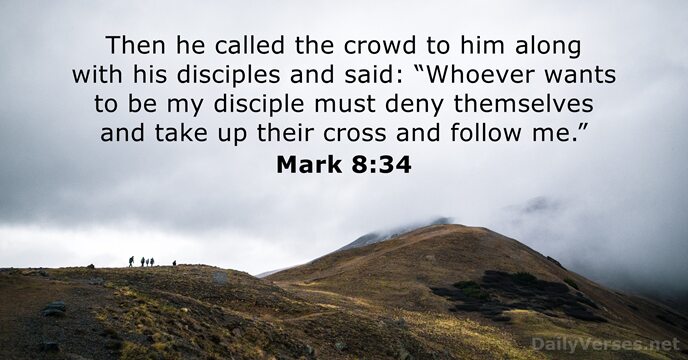
Jesus concludes the chapter by calling the crowd and His disciples together to outline the true cost of discipleship. His words are as challenging today as they were two millennia ago:
"If anyone would come after me, let him deny himself and take up his cross and follow me. For whoever would save his life will lose it, but whoever loses his life for my sake and the gospel's will save it." (Mark 8:34-35, ESV)
True discipleship is not about self-fulfillment or worldly prosperity. It involves radical self-denial, placing ultimate allegiance in Christ, and unashamedly identifying with Him in a culture that often opposes biblical truth.
Conclusion
Examining Mark 8 ESV invites every reader to pause and reflect on the central question of the Christian faith: Who do you say that Jesus is? It challenges us to move past superficial religious observation, embrace the necessity of the cross, and surrender our lives fully to the Savior who gave His life for us.