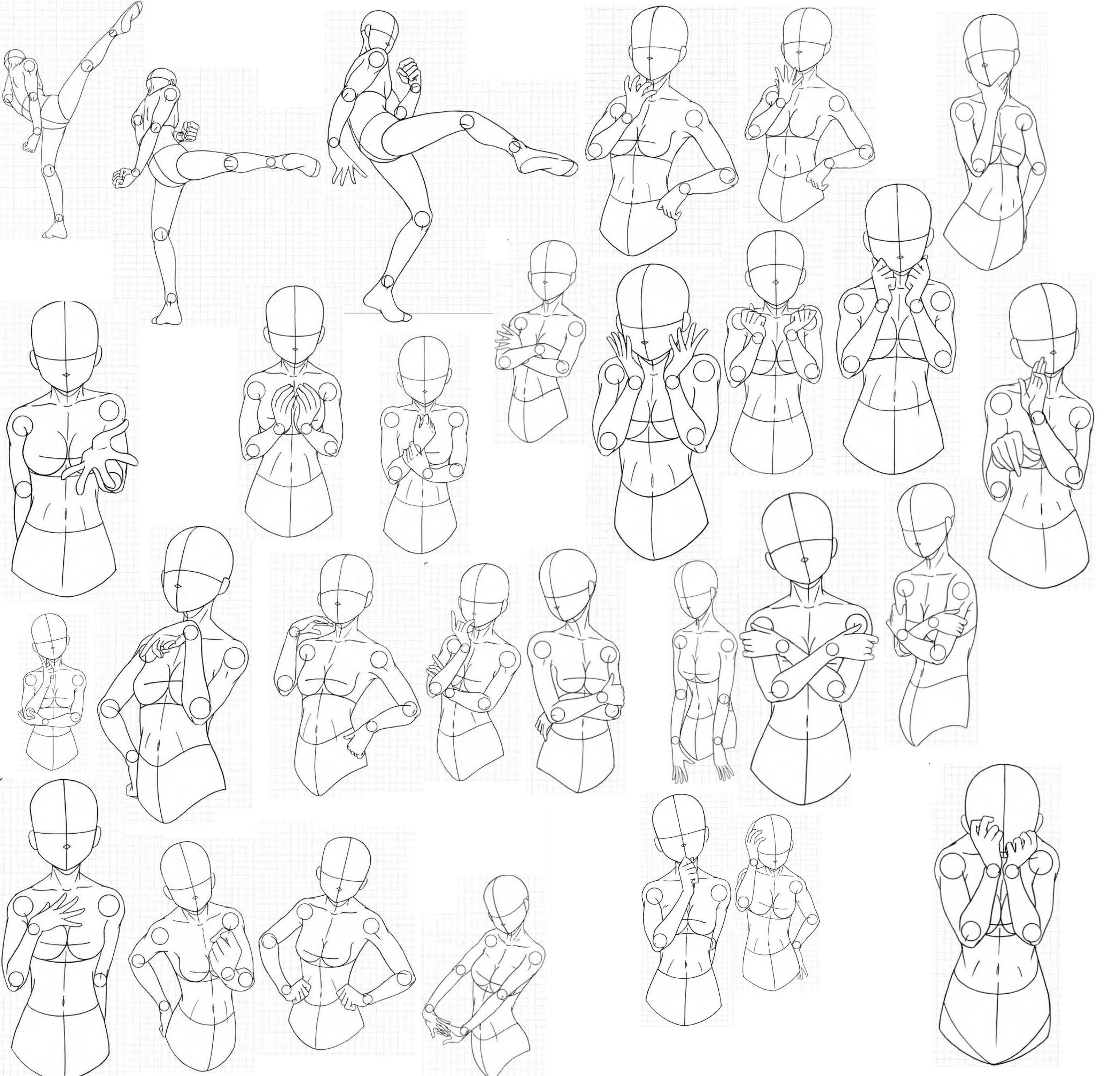
Master Anime Drawing Pose Reference: A Guide
Master Anime Drawing Pose Reference: A Guide

Every digital illustrator and manga artist hits a creative wall when trying to translate a complex mental image onto a blank canvas. Flat characters, stiff limbs, and broken proportions often ruin what started as a great concept. The secret to overcoming this hurdle isn't raw talent alone; it is knowing how to find and apply a reliable anime drawing pose reference. By studying real human anatomy, stylized 3D models, and professional manga panels, you can instantly elevate your artwork from rigid to dynamic.
In this guide, you will learn how to source the best reference materials, break down complex body mechanics, and translate static images into expressive, action-packed anime illustrations.
Where to Find the Best Anime Drawing Pose Reference
Finding the right reference material sets the foundation for your artwork. Depending on your skill level and the specific scene you want to draw, several tools and platforms can provide the exact look you need.
3D Modeling Software and Apps
For custom angles and dramatic lighting, 3D character apps are invaluable. Software like Clip Studio Paint, Magic Poser, and Easy Poser let you manipulate digital manikins in a 3D space. You can adjust limb lengths, twist torsos, and even change the virtual camera angle to see how perspective affects the human form.
- Clip Studio Paint: Comes with built-in 3D models that you can pose and dress with basic clothing shapes.
- Blender: Excellent for advanced artists who want to create or import custom rigs for specific character designs.
- Mobile Apps: Perfect for quick sketching sessions on the go when you need a fast layout of a hand or foot angle.
Real Photography and Stock Sites
Anime style relies heavily on real-world physics, even when exaggerated. Using real human photography helps you understand how weight shifts, how muscles flex under skin, and how clothing folds over joints.
- Websites like Grafit Studio, Adorkastock, and Pinterest offer curated pose packs tailored specifically for artists.
- Action figures (like Figma or S.H.Figuarts) make incredible physical references because they maintain fixed poses under bright desk lamps, helping you study cast shadows.
How to Break Down and Use a Pose Reference
Looking at a reference is only half the battle. Copying a reference line-for-line often leads to stiff results because you are drawing what you think you see rather than understanding the underlying structure. Follow this step-by-step workflow to master any reference image.

- Identify the Line of Action: Find the primary curve that defines the character's movement. Is it a sweeping C-curve for a relaxed stance, or a tense S-curve for a high-speed combat strike?
- Block Out Basic Shapes: Ignore details like hair, eyes, and clothing. Use simple circles, cylinders, and boxes to map out the head, ribcage, pelvis, and limbs.
- Check Proportions: Anime proportions often range from chibi (2 heads tall) to stylized heroes (8 heads tall). Ensure your block-out matches your chosen style guide.
- Add Dynamism and Exaggeration: Once the structural foundation is secure, push the angles further. Anime art thrives on dynamic foreshortening and energetic silhouettes.
Common Mistakes to Avoid
When working with reference materials, beginner artists frequently fall into a few common traps that stunt their progress.
Tracing Blindly
Tracing a photo directly can help you learn muscle placement, but it often leaves you unable to draw that same pose from memory or a different angle later. Use reference images as a guide for construction rather than a strict stencil to trace over.
Ignoring Weight Distribution
A common rookie mistake is drawing a character in a running or standing pose where their center of gravity falls entirely outside their feet. Unless the character is mid-air, ensure one foot directly supports the body's weight to keep the pose grounded and believable.
Flat Silhouettes
If your character looks like a cardboard cutout, your pose lacks depth. Use overlapping lines—such as an arm passing in front of the torso—to create a clear sense of three-dimensional space.
Conclusion
Mastering the use of an anime drawing pose reference takes time, patience, and deliberate practice. By utilizing 3D tools, studying real-life anatomy, and focusing on the core line of action before adding details, you will watch your character art transform. Start small, build a library of your favorite reference sheets, and don't be afraid to experiment with extreme angles to give your artwork maximum impact.