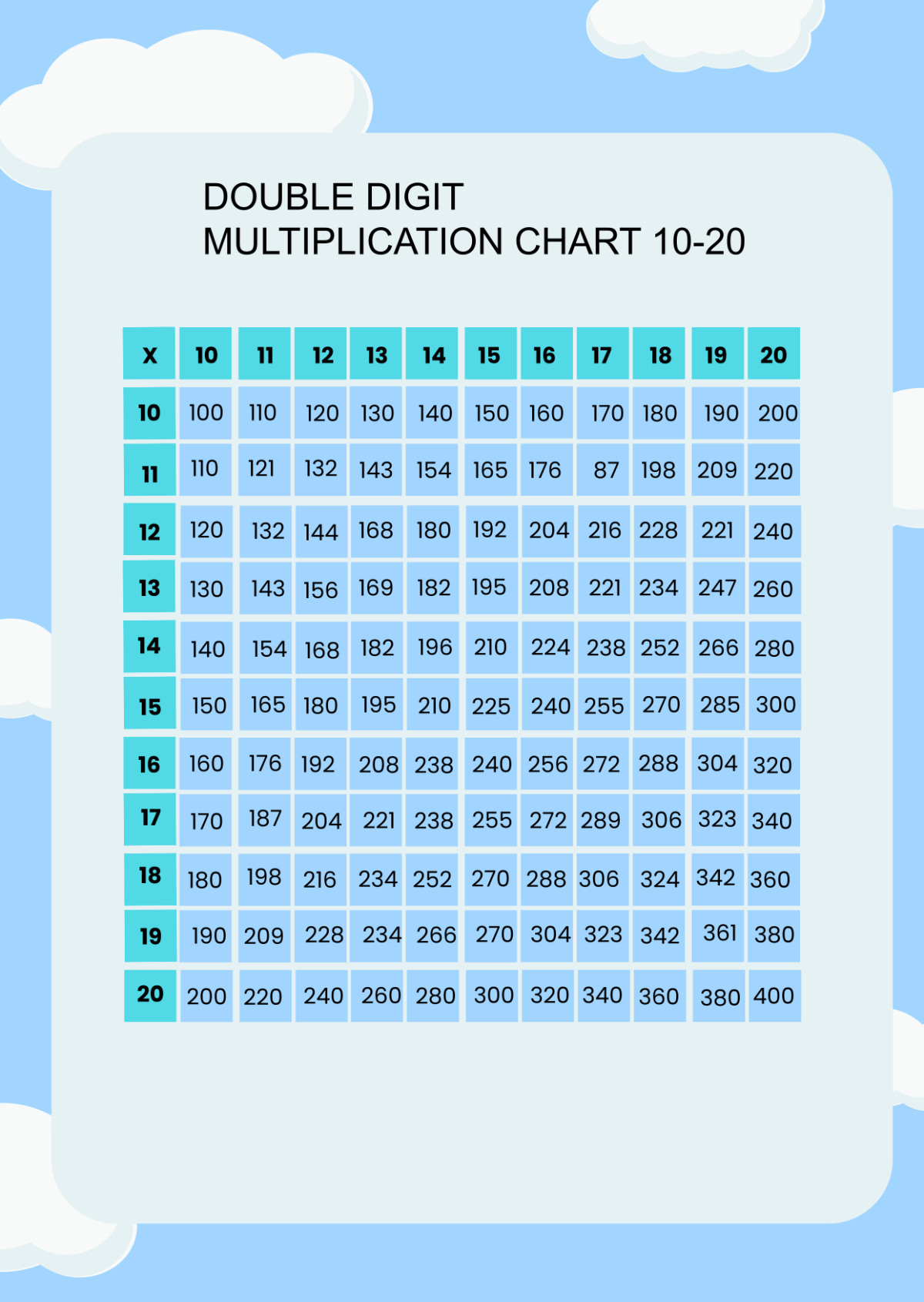
Master Multiplication Skills Up to 200 Fast
Standard multiplication tables usually stop at 12x12, leaving a noticeable gap when students encounter larger numbers. Pushing past this traditional boundary to master multiplication skills up to 200 opens the door to true mathematical fluency. Whether you are a student preparing for advanced math, a parent looking to support your child, or an adult brushing up on everyday mental math, conquering this range changes how you interact with numbers.

Expanding your mathematical toolkit beyond 144 requires moving away from rote memorization and toward structural understanding. By combining foundational knowledge with clever mental shortcuts, you can tackle products up to 200 quickly and accurately.
Why Expand Beyond the Standard Times Table?
Most elementary school curriculums focus heavily on products up to 144. However, everyday problem-solving and middle school mathematics frequently demand quick calculations with slightly larger numbers. For example, calculating areas, scaling recipes, or working with percentages often involves numbers between 11 and 20.
When you master multiplication skills up to 200, you build cognitive flexibility. Instead of relying on a calculator or struggling through long multiplication on paper, you develop a sense of numerical relationships. This confidence reduces math anxiety and accelerates your ability to solve complex multi-step problems.
Foundational Building Blocks
Before jumping into higher products, ensure your baseline knowledge is rock solid. You cannot build a sturdy roof without solid walls.
- Fluency with 1 to 10: Instant recall of basic single-digit multiplication facts is non-negotiable.
- Powers of 10: Understanding how multiplying by 10 affects place value (e.g., 12 × 10 = 120) anchors your calculations in the higher range.
- Skip Counting: Familiarity with counting by 12s, 13s, and 15s provides a safety net when you need to verify a mental calculation.
Core Strategies to Master Multiplication Skills Up to 200
Instead of memorizing 200 individual facts, use mathematical patterns and structural breakdowns to simplify the process. Here are the most effective techniques for this numerical range.
1. The Distributive Property (Breaking Numbers Apart)
The distributive property is your most powerful tool for mental math. It allows you to split a difficult factor into two more manageable parts.
Suppose you need to calculate 14 × 12. You can break 12 into 10 and 2:
- Multiply 14 by the easy number: 14 × 10 = 140
- Multiply 14 by the remaining part: 14 × 2 = 28
- Add the two partial products together: 140 + 28 = 168
This technique turns an intimidating calculation into two simple steps you can easily perform in your head.
2. Spotting Patterns with the Teens

Multiplying numbers between 11 and 19 follows predictable patterns. A famous mental math trick for multiplying two numbers between 11 and 19 works like this:
Take 13 × 14:
- Take the first number and add the units digit of the second number: 13 + 4 = 17.
- Multiply that result by 10: 17 × 10 = 170.
- Multiply the two units digits together: 3 × 4 = 12.
- Add them together: 170 + 12 = 182.
This method works reliably for any combination of numbers from 11 through 19, keeping your final products safely under 200.
3. Doubling and Halving
If you encounter an even number paired with a tricky multiplier, use the doubling and halving strategy. By cutting one number in half and doubling the other, the product remains exactly the same.
Consider 16 × 11:
- Halve the 16 to get 8.
- Double the 11 to get 22.
- Multiply the new, simpler numbers: 8 × 22. Wait, let's look at an even better example: 15 × 12.
- Halve the 12 to get 6.
- Double the 15 to get 30.
- Multiply 30 × 6 = 180.
Suddenly, a tough double-digit problem becomes a basic single-digit multiplication fact with a zero attached.
Practical Practice Routines
Knowing the strategies is only half the battle; consistent, deliberate practice turns strategies into automatic reflexes. Incorporate these routines into your daily schedule:
- Flashcard Customization: Make custom flashcards focusing exclusively on factors between 11 and 15 paired with digits 2 through 9 (e.g., 13 × 7, 14 × 6, 12 × 9).
- Real-World Application: Look for opportunities during grocery shopping, cooking, or budgeting to calculate areas or totals mentally instead of reaching for a smartphone.
- Timed Challenges: Give yourself two minutes to correctly answer ten mixed problems in the 100 to 200 product range. Track your improvement week over week.
Common Pitfalls to Avoid
As you work toward higher computational fluency, watch out for these common stumbling blocks:
- Relying Solely on Memorization: Trying to brute-force memorize every product up to 200 leads to cognitive overload. Lean on the distributive property instead.
- Skipping Foundation Checks: If you hesitate on 7 × 8 or 9 × 6, pause and reinforce those basics before trying to tackle 17 × 8.
- Neglecting Estimation: Always estimate your answer first (e.g., knowing that 13 × 14 must be close to 13 × 10 = 130 and less than 200) to catch careless errors.
Conclusion
Pushing your mathematical boundaries beyond the standard multiplication chart is a rewarding milestone. By utilizing strategies like the distributive property, the teen number trick, and doubling-and-halving, you can easily master multiplication skills up to 200. Consistent, short bursts of focused practice will transform these techniques into second nature, giving you a lasting boost in everyday math confidence.