Master Wordplay Tactics for Fast Crossword Solving
Mastering the Mind Games Within the Grid
Staring at a half-finished crossword puzzle can feel like trying to decode an ancient language, especially when you hit a wall of cryptic clues and multi-layered puns. Standard vocabulary only gets you so far; to conquer challenging grids without burning through hours of your day, you need to understand how constructors think. Employing specific wordplay tactics for solving complex crossword puzzles fast and easy can transform a frustrating exercise into a smooth, rewarding routine.
Crossword constructors use a distinct set of linguistic tools to misdirect solvers. Once you learn to recognize these patterns, the grid opens up dramatically. Here is a breakdown of the most effective strategies used by tournament solvers to speed through difficult puzzles.
Top Wordplay Tactics for Solving Complex Crossword Puzzles Fast and Easy
When straightforward definitions fail, constructors rely on wordplay. Recognizing the type of clue you are dealing with is the first step toward finding the correct answer in seconds rather than minutes.
1. Spotting Question Marks and Exclamation Points
Punctuation is your biggest tell in modern crosswords. If a clue ends with a question mark or an exclamation point, it is a flashing neon sign indicating that the clue is not what it seems. It usually signals a pun, a play on words, or a whimsical definition.
- Standard clue: "Feline sound" (MEOW)
- Trick clue: "Feline sound?" (PURR or HISS, but often something punny like PURRSUASION or a pop culture reference)
When you see that punctuation mark, immediately throw away the literal interpretation and start brainstorming homophones, double meanings, and synonyms used in unusual contexts.
2. Decodable Indicators in Cryptic Clues
If you are tackling British-style cryptic crosswords, the clue itself is a mini-puzzle containing two parts: a definition and wordplay. Learning the indicator words that signal specific types of wordplay is essential for speed.
- Anagram indicators: Words like "broken," "shaken," "mad," "new," or "mixed" tell you that the letters of a nearby word must be rearranged.
- Hidden word indicators: Phrases like "found in," "some of," or "part of" mean the answer is spelled out consecutively inside the clue text itself.
- Reversal indicators: Words pointing backward or upward, such as "returned," "revolting," or "westbound" (in down clues), indicate you need to spell an answer backwards.
Mastering these indicators allows you to instantly dissect a clue into its functional parts rather than guessing blindly.
3. Exploiting Homophones and Sound-Alike Clues
Constructors love auditory deception. A clue that sounds like everyday speech or features a spelling pun almost always points to a homophone. Look for phrases like "heard," "reportedly," "say," or "audibly" within the clue.
Video: How to Crack Cryptic Crosswords: A simple tactic for beginners to try! Anagram clue spotting

For example, a clue reading "Monarch's heavy metal?" might point to CROWN ZINC or play on the sound of a ruler's domain. If a normal definition yields nothing, say the clue out loud. Often, your ear will catch the pun before your eyes register the spelling.
4. Mastering Fill-in-the-Blank and Suffix Patterns
Fill-in-the-blank clues are the easiest entry points into a complex puzzle, but they also rely heavily on grammar and word structure. Pay close attention to verb tenses and noun plurals in the clue—the answer must match the grammatical form precisely.
Furthermore, keep a mental catalog of common crossword suffixes and prefixes:
- Comparative endings (-ER, -EST)
- Past tense markers (-ED)
- Adverbial suffixes (-LY)
- Plural markers (-S, -ES)
If a clue asks for "More ancient," you immediately know the answer ends in -ER and matches the length required by the intersecting squares.
Strategic Grid Habits to Speed Up Your Solving
Beyond analyzing individual clues, how you approach the grid matters. Speed solving is as much about process management as it is about vocabulary.
Always Scan for Low-Hanging Fruit First
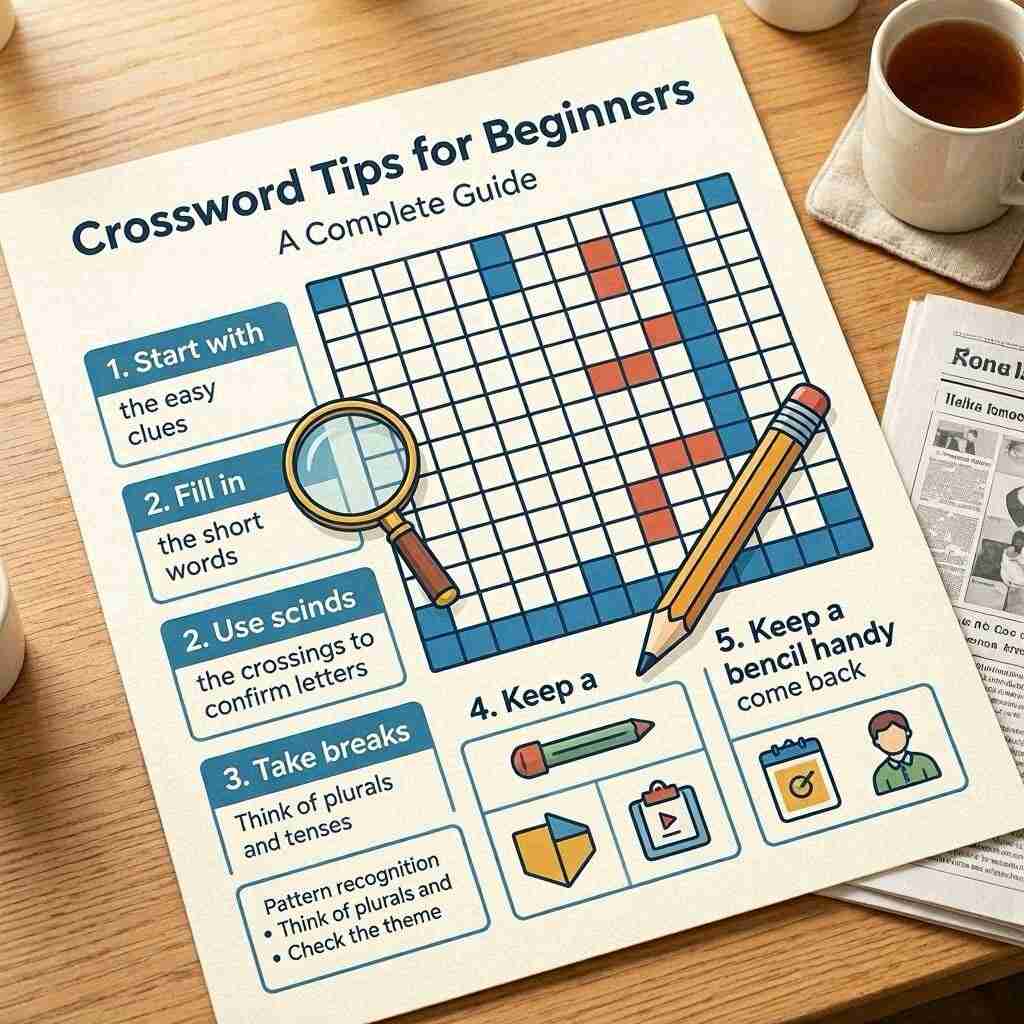
Never get bogged down on clue number one across. The fastest solvers skim the entire list of clues—both across and down—to pick off the absolute gimmes. Fill in abbreviations, partial phrases, and fill-in-the-blank clues first. This builds a skeleton of intersecting letters that gives you the cross-checks needed for the tougher, wordplay-heavy entries.
Trust the Cross-Checks (Intersections)
When you are stuck on a clever wordplay clue, let the intersecting letters do the heavy lifting. Often, filling in three or four crossing letters narrows down a ten-letter wordplay puzzle to a single obvious option, saving you from overthinking the constructor's trap.
Conclusion
Solving complex crosswords quickly is not about having a genius-level vocabulary; it is about learning to think like the constructor. By keeping an eye out for punctuation traps, mastering cryptic indicators, and leveraging your cross-checks efficiently, you will drastically cut down your solving time. Apply these wordplay tactics to your next puzzle, and watch how fast those blank squares fill up.