Mastering BrainPOP Kinetic Energy: A Guide
When middle and high school students first encounter physics, abstract concepts like joules, mass, and velocity can feel overwhelming. Fortunately, online educational platforms have transformed how these topics are taught. If you are a teacher or parent looking for effective digital learning tools, the BrainPOP kinetic energy resources offer an exceptional way to introduce students to the fundamental laws of motion and energy transfer.

Understanding Kinetic Energy Through BrainPOP
At its core, kinetic energy is the energy of motion. Any object that is moving—whether it is a rolling bowling ball, a flying bird, or a speeding car—possesses this type of energy. The BrainPOP kinetic energy movie breaks this big idea down into digestible, highly visual segments featuring the platform's iconic animated characters, Tim and Moby.
The brilliance of the BrainPOP approach lies in its narrative storytelling. Instead of forcing students to memorize dry textbook formulas immediately, the video places kinetic energy into relatable, real-world contexts. Students watch as Tim and Moby demonstrate how speed and mass directly influence the amount of energy a moving object carries, laying a solid conceptual foundation before any math is introduced.
Key Features of the BrainPOP Kinetic Energy Unit
The kinetic energy topic page is much more than just a short animated video. It is a comprehensive mini-unit designed to reinforce learning through multiple modalities. Here is what educators and students typically find inside:
- The Animated Movie: A 4-to-5-minute core video explaining the definition, examples, and variables of kinetic energy.
- Interactive Quizzes: Graded and review quizzes that test comprehension immediately after watching the video.
- Graphic Organizers: Printable or digital organizers to help students map out relationships between mass, speed, and energy.
- Creative Coding and Make-a-Map: Interactive tools that allow students to build their own concept maps or code a project demonstrating energy transfer.
How Speed and Mass Affect Kinetic Energy
One of the most valuable aspects of the BrainPOP lesson is how clearly it illustrates the formula for kinetic energy ($KE = \frac{1}{2}mv^2$) without intimidating the learner. Through visual scaling, the video demonstrates two crucial rules of physics:
The Linear Impact of Mass
If you double the mass of a moving object while keeping its speed constant, its kinetic energy doubles. BrainPOP illustrates this by comparing objects of different sizes moving at the same velocity, making the direct proportional relationship intuitive for visual learners.
Video: Brainpop Kinetic Energy

The Exponential Impact of Speed
Speed is where things get really interesting—and dangerous in the real world. Because velocity is squared in the kinetic energy equation, doubling an object's speed quadruples its kinetic energy. The animated examples on BrainPOP make this non-linear relationship easy to grasp, helping students understand why high-speed car crashes result in exponentially more damage than low-speed bumps.
Practical Ways to Use BrainPOP in the Classroom
Teachers can integrate the kinetic energy topic into their lesson plans in several impactful ways. Because the platform supports differentiated learning, it adapts well to various teaching styles:
- The Flipped Classroom: Assign the BrainPOP video as homework the night before a hands-on lab. Students come to class with baseline vocabulary already established.
- Station Rotation: Use the featured movie as one station in a physics lab rotation, followed by a hands-on activity where students measure the speed of rolling toy cars.
- Formative Assessment: Use the "Challenge" feature—a gamified set of questions—at the end of a class period to check for understanding before moving on to potential energy.
Connecting Kinetic and Potential Energy
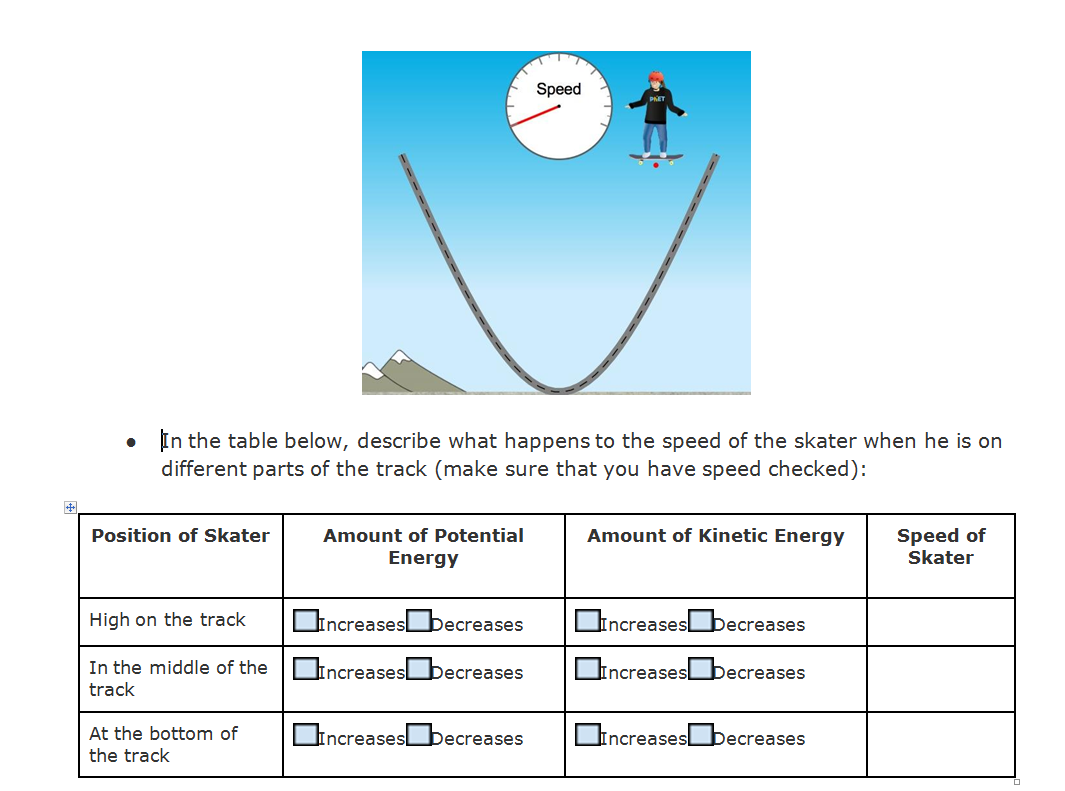
Kinetic energy rarely exists in a vacuum. To fully understand it, students must also understand potential energy (stored energy). BrainPOP excels at showing the continuous conversion between these two states. For instance, when a roller coaster climbs to the top of a peak, its kinetic energy decreases while its potential energy increases. As it plunges down the slope, that potential energy converts rapidly back into kinetic energy.
By pairing the kinetic energy lesson with BrainPOP's complementary potential energy topic, students get a complete picture of mechanical energy conservation.
Conclusion
Teaching physics to young learners requires bridging the gap between abstract math and tangible reality. The BrainPOP kinetic energy resources successfully bridge that gap by combining humor, animation, and interactive testing. Whether used in a structured classroom or for independent homeschool study, these tools ensure that students not only memorize scientific definitions but genuinely understand how the physical world works.