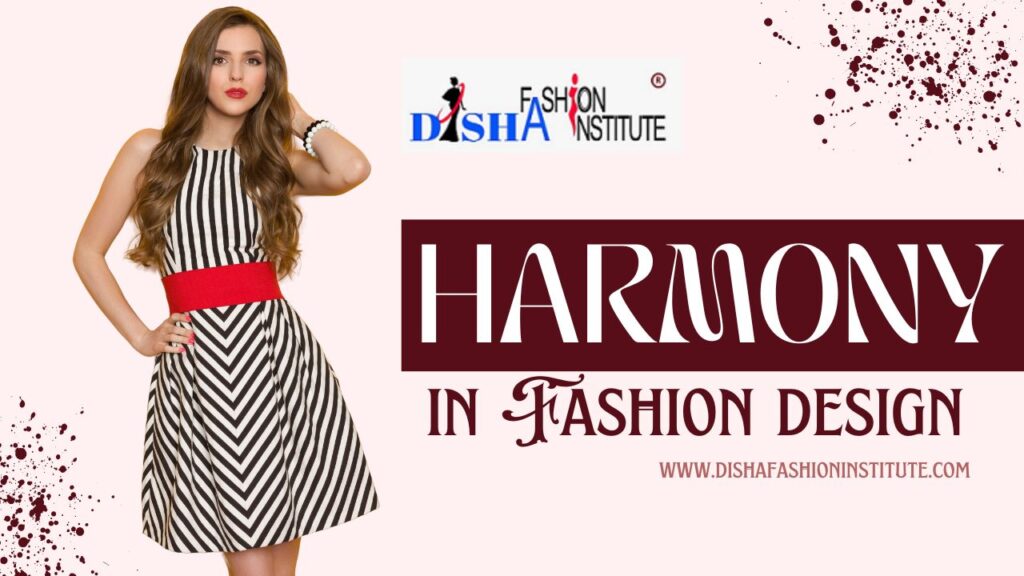
Mastering Harmony in Fashion Design
When you look at a truly breathtaking runway collection or a perfectly curated everyday outfit, it often feels effortless. However, behind that visual ease lies a deliberate application of design principles. At the heart of this aesthetic success is harmony in fashion design. Harmony occurs when all the separate elements of a garment—such as color, texture, line, and silhouette—come together to create a unified, cohesive whole.

Achieving this balance is what separates amateur garment construction from professional, high-end design. Whether you are sketching your first collection or trying to understand why a specific outfit works, mastering this concept is essential.
The Core Elements That Create Visual Balance
To understand how to build a cohesive garment, you must first look at the individual building blocks of design. Every piece of clothing utilizes lines, shapes, colors, and textures. When these elements complement rather than compete with one another, harmony naturally follows.
1. Line and Silhouette
Lines dictate the path of the eye across a garment. Structural seams, darts, pleats, and prints all introduce lines that define the silhouette. To achieve harmony:
- Match the mood: Soft, curved lines communicate fluidity and romance, while sharp, straight lines convey structure and modernity. Mixing them without intention creates visual confusion.
- Support the body: The silhouette should honor the proportions of the human form, ensuring that the garment and the wearer work as a single visual unit.
2. Texture and Fabric Weight
Fabric choice dictates how a garment moves and catches the light. Putting a heavy, rigid wool next to a delicate, sheer silk can create a striking contrast, but it can also disrupt harmony if the transition is too jarring.
Successful designers balance textures by pairing similar weights or intentionally contrasting matte and shiny surfaces to create depth without overwhelming the eye.
The Role of Color Theory in Fashion Harmony
Video: The Principles of Fashion Design

Color is often the first thing people notice about an outfit, making it a powerful tool for achieving harmony in fashion design. A chaotic mix of neon colors can feel jarring, while a thoughtfully chosen palette brings instant calm and sophistication.
Designers rely on classic color harmonies derived from the color wheel:
- Monochromatic: Using different shades, tints, and tones of a single color. This creates an inherently harmonious, elongating effect.
- Analogous: Selecting colors that sit next to each other on the color wheel (such as blue, blue-green, and green) for a serene, natural flow.
- Complementary: Pairing opposite colors (like orange and blue) for high contrast. To maintain harmony here, designers often let one color dominate while using the other as a subtle accent.
Proportion and Scale: The Geometry of Style
Even if your colors and textures align, a garment can still feel off if the proportions are ignored. Proportion refers to the size relationship between different parts of a garment—such as the length of a bodice compared to the length of a skirt, or the size of a pocket relative to the overall surface area.
The classic "rule of thirds" often guides this process. Instead of splitting an outfit directly down the middle (a 1-to-1 ratio, which can cut the body awkwardly), dividing proportions into a 1-to-2 or 1-to-3 ratio creates a much more visually pleasing and harmonious silhouette.
Balancing Unity and Variety
A common trap in apparel creation is going too far in one direction. If a garment is entirely uniform, it becomes boring. If it has too much variety, it becomes chaotic.
True harmony requires a delicate dance between unity and variety:
- Establish a focal point: Draw the viewer's eye to one primary feature, such as an asymmetrical neckline, a bold print, or intricate embroidery.
- Support with repetition: Use recurring elements—like matching buttons, repeating stitching colors, or a subtle motif—to tie the look together so the focal point doesn't feel disconnected.
- Edit ruthlessly: Coco Chanel famously advised taking off one accessory before leaving the house. In design, editing out unnecessary seams, pockets, or trims helps restore clean, harmonious lines.
Conclusion
Harmony in fashion design is not about strict adherence to rigid rules; it is about intentional decision-making. By thoughtfully balancing color, texture, line, and proportion, you can transform random fabrics and sketches into a cohesive story. Whether you are designing for the runway or building a personal capsule wardrobe, striving for harmony ensures that your creations will always look polished, purposeful, and timeless.