Mastering Leftover Colorado Tags Made Easy
Drawing a blank in the primary Colorado big-game draw does not mean your hunting season is over. Every year, thousands of hunters salvage their fall plans or double up on meat hunts by tapping into the surplus license pool. With the right strategy, mastering leftover Colorado tags made easy is entirely within reach, turning an otherwise empty calendar into a successful season in the Rocky Mountains.

Colorado Parks and Wildlife (CPW) manages one of the largest big-game systems in North America. While high-demand units receive thousands of applications, dozens of quality hunt codes remain unclaimed or get surrendered after the primary and secondary draws. Knowing when, where, and how to snag these licenses gives you a massive advantage over hunters who simply pack their gear away until next spring.
Understanding the Colorado Leftover System
Before jumping into the purchase process, you need to understand where leftover tags come from and how CPW categorizes them. Leftover licenses typically fall into two categories:
- Unsold Draw Tags: Licenses that made it through both the Primary Draw (held in spring) and the Secondary Draw (held in summer) without being selected. These often include plains deer tags, private-land-only (PLO) cow elk hunts, bear licenses, and pronghorn opportunities.
- Reissued Tags: Licenses surrendered by hunters who drew them earlier in the year but can no longer use them. Reissued licenses are among the most coveted because they often include high-demand rifle and archery tags in premier Game Management Units (GMUs).
License Lists: A, B, and C Explained
CPW classifies big-game licenses into List A, List B, and List C. Understanding this system ensures you stay completely legal while maximizing your opportunities:
- List A: Your primary tag. In most cases, you can hold only one List A license per species each season.
- List B: A secondary tag. You can hold a List A and a List B tag, or two List B tags, depending on the species and GMU regulations.
- List C: Supplemental or unlimited licenses. You can hold an unlimited number of List C licenses in addition to your List A and B tags (common for certain private-land antlerless tags or bear licenses).
Purchasing a leftover tag does not consume your accumulated preference points. This is one of the greatest benefits of the leftover process: you can hunt this fall while your point pool continues to build for future dream hunts.
Mastering Leftover Colorado Tags Made Easy: A Step-by-Step Guide
Securing a leftover tag requires preparation, precise timing, and digital agility. Follow these concrete steps to improve your odds on sale day.
Step 1: Complete Prerequisites Weeks in Advance
Do not wait until the morning of the leftover sale to log into your CPW account. Days or weeks beforehand, you must verify your profile details on the CPW shop platform:
- Confirm your Customer Identification Number (CID) and login credentials.
- Purchase your mandatory annual Habitat Stamp.
- Ensure you hold a qualifying base license (such as an annual small game license or spring turkey tag), which CPW requires before purchasing big-game licenses.
- Pre-save your current credit card information to prevent checkout bottlenecks.
Step 2: Analyze the Leftover List Early
CPW typically releases the official leftover list in late July, several days before the sale goes live. Download the list the moment it becomes available. Rather than targeting a single hunt code, create a tiered spreadsheet containing:
- Primary Choice: Your top target code with public land access.
- Secondary Alternatives: Three to five realistic backup codes in adjacent units.
- Land Status: Confirm whether the tag is valid for public land, private land only (PLO), or a specific ranch under the Ranching for Wildlife program.
Always cross-reference leftover hunt codes with public land maps like onX Hunt or Gaia GPS. A tag is worthless if the GMU consists of 98% locked private property and you have no permission to access it.
Step 3: Execute the Leftover Day Sale

Leftover Day typically launches in early August at 9:00 a.m. Mountain Time. CPW utilizes a virtual waiting room to manage web traffic:
- Log into CPWshop.com roughly 30 to 45 minutes prior to the 9:00 a.m. launch.
- When the queue opens, you will be assigned a randomized position in line. Do not refresh your browser, or you risk losing your spot.
- Once admitted into the store, navigate directly to big-game licenses, paste your pre-selected hunt code into the search box, and proceed straight to checkout.
The CPW Reissue List: The Hidden Goldmine
While the initial Leftover Day attracts tens of thousands of hunters, the ongoing reissue process provides some of the best opportunities of the entire season. When hunters return tags drawn with fewer than five preference points, CPW releases them back to the general public via the reissue list.
Key dynamics of the reissue process include:
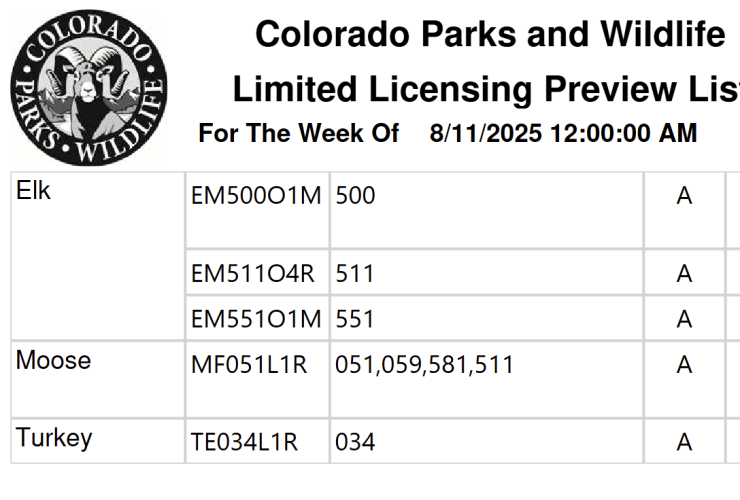
- The Drop Schedule: Reissue tags are previewed on the CPW website on designated weekdays (typically starting mid-August) and go live for purchase the following morning at 11:00 a.m. Mountain Time.
- The Five-Point Rule: Tags that required five or more preference points to draw during the primary draw do not hit the public reissue list. CPW contacts the next person in line from the original draw order. Tags requiring fewer than five points, however, enter the open reissue pool.
- High Turnover: Trophy archery elk, early season rifle mule deer, and high-country tags routinely appear on the reissue list as hunters experience schedule conflicts or injuries.
To win on reissue days, keep the target hunt code copied to your clipboard, watch an atomic clock synchronized to seconds, and submit your cart addition at exactly 11:00:00 a.m.
Three Costly Mistakes to Avoid
Even seasoned hunters fall prey to simple technical or regulatory errors during leftover sales. Watch out for these three pitfalls:
1. Buying a Private Land Only (PLO) Tag Without Permission
Leftover lists are heavily populated with PLO hunt codes (designated with a "P" in the code, such as E-E-001-P2-R). Purchasing one of these without pre-existing written landowner permission leaves you with a tag you cannot legally hunt. Never buy a PLO license assuming you will find access later.
2. Overlooking Season Dates and Overlaps
Colorado offers specific separate and combined rifle seasons, alongside muzzleloader and archery windows. Double-check your chosen code's valid dates against your personal schedule. A cheap cow tag is no bargain if you cannot take the required four days off work.
3. Slow Checkout Habits
On CPWshop.com, simply placing a tag in your cart does not guarantee it is reserved indefinitely. Other hunters competing for single-license inventory can check out faster if your payment details stall. Keep your security code handy, maintain a fast internet connection, and finalize the transaction immediately.
Make the Most of Your Fall Season
Leftover licenses represent one of the most cost-effective and flexible tools in Western big-game hunting. By mastering CPW's license lists, preparing your account well before the drop, and monitoring the weekly reissue updates, you can consistently secure quality hunting tags across Colorado without burning your hard-earned preference points.