Mastering the Kodokan Throws: The Complete Guide
Introduction to Kodokan Throws

When Jigoro Kano founded modern judo in 1882 at the Kodokan Institute in Tokyo, he sought to distill various traditional jujutsu styles into a safer, more efficient martial art and educational system. At the core of this system are the throwing techniques, known collectively as Nage-waza. These Kodokan throws are meticulously categorized to teach practitioners balance, leverage, timing, and spatial awareness.
Understanding these techniques is essential for anyone practicing judo, Brazilian Jiu-Jitsu (BJJ), or general grappling. The traditional throwing curriculum is divided into the Gokyo no Waza (the five teaching groups) and later additions, totaling 68 official techniques recognized by the Kodokan today. This article breaks down how these throws are structured, highlighting key techniques from each category.
The Structure of Nage-waza (The Throwing Techniques)
The Kodokan classifies throwing techniques primarily based on how the throw is executed physically. The overarching division separates standing throws (Tachi-waza) from sacrifice throws (Sutemi-waza).
Standing techniques are further broken down into hand techniques, hip techniques, and foot/leg techniques. Sacrifice techniques are divided into those where you fall straight back and those where you fall rolling to the side. Let us explore the primary categories in detail.
1. Te-waza (Hand Techniques)
Hand and arm techniques rely heavily on upper body strength, pulling momentum, and lifting action. While they are called hand techniques, successful execution actually depends heavily on turning the hips and using the legs to off-balance (kuzushi) the opponent.
- Seoi-nage (Shoulder Throw): One of the most famous judo throws, where the tori (attacker) pivots, places an arm across the uke's (defender's) body or under their armpit, and lifts them over their shoulder.
- Tai-otoshi (Body Drop): A classic hand technique where the practitioner uses their straight leg as a block while pulling the opponent sharply downward and forward over the barrier.
- Morote-seoi-nage (Two-Handed Shoulder Throw): A variation of seoi-nage gripping both lapels to hoist the opponent overhead.
2. Koshi-waza (Hip Techniques)
Hip techniques use the practitioner's hips as a fulcrum to lift and rotate the opponent's body. These throws generate immense power because they leverage the core and larger muscle groups of the lower body.
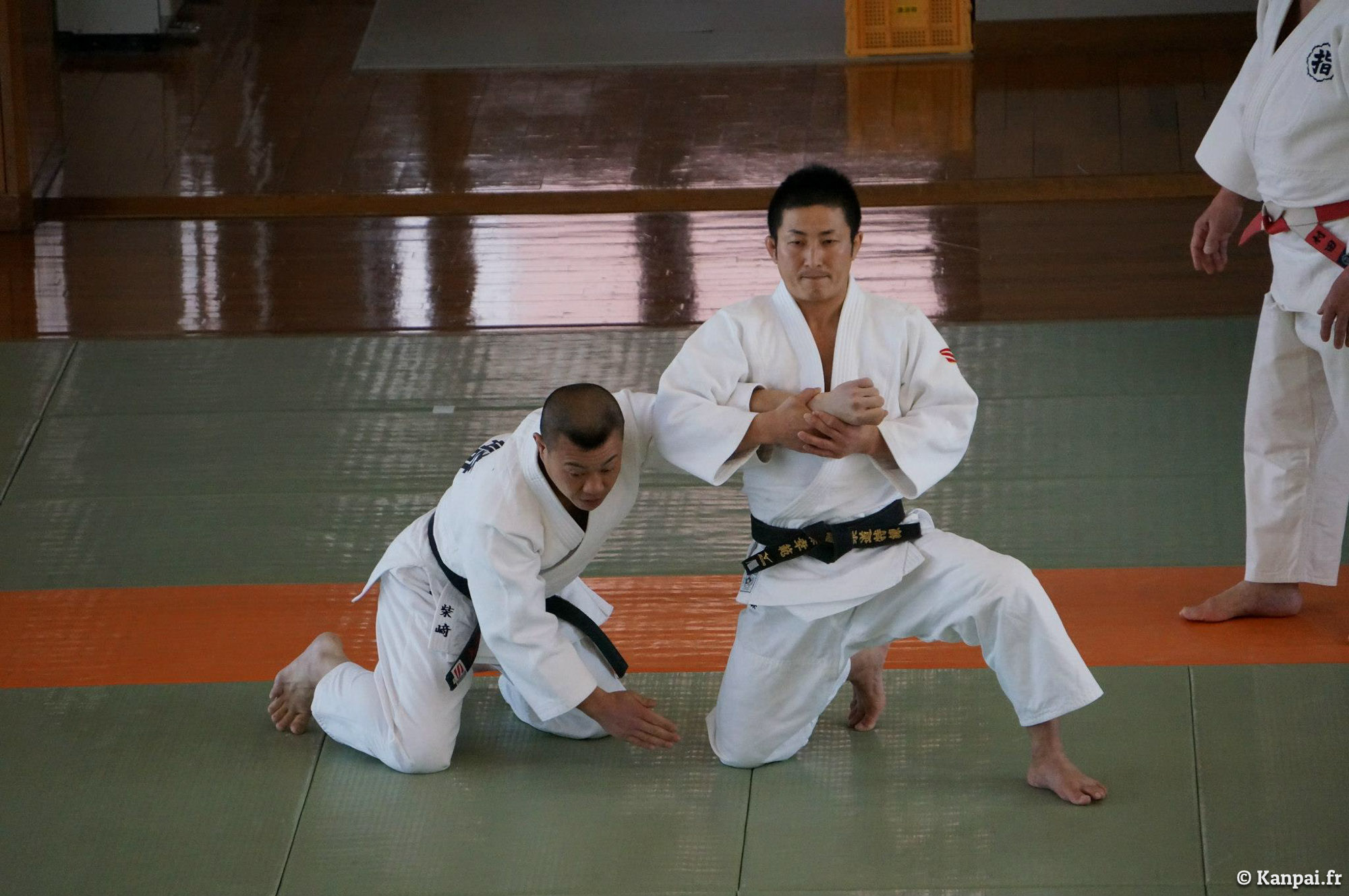
Video: 手技 / Te-waza

- O-goshi (Major Hip Throw): The fundamental hip throw taught to beginners. The attacker steps in, wraps an arm around the opponent's waist or back, and turns to project them over the hip.
- Koshi-guruma (Hip Wheel): Similar to o-goshi, but the attacking arm wraps around the opponent's neck rather than the waist, creating a wheel-like rotation.
- Uki-goshi (Floating Hip): A subtle, highly technical throw where light hip contact guides the opponent past without a heavy lift.
3. Ashi-waza (Foot and Leg Techniques)
Foot and leg techniques require precise timing and rhythm. Instead of lifting opponents, practitioners use sweeps, trips, and blocks to intercept their stepping momentum. These are often considered the most aesthetic and energy-efficient Kodokan throws.
- De-ashi-harai (Advanced Foot Sweep): Sweeping the opponent's foot precisely as they step down on it, disrupting their balance instantly.
- O-soto-gari (Major Outer Reaping): Stepping to the side and sweeping or 'reaping' the opponent's outer leg backward while driving them down.
- Uchi-mata (Inner Thigh Reap): A dynamic technique where the inner thigh sweeps the opponent's leg from the inside while lifting upward. It remains one of the highest-scoring throws in modern international competition.
4. Ma-sutemi-waza (Front Sacrifice Techniques)
In sacrifice techniques, the attacker willingly gives up their standing balance, falling backward or sideways to pull the opponent down with them. Front sacrifice techniques involve falling straight back onto the mat.
- Tomoe-nage (Circle Throw): The practitioner places one foot in the opponent's stomach, falls backward, and uses momentum to launch the opponent over their head in a circular motion.
- Sumi-gaeshi (Corner Reversal): A technique where the attacker drops to the mat, hooking the opponent's inner thigh and rolling them over the shoulder corner.
5. Yoko-sutemi-waza (Side Sacrifice Techniques)
Side sacrifice throws involve falling to the side rather than straight back. These are dynamic, aggressive techniques often used as counters or when an opponent resists a standard forward attack.
- Tani-otoshi (Valley Drop): The attacker drops their weight to the side and behind the opponent, blocking their legs and causing them to fall backward.
- Uki-waza (Floating Throw): A gentle side sacrifice where the attacker guides the opponent's momentum diagonally downward.
The Progression of Learning Kodokan Throws
Learning these techniques requires a structured approach to prevent injury and build correct muscle memory. Beginners typically start with basic breakfalls (ukemi) before attempting any throws. Once safe falling habits are established, students progress through specific developmental milestones.
- Kuzushi (Off-balancing): Breaking the opponent's center of gravity in one of eight directions.
- Tsukuri (Fitting-in): Moving into the proper throwing position without necessarily knocking the partner down.
- Kake (Execution): The final commitment and completion of the throw.
- Randori (Free Practice): Applying the throws against a fully resisting opponent in live sparring.
Conclusion
The Kodokan throws represent a masterpiece of martial arts engineering. By breaking human movement down into distinct categories of hands, hips, feet, and sacrifice, Jigoro Kano created a curriculum that teaches complete body awareness and functional physics. Whether you are aiming to earn your next belt in judo or simply looking to improve your takedown game in mixed martial arts, studying these foundational techniques offers a lifelong path of physical and mental mastery.