Mastering the Present Tense: A Complete Guide
Whether you are drafting an email, telling a story, or writing an academic essay, understanding the present tense is fundamental to clear communication. In English, the present tense does far more than describe what is happening right this second. It expresses universal truths, describes recurring habits, outlines future scheduled events, and connects past events to current circumstances.
Because English divides the present into four distinct aspects, learners and native speakers alike can find the nuances challenging. This guide breaks down each type of present tense, complete with formulas, practical examples, and common pitfalls to avoid.
The Four Types of Present Tense
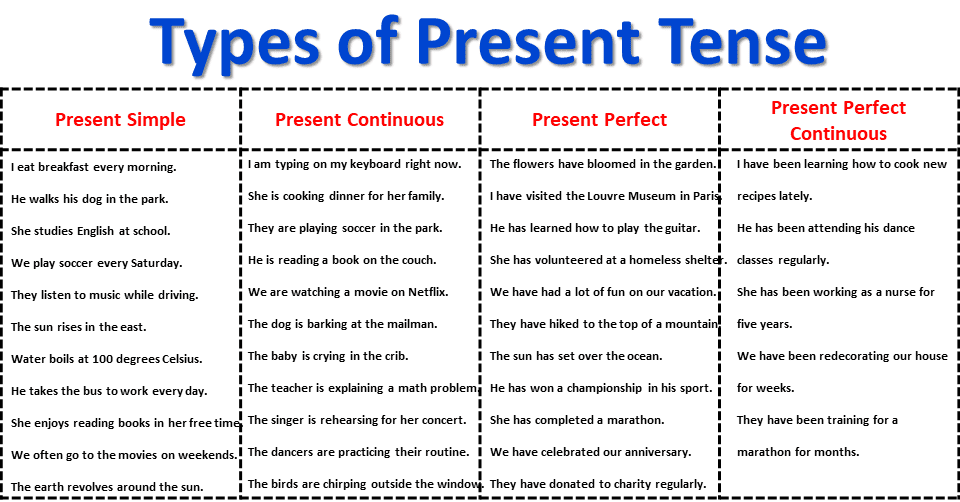
English uses four present tense forms: Simple Present, Present Continuous (or Progressive), Present Perfect, and Present Perfect Continuous. Each conveys a unique perspective on time and completion.
1. Simple Present Tense
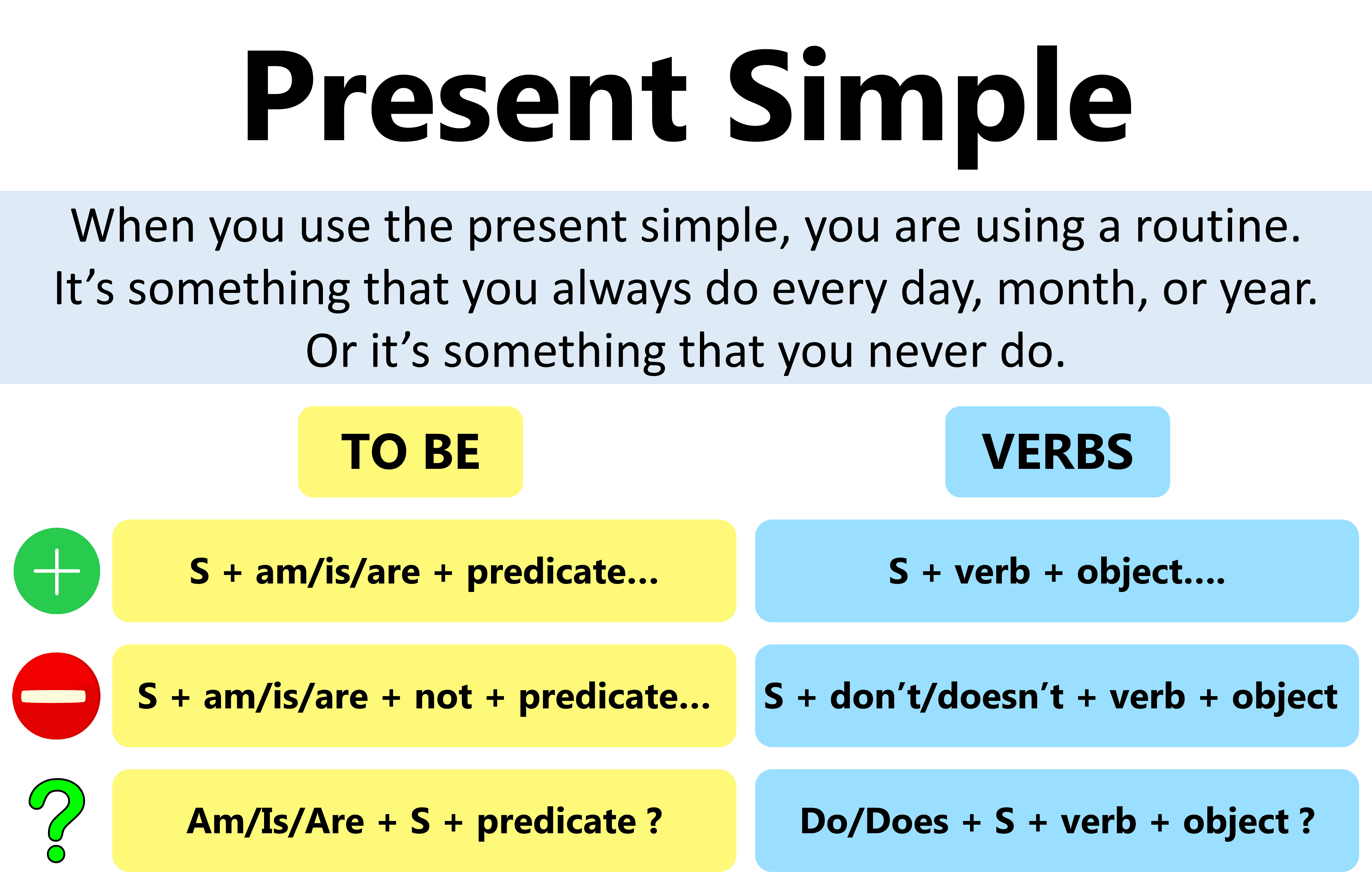
The simple present tense is used for permanent states, general facts, repeated actions, and scheduled future events.
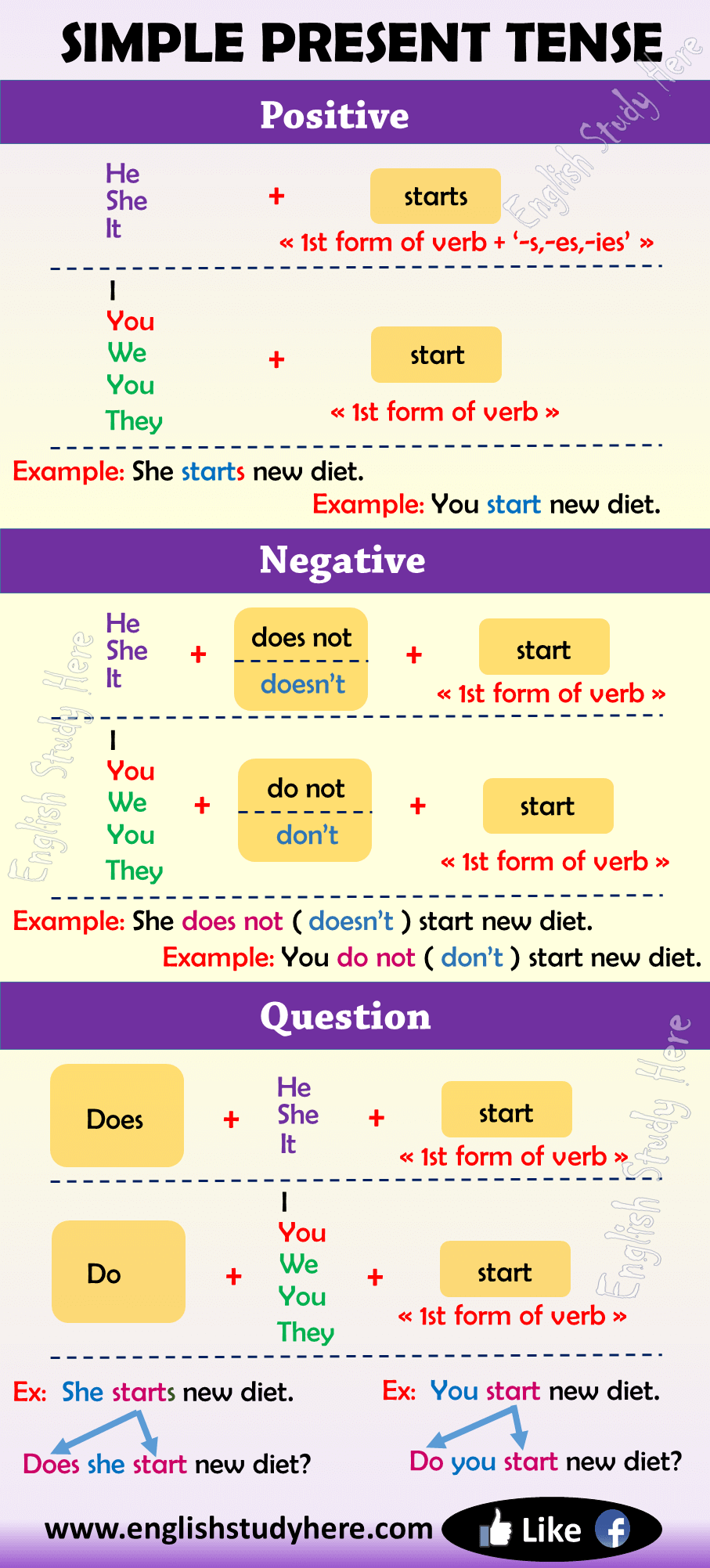
- Formula: Subject + base form of the verb (add -s or -es for third-person singular: he, she, it).
- Negative: Subject + do/does not + base verb.
- Question: Do/Does + subject + base verb?
Primary uses:
- Habits and routines: "She walks her dog every morning before breakfast."
- Universal facts and truths: "Water boils at 100 degrees Celsius."
- Fixed schedules: "The train departs at 6:30 PM tomorrow."
- Current states: "They live in Chicago."
2. Present Continuous Tense
The present continuous tense describes ongoing activities taking place right now, temporary situations, or near-future plans.
- Formula: Subject + am/is/are + present participle (verb + -ing).
- Negative: Subject + am/is/are not + present participle.
- Question: Am/Is/Are + subject + present participle?
Primary uses:
- Actions occurring at the moment of speech: "Listen, the baby is crying."
- Temporary situations: "I am living with my brother until my lease begins next month."
- Trends and changing situations: "Electric vehicles are becoming more affordable."
- Arranged future plans: "We are meeting the design team on Thursday."
3. Present Perfect Tense
The present perfect tense connects the past with the present. It describes actions that happened at an unspecified time in the past or actions that started in the past and continue into the present.
- Formula: Subject + have/has + past participle (e.g., seen, worked, written).
- Negative: Subject + have/has not + past participle.
- Question: Have/Has + subject + past participle?
Primary uses:
- Life experiences: "I have visited Japan twice." (The exact date is not important; the experience remains relevant.)
- Recent events with present impact: "She has misplaced her keys, so she cannot open the door."
- Actions starting in the past and continuing now: "Marcus has worked at the hospital for ten years."
4. Present Perfect Continuous Tense
This tense highlights the duration or process of an action that began in the past and is either still happening or has just stopped with noticeable present results.
- Formula: Subject + have/has been + present participle (verb + -ing).
- Negative: Subject + have/has not been + present participle.
- Question: Have/Has + subject + been + present participle?
Primary uses:
- Continuous action continuing to the present: "It has been raining all morning."
- Recent activities with visible evidence: "His hands are covered in grease because he has been fixing his bicycle."
Subject-Verb Agreement in the Present Tense
One of the most frequent errors in English writing involves subject-verb agreement in the present tense. Singular subjects take singular verbs, and plural subjects take plural verbs.

For the simple present, the rule is straightforward: add an -s or -es when the subject is third-person singular (he, she, it, or any singular noun).
- Correct: "The analyst reviews the reports carefully."
- Incorrect: "The analyst review the reports carefully."
Special spelling rules for third-person singular verbs include:
- Verbs ending in -ch, -s, -sh, -x, or -z: Add -es (e.g., watches, misses, fixes).
- Verbs ending in a consonant + -y: Change -y to -i and add -es (e.g., carries, flies, studies).
- Verbs ending in a vowel + -y: Simply add -s (e.g., plays, stays, buys).
Stative Verbs vs. Dynamic Verbs
A crucial rule when using present tenses is the distinction between dynamic verbs and stative verbs. Dynamic verbs describe physical actions or activities (e.g., run, write, eat), and they can appear in both simple and continuous forms.
Stative verbs describe states of being, emotions, possessions, senses, or mental processes. Stative verbs are rarely used in continuous (-ing) tenses.
- Thoughts and opinions: know, believe, understand, recognize, think (as an opinion)
- Feelings and emotions: love, hate, prefer, want, need
- Possession: have, own, possess, belong
- Senses: seem, appear, taste, smell, sound
Compare these examples:
- Incorrect: "I am knowing the answer right now."
- Correct: "I know the answer right now."
- Incorrect: "This coat is belonging to Sarah."
- Correct: "This coat belongs to Sarah."
Note: Some verbs can be both stative and dynamic depending on context. When think refers to an opinion, it is stative ("I think she is talented"). When it refers to the mental process of pondering, it is dynamic ("I am thinking about my upcoming vacation").
Common Present Tense Mistakes to Avoid
Even proficient writers occasionally make errors with present tenses. Keep an eye out for these three widespread mistakes:
1. Confusing Simple Present with Present Continuous
Do not use the simple present to describe an action occurring at this exact second, and avoid using the present continuous for permanent routines.
- Incorrect: "Look! It snows outside."
- Correct: "Look! It is snowing outside."
- Incorrect: "I am drinking coffee every morning."
- Correct: "I drink coffee every morning."
2. Using Present Perfect with Specific Past Time Markers
The present perfect should never be paired with a definite past time expression like yesterday, last year, or in 2018. Use the simple past instead.
- Incorrect: "I have finished the project yesterday."
- Correct: "I finished the project yesterday." (Simple Past)
- Correct: "I have finished the project already." (Present Perfect)
3. Overusing "Since" Instead of "For"
When using the present perfect continuous to show duration, pair since with a specific starting point in time and for with a measurable period.
- Correct with point in time: "We have been studying since 8:00 AM."
- Correct with duration: "We have been studying for four hours."
Summary Reference Table
Use this quick guide to choose the right tense for your intended meaning:
- Simple Present: Facts, habits, routines, static truths ("She teaches chemistry.")
- Present Continuous: Actions happening right now, temporary states ("She is teaching a seminar today.")
- Present Perfect: Completed actions with current relevance, unspecified past events ("She has taught over 500 students.")
- Present Perfect Continuous: Ongoing actions emphasizing duration up to now ("She has been teaching for fifteen years.")
By applying these principles, you will write with greater accuracy, eliminate grammatical confusion, and express time relationships clearly across every sentence you build.