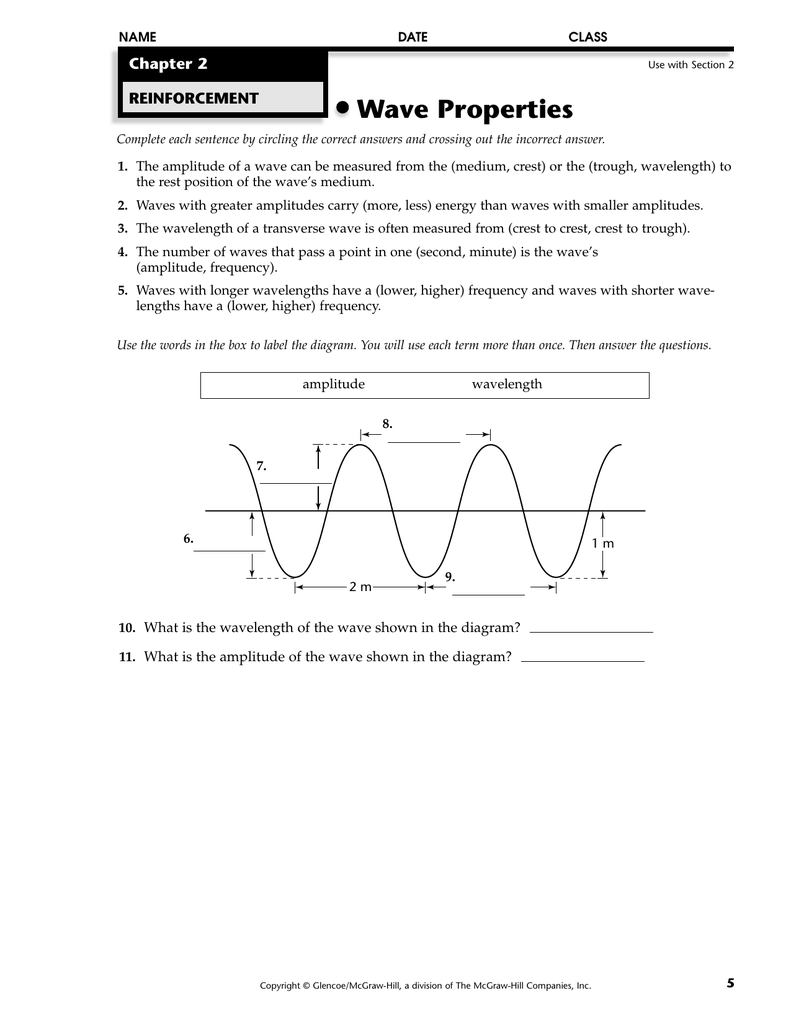
Mastering Waves Unit 2 Worksheet 5 Answer Key
Physics students often hit a challenging conceptual wall when transitioning from basic kinematics to wave motion. Unit 2 typically dives deep into wave behavior, covering properties like wavelength, frequency, wave speed, and amplitude. If you have been searching for the Waves Unit 2 Worksheet 5 answer key, you likely need more than just a list of numbers—you need a clear understanding of why those answers are correct.

This guide breaks down the core concepts found in typical Unit 2 physics worksheets, offering step-by-step problem-solving strategies, conceptual explanations, and common pitfalls to avoid so you can ace your next assessment.
Understanding the Core Concepts of Unit 2 Waves
Before checking your work against a Waves Unit 2 Worksheet 5 answer key, it is vital to understand the underlying formulas and relationships. Wave physics relies heavily on proportional reasoning. When one variable changes, how does it impact the others?
The Universal Wave Equation
The cornerstone of almost every problem in Unit 2 is the universal wave equation:
v = f × λ
Where:
- v = wave speed (measured in meters per second, m/s)
- f = frequency (measured in Hertz, Hz or s⁻¹)
- λ = wavelength (measured in meters, m)
Understanding this relationship allows you to manipulate the equation to solve for frequency (f = v / λ) or wavelength (λ = v / f). Worksheet 5 typically tests your ability to convert units—such as centimeters to meters or kilohertz to Hertz—before plugging them into this formula.
Period vs. Frequency
Another frequent stumbling block in Unit 2 is distinguishing between period (T) and frequency (f). Frequency is how many waves pass a point per second, while period is the time it takes for one complete wave cycle to pass.
The mathematical inverse relationship is:
- f = 1 / T
- T = 1 / f
If a worksheet problem gives you the time it takes for 10 waves to pass a dock, you must first find the period of a single wave before calculating frequency.
Step-by-Step Solutions for Common Worksheet 5 Problems
While specific curricula vary by school district, most high school and introductory college physics courses feature similar problem types on Unit 2 Worksheet 5. Here is how to approach the most challenging categories.
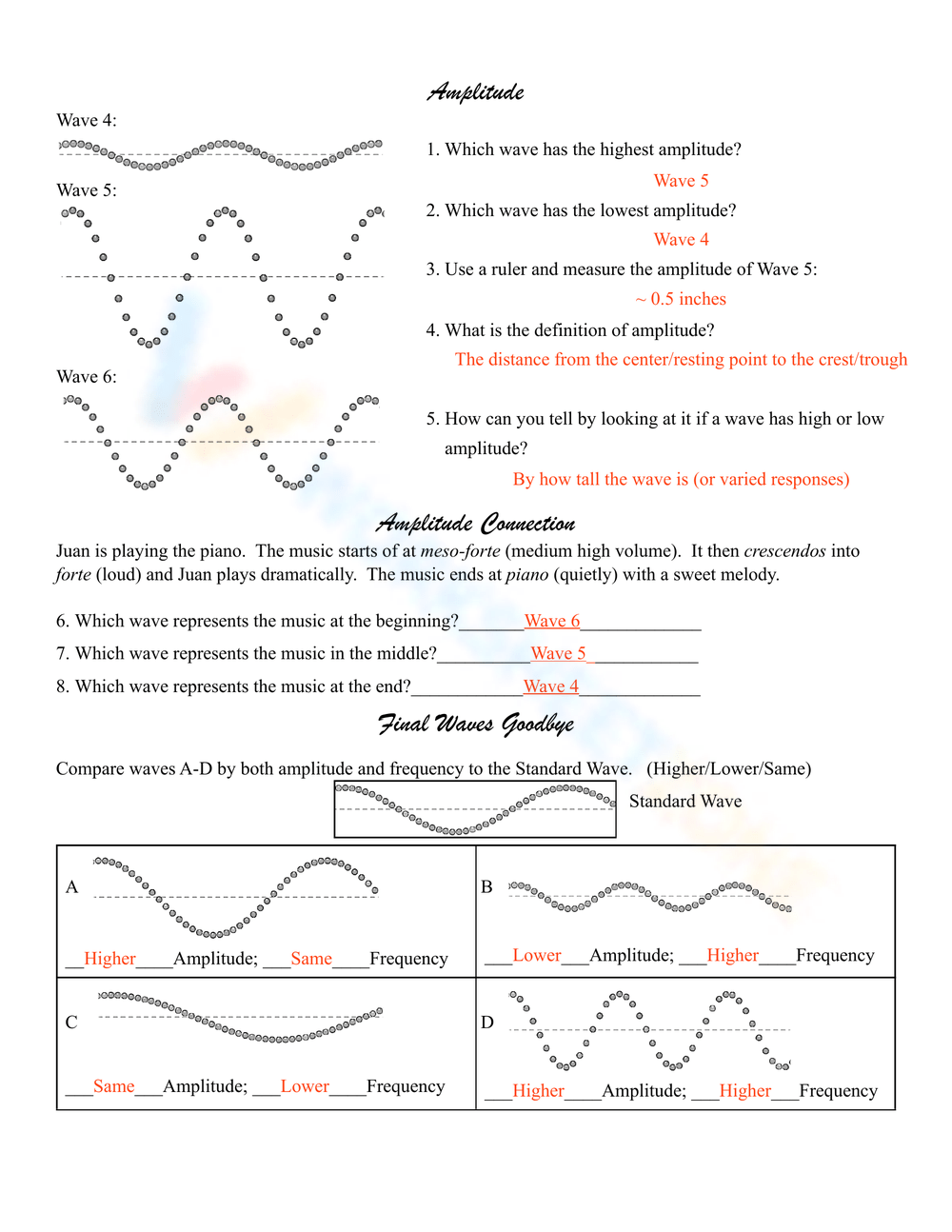
Problem Type 1: Calculating Wave Speed from Graphs
Many worksheets feature a snapshot of a transverse wave on a grid, plotting displacement versus position or displacement versus time.
- Identify the axes: Check if the x-axis represents distance (meters) or time (seconds).
- Extract the wavelength or period: If the x-axis is distance, the distance from one crest to the next is your wavelength (λ). If the x-axis is time, the time between crests is your period (T).
- Apply the formula: Use the extracted values alongside the given wave speed to solve for the missing variable.
Problem Type 2: Medium Changes and Wave Behavior
Advanced questions on Worksheet 5 often ask what happens to a wave when it passes from one medium into another (for example, from deep water to shallow water, or through different string tensions).
Remember these two golden rules of wave behavior:
- Frequency (f) never changes when a wave enters a new medium because it is determined by the source generating the wave.
- Speed (v) changes based on the physical properties of the new medium.
- Because v changes and f remains constant, the wavelength (λ) must change proportionally. If speed decreases, wavelength decreases.
Tips for Maximizing Your Learning from Answer Keys
Simply copying down numbers from a Waves Unit 2 Worksheet 5 answer key will not help you pass your exams. To truly master the material, use answer keys strategically.
1. Attempt Every Problem First
Never look at the answer key before attempting the problem on your own. Even if you get stuck, writing down the known variables (e.g., λ = 2.0 m, f = 5 Hz) primes your brain to engage with the solution when you finally check it.
2. Trace Your Error Backwards
If your final answer does not match the answer key, resist the urge to erase your work. Instead, look at the key and ask yourself:
- Did I use the wrong formula?
- Did I make a unit conversion error (e.g., forgetting to convert milliseconds to seconds)?
- Did I mess up the algebra when isolating the variable?
Identifying your specific point of failure is the fastest way to build long-term physics competence.
Conclusion
Mastering wave mechanics takes practice, patience, and a solid grasp of fundamental formulas like the universal wave equation. While consulting a Waves Unit 2 Worksheet 5 answer key is a great way to verify your progress, true academic success comes from understanding the step-by-step journey from a blank problem to the final, correct solution. Keep practicing your unit conversions, pay close attention to the properties of the medium, and you will be fully prepared for your next physics test.