Mastering Your Morals with the Army NCO Creed and Leadership Principles
In an era marked by rapid change and complex ethical dilemmas, finding a reliable internal compass can be difficult. Whether leading a team in a corporate boardroom, serving in public office, or navigating personal challenges, leaders often encounter situations where expediency clashes with integrity. Mastering Your Morals with the Army NCO Creed and Leadership Principles offers a battle-tested framework for building character, making sound ethical decisions, and earning the trust of those you lead.
Known across the military as the "Backbone of the Army," Noncommissioned Officers (NCOs) bridge the gap between high-level operational strategy and on-the-ground execution. Their moral authority does not derive merely from rank; it stems from a deeply ingrained code of conduct and an uncompromising devotion to character.
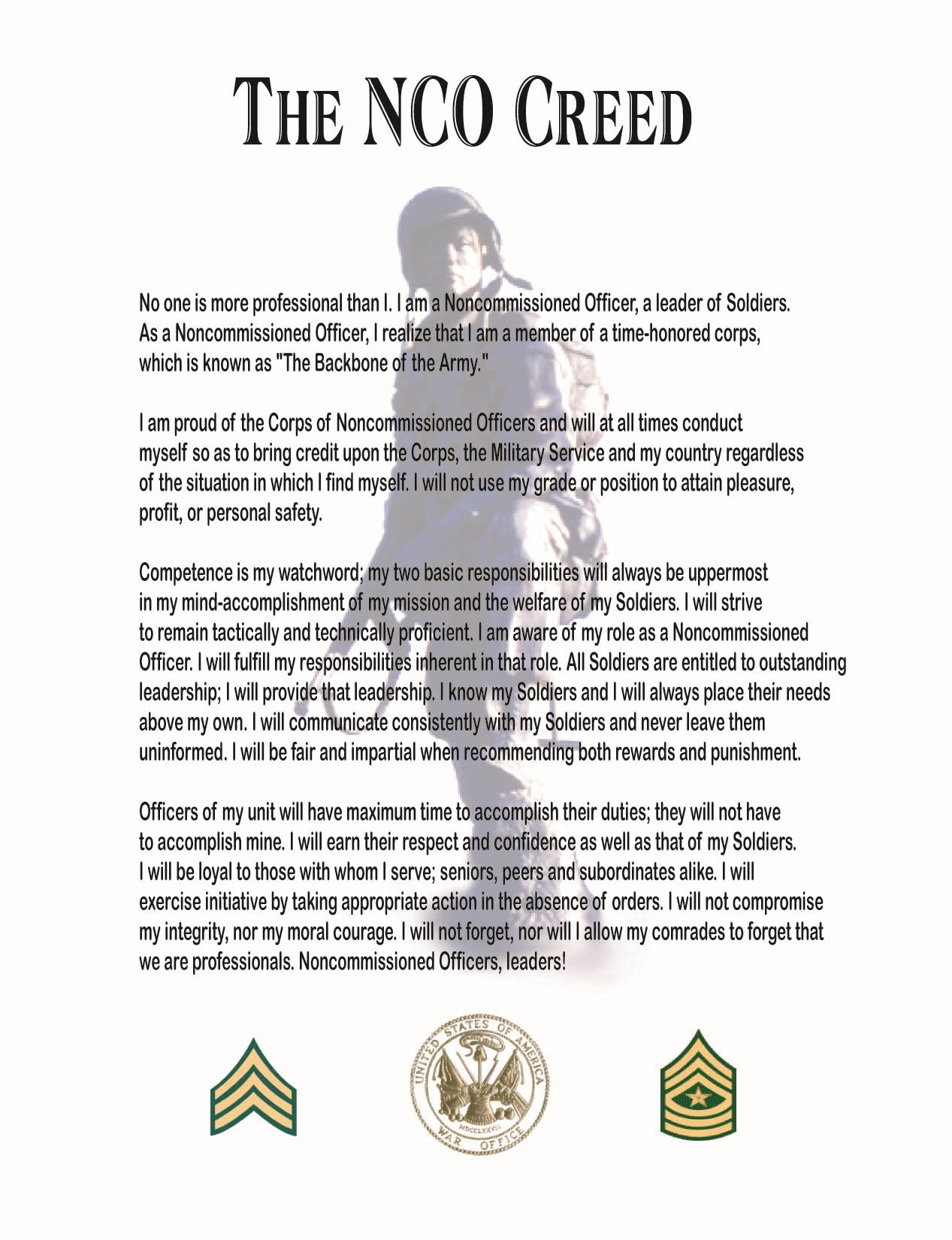
The Architecture of the Army NCO Creed
Written in 1973 by a small group of senior enlisted leaders at Fort Bliss, Texas, the Creed of the Noncommissioned Officer was designed to restore professional pride and ethical clarity in the post-Vietnam era. It is not merely a ceremonial recitation; it is an active statement of professional identity and moral obligation.
Three core stanzas anchor the creed, each beginning with a defining affirmation:
- "No one is more professional than I." This establishes that moral leadership begins with personal competence and self-respect. You cannot demand excellence or honesty from others without first embodying it yourself.
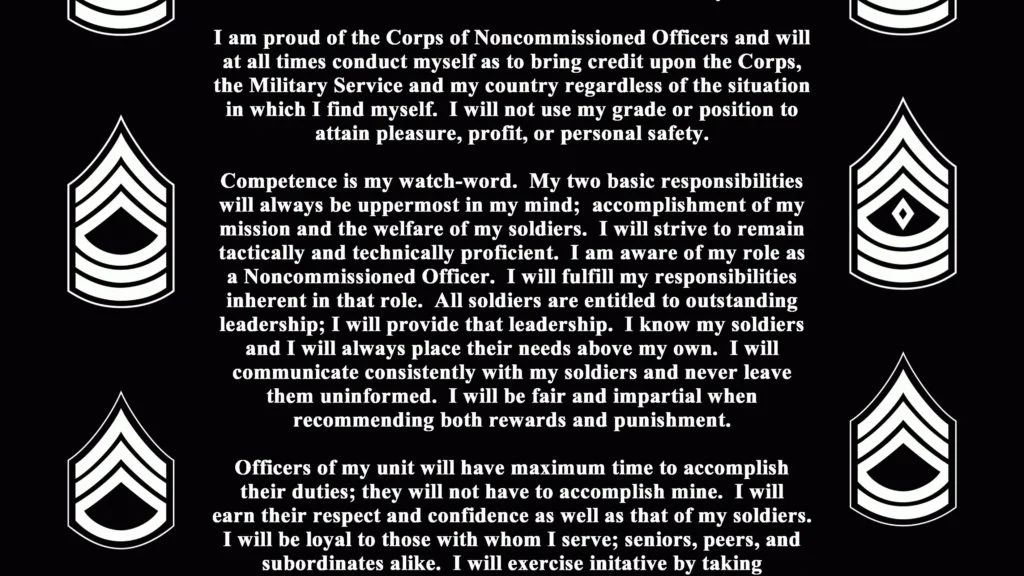
- "Competence is my watchword; my two basic responsibilities will always be uppermost in my mind—accomplishment of my mission and the welfare of my soldiers." This dual responsibility forms the ethical tension of all leadership: balancing task achievement with human care.
- "I will not compromise my integrity, nor my moral courage." This line directly charges the leader to defend the truth, speak up against wrongdoing, and reject ethical shortcuts regardless of the personal cost.
The Be-Know-Do Framework and Moral Leadership
Army leadership doctrine (codified in Army Doctrine Publication 6-22) organizes leadership development around three pillars: Be, Know, and Do. When applied to moral mastery, this framework prevents ethics from remaining purely abstract.
1. BE: Character and Core Values
What a leader represents internally determines how they act externally. The Army defines character through the acronym LDRSHIP: Loyalty, Duty, Respect, Selfless Service, Honor, Integrity, and Personal Courage. To "Be" an ethical leader means internalizing these values so deeply that they dictate reflexive behavior under extreme stress.
2. KNOW: Moral Awareness and Professional Knowledge
Good intentions are insufficient without competence. Leaders must understand institutional standards, the law of land warfare, human behavior, and the operational environment. Moral failure frequently occurs not because a person actively desires to do evil, but because they lack the technical or interpersonal awareness to foresee the consequences of their actions.
3. DO: Purpose, Direction, and Ethical Action

Leadership culminates in action. A person can memorize every ethical treatise in existence, but if they fail to act when a peer cheats or a subordinate is mistreated, their morals are hollow. "Doing" requires translating internalized values into decisive, visible actions that protect others and enforce accountability.
Mastering Your Morals with the Army NCO Creed and Leadership Principles
Achieving moral clarity is not an innate trait; it is a discipline practiced daily. By integrating the NCO Creed with foundational military leadership principles, anyone can strengthen their moral decision-making through several practical habits.
- Know Yourself and Seek Self-Improvement: Honest self-examination is the antidote to hubris. Routinely evaluate your blind spots, temperamental triggers, and moral weaknesses before external pressure exposes them.
- Set the Example: The NCO Creed states, "I will communicate consistently with my people and never leave them uninformed." Leading by example means demonstrating transparency, owning your mistakes publicly, and adhering strictly to the standards you set for your team.
- Make Sound and Timely Decisions: In ethical crises, procrastination is often a form of cowardice. The principles urge leaders to gather the best available facts, consider the moral implications, and decide firmly rather than allowing circumstances to dictate the outcome.
- Seek Responsibility and Take Responsibility for Your Actions: A hallmark of moral decay is shifting blame. When a mission fails or an ethical lapse occurs on your watch, a true leader accepts accountability upward while protecting and correcting subordinates downward.
- Look Out for the Welfare of Your People: Selfless service requires prioritizing the safety, dignity, and legitimate needs of your team over personal comfort, accolades, or career advancement.
The Vital Distinction Between Physical and Moral Courage
The U.S. Army distinguishes between two forms of bravery: physical courage and moral courage. Physical courage involves overcoming the fear of bodily injury or death in combat. While vital, physical courage is often episodic.
Moral courage, by contrast, is a continuous demand. It is the willingness to stand alone against popular opinion, report ethical breaches, challenge toxic superiors, and admit grave personal errors. The NCO Creed reminds leaders that prestige and convenience must always yield to integrity. Leaders who lack moral courage inevitably cultivate environments where toxicity, cut corners, and systemic failure thrive.
Applying the NCO Mindset in Everyday Life
You do not need to wear combat boots or carry a military identification card to adopt these principles. The NCO ethos translates seamlessly into civilian professions, community organizations, and family life:
- In Business: Replace corporate buzzwords with a commitment to mission accomplishment and employee welfare. When profit pressures mount, rely on the NCO principle of non-compromise to avoid deceptive marketing or corner-cutting in product safety.
- In Team Management: Establish clear, objective standards for performance. Provide direct, constructive feedback with empathy, ensuring no one is set up for failure.
- In Personal Relationships: Cultivate loyalty, keep your promises, and treat open communication as a personal duty rather than an afterthought.
Final Thoughts on the NCO Legacy
The words of the Army NCO Creed have echoed across drill fields, operational command posts, and remote forward operating bases for half a century. They endure because they touch upon a universal truth: true authority is earned through character, competence, and service.
By studying the NCO Creed and operationalizing its leadership principles, you transform personal ethics from a vague aspiration into a robust, daily practice. In doing so, you not only elevate your own standard of conduct, but you also create a legacy of integrity that inspires everyone under your watch.