Mexican Last Names Starting with V: Meanings & Origins
Surnames serve as living records of heritage, migration, and family trades. Whether you are tracing your family tree or simply curious about linguistic roots, exploring mexican last names starting with V provides a fascinating look into centuries of cultural evolution. In Mexico, surnames largely reflect the country's Spanish colonial past, interwoven with indigenous adoptions and regional migrations.

Most Mexican surnames beginning with the letter V fall into three primary categories: patronymics (names derived from an ancestor's given name), habitational or toponymic names (derived from geographic features or towns), and occupational or descriptive nicknames. Below, we break down the most widespread, historic, and unique V surnames found across Mexico today.
The Origins and Linguistic Roots of Mexican V Surnames
To understand Mexican surnames, it helps to understand how names formed on the Iberian Peninsula before making their way to the Americas during the 16th century. Surnames starting with V often stem from:
- Latin: Words describing landscapes, such as vallis (valley) or vicus (village).
- Basque: Ancient non-Indo-European roots that survived in northern Spain, frequently linked to flora, fauna, and rocky terrain.
- Visigothic: Germanic names brought to Iberia after the fall of the Western Roman Empire, later adapted into patronymic family names.
Most Common Mexican Last Names Starting with V
Several V surnames rank among the most frequently registered family names in Mexico's National Electoral Institute (INE) and civil registries. Here are the prominent ones you will encounter across the country.
1. Vázquez (or Vasquez)
Vázquez is one of the most prominent surnames in Mexico. It is a patronymic name meaning "son of Vasco." The given name Vasco itself derives from Velasco, a medieval name with Basque origins (bela, meaning "crow" or "raven," combined with the diminutive suffix -sko). Over time, the name also came to signify someone from the Basque region. In Mexico, you will see both the traditional "z" spelling (Vázquez) and the variant ending in "s" (Vasquez).
2. Vargas
Vargas is a classic habitational surname with deep roots in Cantabria and Santander in northern Spain. The word vargas refers to a steep slope, an embankment, or historically, a rustic thatched cottage built on flooded meadowland. Following Spanish settlement, the Vargas lineage established deep roots throughout central and western Mexico, including Jalisco and Guanajuato.
3. Vega
Vega is a topographic surname referring to someone who lived on or near a vega, a Spanish word for an open, fertile plain or river meadow. The word originates from the pre-Roman Iberian term vaica. Because agriculture was central to settlement patterns in colonial Mexico, many families adopted or were assigned this name based on the fertile lands they farmed.
4. Valdez (or Valdés)
Valdez is predominantly patronymic and habitational. It often denotes a descendant of Baldo (a shortened form of Germanic names containing bald, meaning "bold" or "brave"). Alternatively, it signifies someone from one of the various towns named Valdés in Asturias, Spain, derived from val de (valley of). Families bearing the Valdez name played notable roles in northern Mexican territorial settlements.
5. Villarreal
Particularly common in northern Mexican states like Nuevo León, Tamaulipas, and Coahuila, Villarreal is a compound habitational name. It combines villa (town or estate) with real (royal), denoting a settlement with royal charters or royal privileges. Early settlers of Monterrey and surrounding regions carried this name, making it an anchor of northeastern Mexican genealogy.
6. Villanueva
Translating literally to "new town," Villanueva was given to people who came from any of the dozens of newly established settlements during the Reconquista in Spain, and later, the founding of towns in New Spain. It remains a widely respected surname across modern Mexico.
Topographic and Habitational Mexican Surnames Beginning with V
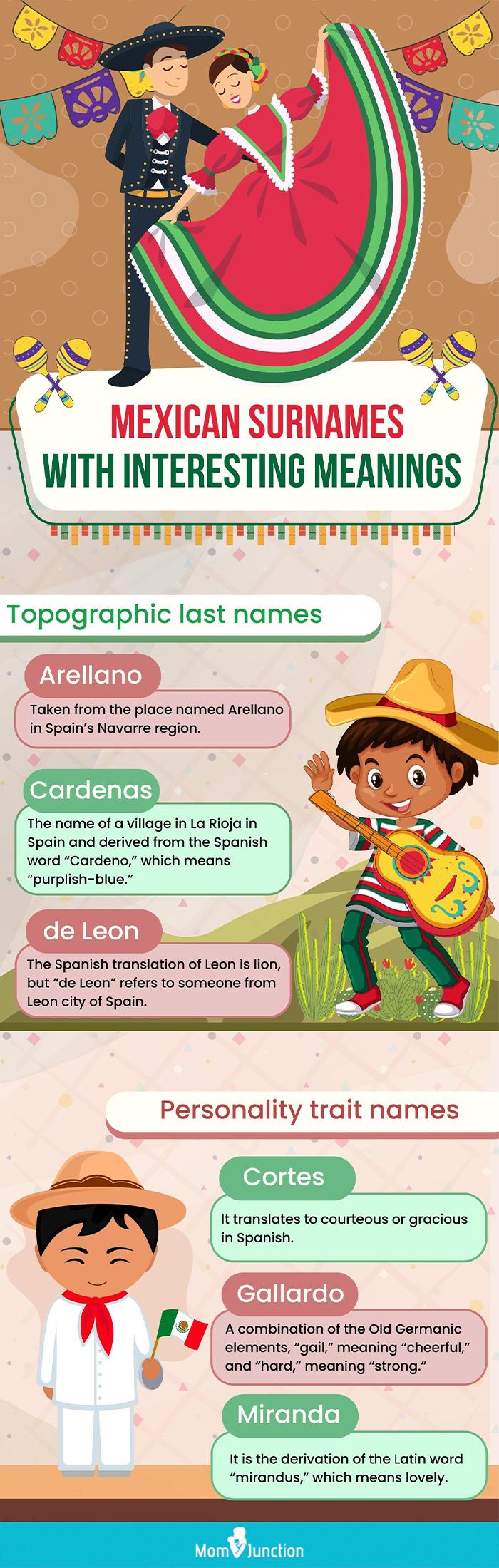
Many Mexican families carry names that originally described the environment where their ancestors lived or held land. If your surname starts with V, there is a strong probability it points toward a natural landscape feature:
- Valle: Directly translates to "valley." It was applied to families dwelling in valleys or low-lying agricultural communities.
- Vallejo: A diminutive of valle, meaning "little valley" or "ravine." It is common in central Mexico and the Bajío region.
- Villar: Derived from the Latin villare, meaning a small rural hamlet, farmstead, or country estate.
- Viveros: Originating from the Spanish word for nursery, fish hatchery, or pond (vivero). It originally described someone who maintained or lived near water preserves or plant nurseries.
- Valderrama: A habitational name from places in Burgos, meaning "valley of the branch" or "valley of the bough."
Distinctive and Less Common Mexican V Last Names
While names like Vázquez and Vargas are ubiquitous, Mexico is also home to several distinctive V surnames with intriguing backstories:
Velasco
Though related to the root of Vázquez, Velasco remains an independent surname. It was a noble name in medieval Castile and spread widely in the southern states of Mexico, particularly Oaxaca, where several historic figures and governors held the surname.
Valenzuela
A diminutive of Valencia, Valenzuela translates to "Little Valencia." It originated in the Andalusian province of Córdoba. Over generations, it became prominent in northwestern Mexico, particularly Sonora and Sinaloa.
Venegas
A patronymic surname traced to the medieval personal name Egas or Venegas. In colonial Mexican history, members of the Venegas family held administrative and military positions, including Francisco Javier Venegas, who served as Viceroy of New Spain during the early days of the Mexican War of Independence.
Verdugo
While the modern Spanish word verdugo translates to "executioner," the surname originally held a far more peaceful agricultural meaning: a young, green tree shoot or sprout (from Latin viriditas, greenness). Early bearers were often prune growers or people living near lush green brush.
Vera
This name carries multiple potential origins. It can come from the Spanish word vera, meaning "shore," "edge," or "riverbank." It may also derive from the Latin verus, meaning "true" or "just," originally applied as a descriptive nickname for an honest individual.
How Surnames Function in Mexican Culture
When studying Mexican last names starting with V, it is essential to remember Mexico's traditional naming conventions. Most Mexican citizens carry two surnames:
- The Paternal Surname: Inherited from the father's primary last name (listed first).
- The Maternal Surname: Inherited from the mother's father (listed second).
For example, if a child's father is Carlos Vargas Silva and the mother is Elena Morales Vega, the child's full legal name would typically include both: Vargas Morales. This system preserves maternal lineage for an additional generation and creates unique combinations where V surnames can appear as either the primary or secondary identifier.
Summary
From the windswept slopes behind Vargas to the royal charters of Villarreal, Mexican last names starting with V reflect a rich tapestry of Iberian geography, Basque linguistic history, and Mexican colonial tradition. Tracing the meaning behind these names offers a rewarding window into family identity and ancestral roots.