Middle Part with Taper Fade: The Modern Guide
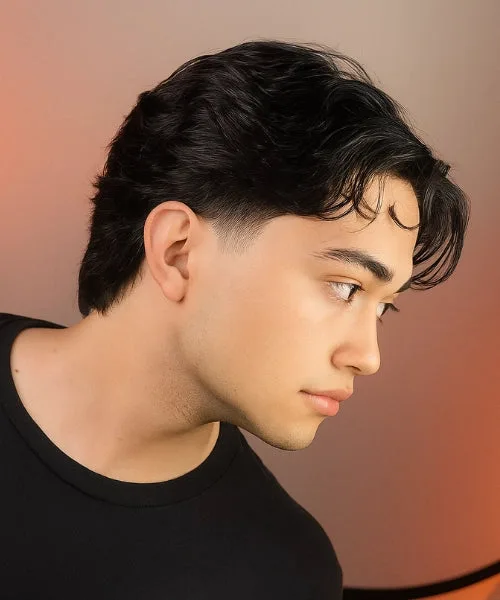
The 90s curtain haircut has made a massive comeback, but its modern iteration is far more refined than the floppy styles worn decades ago. Today, pairing a middle part with taper fade creates the perfect balance between relaxed flow on top and razor-sharp precision around the edges. It cleans up the neckline and sideburns while allowing the top to retain movement, volume, and natural texture.

Whether your hair is pin-straight, wavy, or tightly curled, this haircut offers a versatile canvas. Here is a complete guide to understanding the cut, picking the right variation, communicating with your barber, and styling it at home.
Why the Middle Part Taper Fade Is So Popular
Traditional curtain hairstyles often suffered from looking bulky around the ears and neck as they grew out. The taper fade solves this issue completely. By blending the hair down to the skin only at the temples and the nape, you eliminate awkward bulk without sacrificing the full-bodied shape of the sides.
Key advantages of this combination include:
- Versatility: Wear it casual and textured during the day, or comb it back into a slick, tailored style for formal settings.
- Facial Framing: The central parting frames your cheekbones and forehead, highlighting balanced facial features.
- Clean Grow-Out: Because the bulk of the sides is retained while only the perimeter is faded, the haircut grows out far more naturally than an undercut or high skin fade.
Top Variations of the Cut
Not every middle part looks the same. Adjusting the height of the taper and the texture on top drastically alters the silhouette.
1. Low Taper with Classic Curtains
A low taper fades just the bottom half-inch of the sideburns and neckline. This is the ideal option if you want to preserve maximum length and keep a classic, skater-inspired look. It works exceptionally well for thick, straight hair that needs weight to fall naturally.
2. Mid Taper Fade with Textured Part
The mid taper starts slightly higher, around the top of the ear. This variation delivers a crisper, more deliberate contrast between the short edges and the longer top. It works well if your hair tends to stick straight out at the sides, as removing that extra bulk creates a slimmer head profile.
3. Wavy Middle Part Taper
Natural waves give the middle part built-in volume and an effortless, lived-in feel. The taper keeps the overall silhouette neat so the curls do not look unruly. If you have fine or flat hair, adding a light perm or using sea salt spray can mimic this textured finish.
4. Curly Middle Part with Drop Taper
For type 3 and type 4 hair, parting down the center while dropping the taper low around the back creates a striking, geometric contrast. It allows your curls to cascade naturally over the forehead while maintaining sharp, defined lines around the perimeter.
Best Face Shapes for a Middle Part

The symmetry of a center part draws attention straight down the middle of the face. Here is how it pairs with common face shapes:
- Oval: Virtually any parting and taper height will work. You have complete flexibility.
- Square: The soft curtains soften an angular jawline, making this an ideal match. Keep some length near the ears to round out the proportions.
- Heart / Diamond: Curtains fill out the narrower chin and balance prominent cheekbones. Aim for hair length that hits around the cheekbones.
- Round: Proceed with caution. A flat middle part can accentuate facial roundness. If you have a round face, ask your barber for extra volume at the roots to elongate your profile.
What to Tell Your Barber
Barbers frequently hear conflicting terminology, so being specific prevents disappointment. While bringing 2–3 reference photos is always the best approach, here are the technical specifications you should mention:
- The Top: Ask for 4 to 6 inches of length on top, cut with point-cutting or texturizing shears to remove weight and encourage separation.
- The Transition: Tell your barber you want to maintain the "weight line" through the parietal ridge so your hair can drape over the sides smoothly.
- The Fade: Specify whether you want a low, mid, or high taper. Mention if you want the edges down to bare skin (skin taper) or left with a light guard like a #1 or #1.5 for a softer look.
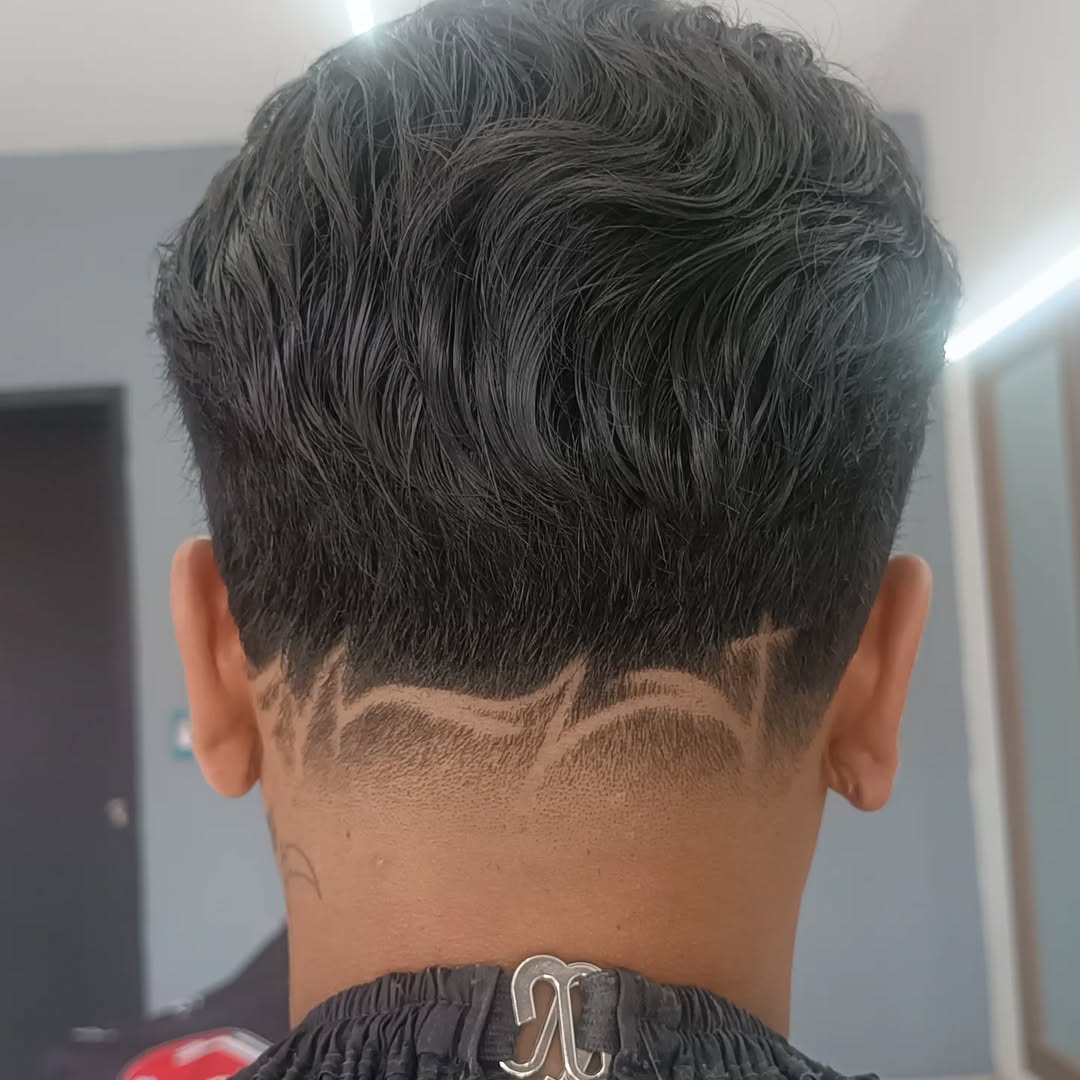
- The Neckline: Request a tapered neck rather than a blocked or rounded line, ensuring a seamless grow-out.
How to Style a Middle Part with Taper Fade
The difference between a limp, flat part and a voluminous, flowing curtain cut comes down to your drying technique. Follow these steps for reliable results:
Step 1: Prep the Hair
Start with clean, damp hair. Towel dry until it is no longer dripping. Spritz 4 to 6 sprays of sea salt spray evenly throughout the roots and mid-lengths. Sea salt spray adds light grit, control, and heat protection without weighing the strands down.
Step 2: Establish the Part
Using a wide-tooth comb or your fingers, trace a straight line from the center of your hairline back toward the crown. Comb the hair slightly forward and outward on each side, forming a subtle "C" curve along your forehead.
Step 3: Blow-Dry with Direction
Attach a concentrator nozzle to your blow dryer and set it to medium heat. Use your hands or a vented round brush to lift the roots upward and slightly backward as you dry. This creates the signature lift at the front. Once the hair is 90% dry, switch to the cold-shot button for 15 seconds to lock the volume in place.
Step 4: Lock in the Texture
Warm a dime-sized amount of matte clay, styling paste, or light cream between your palms until translucent. Rake your fingers through your hair from back to front, then shake the hair back into its natural parting. Pinch the front ends together slightly to create defined curtain strands.
Upkeep and Maintenance
Because this style combines two distinct lengths, maintenance happens in two phases:
- The Taper: The faded sections around the temples and neck will look fuzzy after 2 to 3 weeks. Book a quick 15-minute lineup/taper cleanup between major cuts to keep the perimeter sharp.
- The Top: The length on top only needs a trim every 6 to 8 weeks to remove split ends and maintain the proper drape.
The middle part with taper fade succeeds because it avoids extremes: it is neither overly formal nor untidy. With the proper length, a clean taper, and a simple blow-drying routine, you get a timeless, effortlessly stylish haircut suited for any occasion.