Mike Lindell’s Net Worth: Millions or Masks?
Introduction: Unraveling the MyPillow Mogul's Finances

Few public figures have experienced as dramatic a shift in public profile and business fortunes over the last decade as Mike Lindell. Known ubiquitously as the energetic, mustachioed pitchman behind MyPillow, Lindell transitioned from a classic American rags-to-riches entrepreneurial story to a lightning rod for political controversy. Amid shifting retail partnerships, canceled contracts, and staggering defamation lawsuits, public curiosity remains high regarding the filtered truth about Mike Lindell’s net worth—millions or masks?
At his peak, Lindell enjoyed the fruits of an empire built on a single, highly successful foam pillow design. However, modern financial estimates for the outspoken CEO are plagued by conflicting reports, partisan exaggerations, and a lack of publicly available balance sheets. Because MyPillow is a privately held company, getting an exact ledger of Lindell's personal assets is impossible. Nevertheless, by examining his business history, liquidation reports, and ongoing legal liabilities, we can paint a realistic picture of where his wealth stands today.
The Rise of MyPillow and the Peak Net Worth Years
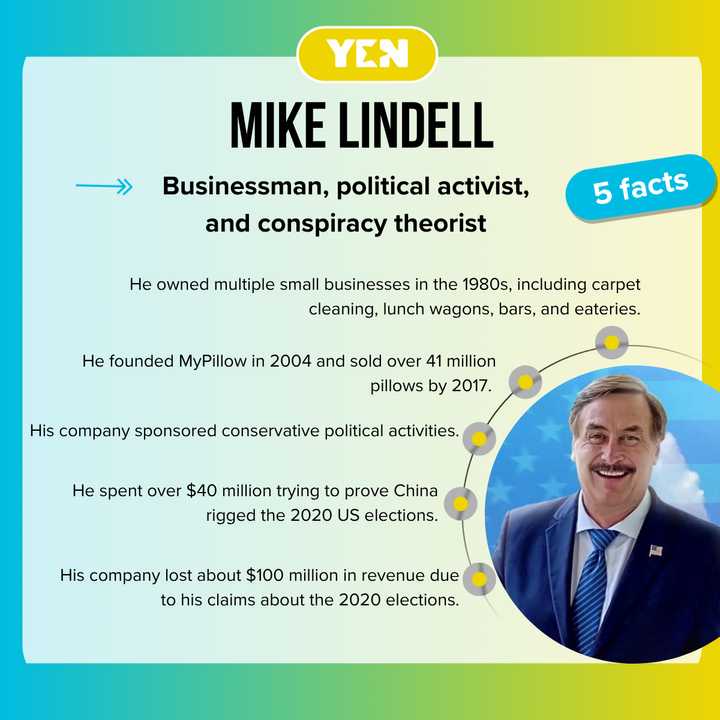
To understand Lindell's current financial reality, we must look at how he made his fortune. Founded in 2004, MyPillow experienced slow initial growth before exploding into a direct-response television powerhouse around 2011. Lindell famously invested his life savings, overcame personal struggles with substance abuse, and leveraged late-night infomercials into a household name.
During the height of the company's success in the mid-to-late 2010s, MyPillow reportedly generated hundreds of millions of dollars in annual revenue. Industry analysts at the time estimated Lindell's personal net worth to be anywhere between $50 million and $300 million. This wealth was tied up in:
- Manufacturing facilities in Minnesota and beyond.
- A massive inventory and supply chain network.
- Extensive direct-to-consumer advertising budgets.
- Real estate holdings, including a primary residence and corporate properties.
At this financial peak, Lindell was living the quintessential American dream, funding pet projects, and even financing a faith-based feature film about his life story. However, his total immersion into political activism after the 2020 presidential election altered his business trajectory permanently.
The Turning Point: Retail Exits and Boycotts
The intersection of Lindell’s personal political claims regarding election integrity and his corporate identity as the CEO of MyPillow proved catastrophic for the brand's traditional retail footprint. Beginning in 2021, major box-store retailers and online shopping platforms began severing ties with MyPillow.
Retail giants including Walmart, Bed Bath & Beyond, Kohl's, and Wayfair dropped MyPillow products from their shelves and digital catalogs. According to Lindell himself, these retail cancellations resulted in the loss of hundreds of millions of dollars in revenue almost overnight. While the company still operated its direct-to-consumer website and sold to independent distributors, the sudden contraction forced severe operational downsizing.
Auctioning Assets: A Sign of Cash Flow Struggles?
As revenue dried up from traditional retail channels, signs of financial strain became increasingly public. In early 2023, MyPillow held a massive online liquidation auction, selling off surplus manufacturing equipment, excess office furniture, and specialized machinery from its Minnesota facilities. While company representatives framed the move as a strategic consolidation to a single, more efficient plant, industry observers interpreted it as an aggressive measure to raise liquid cash amid declining sales.

Legal Liabilities and Defamation Lawsuits
Perhaps the most significant drain on Lindell’s resources—both actual and potential—stems from a series of high-profile defamation lawsuits. Voting machine companies Dominion Voting Systems and Smartmatic filed multi-million-dollar lawsuits against Lindell, his media associates, and MyPillow, citing repeated, unsubstantiated claims regarding the 2020 election.
In addition to these corporate giants, former Dominion executive Eric Coomer also filed personal defamation suits against Lindell. Defending against these lawsuits requires millions of dollars in legal fees. Furthermore, Lindell has publicly admitted that funding these sprawling legal defenses, alongside his cyber-symposiums and voter-fraud investigations, has severely strained his personal liquid assets.
In 2024, a federal judge upheld a defamation arbitration award ordering Lindell to pay a $5 million prize to a computer forensics expert who successfully debunked data Lindell claimed proved election interference. These combined legal pressures have drastically altered his financial stability.
Evaluating the Filtered Truth About Mike Lindell’s Net Worth—Millions or Masks?
So, where does that leave the entrepreneur today? Is he still a multi-millionaire, or has the mask of corporate success slipped to reveal financial ruin?
The filtered truth likely sits somewhere in the middle. While internet rumors frequently claim Lindell is completely bankrupt, financial experts suggest this is an overstatement. MyPillow, despite its massive retail losses, still maintains a loyal customer base and generates steady, albeit reduced, online sales. Lindell likely still retains significant equity in the brand and various real estate assets.
However, his *liquid* net worth has undoubtedly taken a historic beating. Between lost retail contracts, skyrocketing legal defense bills, and potential future liabilities from defamation judgments, the vast cash reserves he once commanded are largely depleted or tied up in illiquid business assets and ongoing litigation.
Conclusion: A Cautionary Tale of Business and Politics
Mike Lindell’s financial trajectory serves as a fascinating, albeit volatile, case study in modern American commerce. He built an empire through relentless grit and a brilliant marketing strategy, only to watch a substantial portion of it evaporate due to politically driven consumer boycotts and unprecedented legal battles.
Ultimately, while Lindell is unlikely to be penniless, the days of commanding a nine-figure fortune appear to be a relic of the past. Whether through future legal settlements, corporate pivots, or continued direct-sales resilience, the final chapter of Mike Lindell's financial story is still being written.