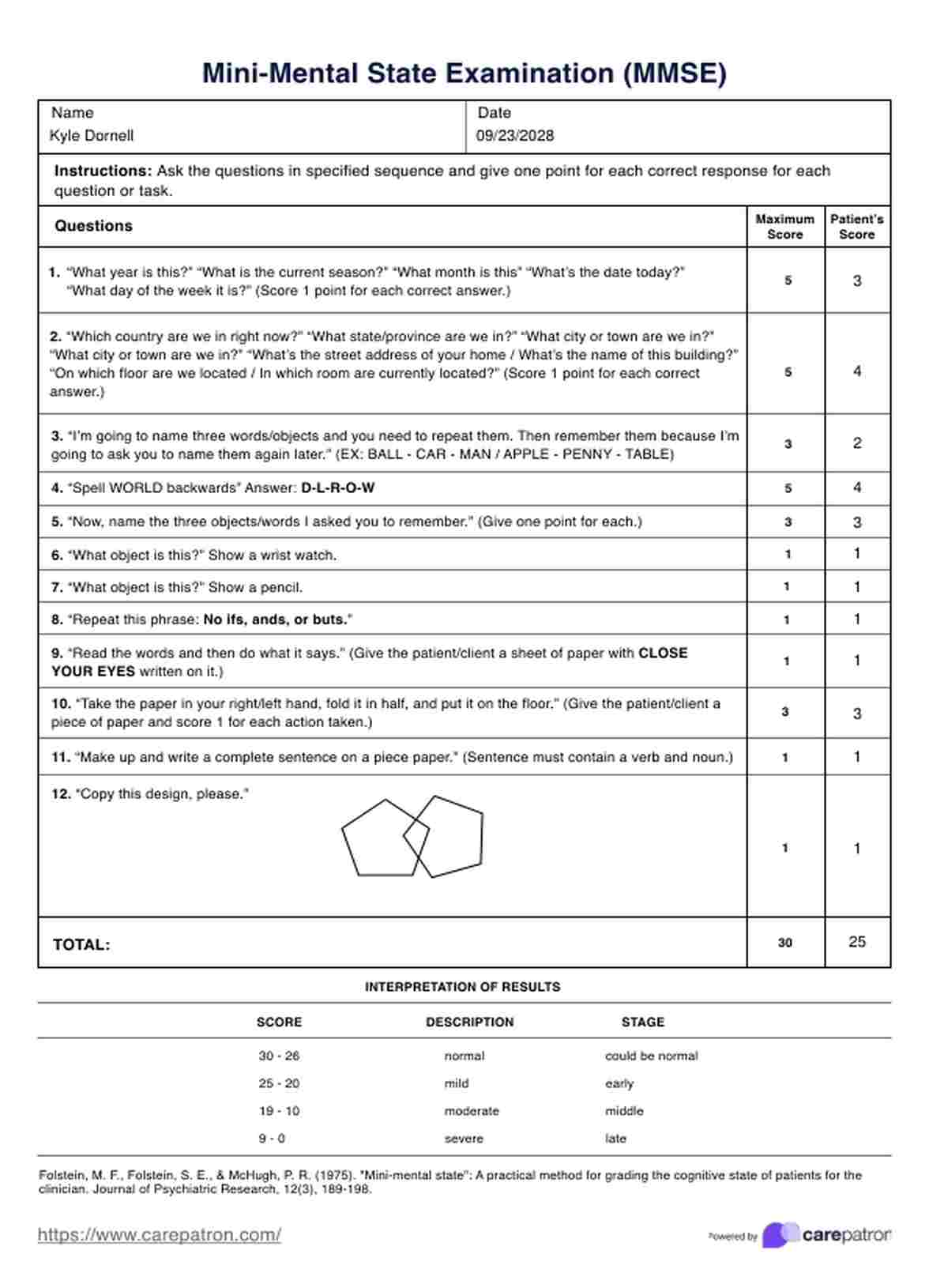
Mini Mental State Examination in Spanish: Clinical Guide
The Mini-Mental State Examination (MMSE) remains one of the most widely recognized bedside screening instruments for cognitive impairment worldwide. However, administering the mini mental state examination in spanish requires far more than a direct word-for-word translation of the original English text created by Folstein, Folstein, and McHugh in 1975. Linguistic nuances, dialect variations, and disparate educational baselines across Spanish-speaking populations heavily influence test performance and diagnostic accuracy.
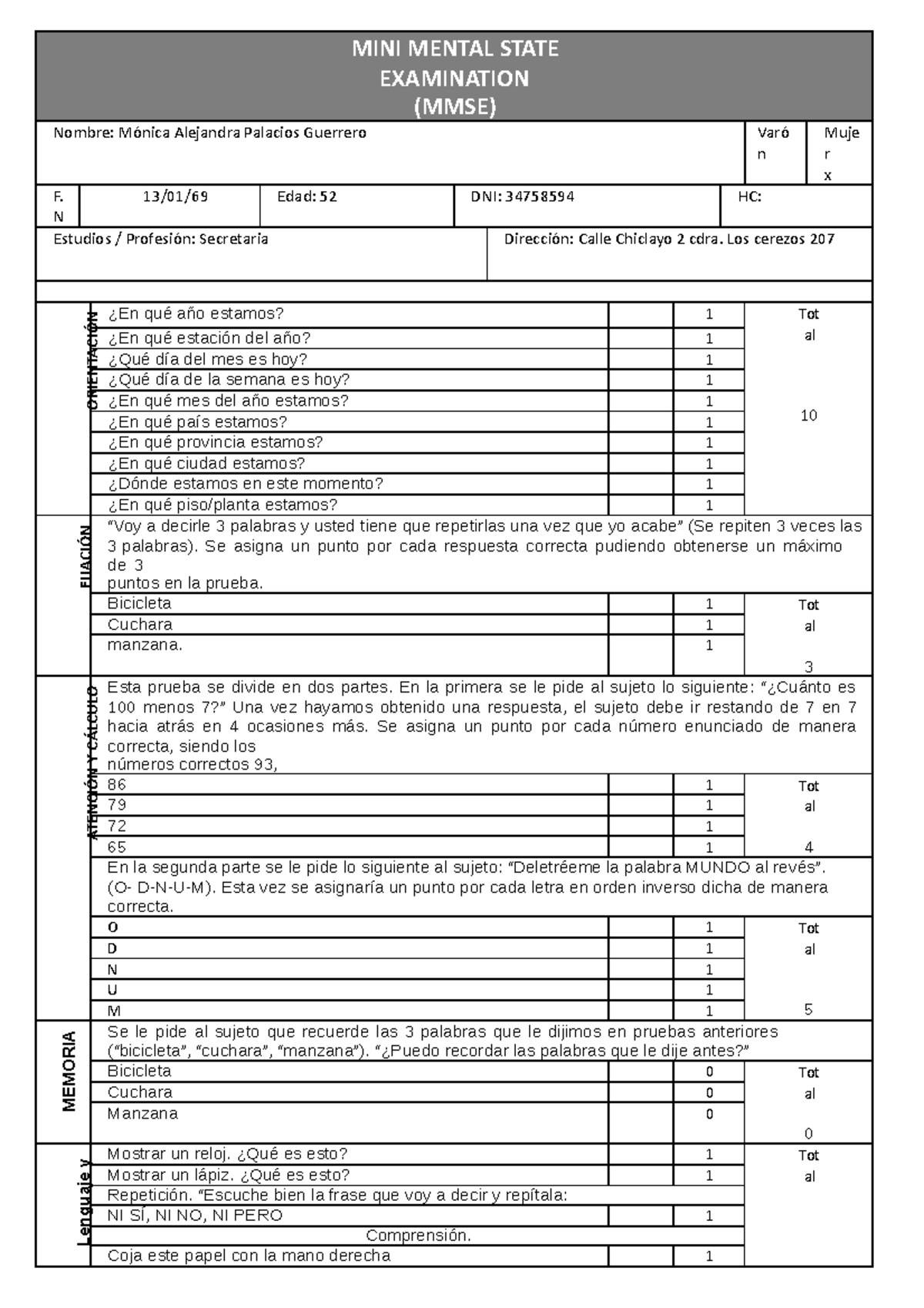
For clinicians evaluating older adults in Latin America, Spain, or Spanish-speaking diaspora communities, selecting an appropriately standardized adaptation and understanding education-adjusted cutoffs are critical steps in preventing false positives and misdiagnoses.
Validated Versions of the Mini Mental State Examination in Spanish
Clinicians often encounter confusion because multiple Spanish versions exist in the medical literature. Administering an unvalidated direct translation compromises clinical validity. The two primary validated frameworks used in clinical practice and research are:
1. Lobo's Mini-Examen Cognoscitivo (MEC)
Developed in Spain by Antonio Lobo and colleagues, the Mini-Examen Cognoscitivo was the earliest formal Spanish adaptation. It exists in two primary formats:
- MEC-35: An expanded 35-point version designed to improve sensitivity in populations with low formal education. It introduces additional subtests, including digits backward and non-verbal reasoning.
- MEC-30: A 30-point version adapted to align more closely with Folstein's original 30-point scale, commonly used across European clinical trials.
2. The Standardized Spanish MMSE (NORMACODEM and Latin American Norms)
In clinical practice across the Americas, clinicians typically use a 30-point adaptation that directly mirrors Folstein's structure while substituting culturally and linguistically appropriate stimuli. Projects such as the NORMACODEM study in Spain (led by Blesa et al.) and validations in Mexico, Colombia, and Argentina established population-specific normative data adjusted for age and literacy levels.
Core Domains and Linguistic Adaptations
The standard 30-point Spanish MMSE evaluates six cognitive domains. To retain psychometric equivalence with the English original, specific items are modified:
1. Orientation (10 Points)
- Temporal (5 points): Year (año), season (estación), date (fecha), day of the week (día de la semana), and month (mes).
- Spatial (5 points): Country (país), state/province (provincia/departamento), city (ciudad), hospital/clinic/site (lugar), and floor/room level (piso).
2. Registration / Immediate Recall (3 Points)
The examiner names three unrelated nouns clearly at one-second intervals. Common word triads in Spanish adaptations include:
- Balón, bandera, árbol (Ball, flag, tree)
- Papel, bicicleta, cuchara (Paper, bicycle, spoon)
- Caballo, peseta, manzana (Horse, coin, apple — widely used in Spain)
The patient must repeat them immediately. Up to six trials may be given for learning, but only the first attempt is scored.

3. Attention and Calculation (5 Points)
Patients are asked to perform serial subtractions: 100 minus 7, continuing down for five steps (93, 86, 79, 72, 65). If the patient cannot perform mental arithmetic or has fewer than three years of formal education, the alternative is spelling a five-letter word backwards. In Spanish, the universal substitute for “WORLD” is M-U-N-D-O, spelled in reverse as O-D-N-U-M.
4. Delayed Recall (3 Points)
The patient is asked to recall the three words presented during the registration subtest. No cues or prompts are provided for scored points.
5. Language and Praxis (9 Points)
- Naming (2 points): Identifying common objects (typically a wristwatch, reloj, and a pencil, lápiz).
- Repetition (1 point): Repeating an idiomatic phrase with phonological complexity. In English, this is “No ifs, ands, or buts.” In Spanish, validated equivalents include: “Ni sí, ni no, ni pero” or “En un trigal había cinco perros.”
- Three-Step Command (3 points): “Take this paper with your right hand, fold it in half, and put it on the floor/table” (“Tome este papel con la mano derecha, dóblelo por la mitad y póngalo en la mesa/suelo”).
- Reading (1 point): Reading and following a written prompt: “CIERRE LOS OJOS” (Close your eyes).
- Writing (1 point): Writing a spontaneous sentence containing a subject and a verb that makes semantic sense.
- Visuospatial Construction (1 point): Copying intersecting pentagons (pentágonos cruzados). All ten angles must be present, and the intersection must form a four-sided diamond or polygon.
Scoring and the Impact of Educational Level
On the standard 30-point scale, an unadjusted score below 24 traditionally indicates possible cognitive impairment. However, applying a rigid cutoff of 23/24 in Spanish-speaking populations leads to high rates of false positives among individuals with limited formal schooling.
Educational background (escolaridad) accounts for more variance in Spanish MMSE scores than age does. Clinicians should use stratified cutoffs or normative correction tables:
- High Education (>8 years of schooling): A cutoff of 24 remains reliable for detecting probable dementia.
- Primary Education (1–7 years of schooling): The optimal cutoff typically shifts downward to 21 or 22.
- Illiterate or No Formal Schooling: The cutoff shifts to 17 or 18. Individuals without literacy often score zero points on reading, writing, spelling MUNDO backwards, and intersecting pentagons without having neurodegenerative pathology.
If using Lobo's 35-point MEC, the traditional cutoff for cognitive impairment is 27/28 for individuals with formal education, and 23/24 for those with low literacy.
Clinical Best Practices for Administration
To ensure valid diagnostic insights when administering the MMSE in Spanish, observe the following clinical protocols:
- Use Professional Medical Interpreters: Never rely on family members or non-medical bilingual staff. Untrained individuals frequently coach patients, rephrase prompts, or overlook linguistic errors that indicate paraphasias.
- Verify Primary Language and Dialect: Establish whether the patient speaks Spanish as a first language or an indigenous language (such as Quechua, Nahuatl, or Maya) or regional language (such as Catalan or Galician). For non-native speakers, subtle language subtests can misrepresent true cognitive baseline.
- Check Sensory Status: Ensure the patient wears functioning hearing aids and reading glasses. Sensory deficits disproportionately lower scores on the reading, naming, and pentagon-copying tasks.
- Avoid Direct Translation Sheets: Keep laminated copies of standard validated Spanish versions on hand rather than translating an English form on the fly. This guarantees standardized stimulus words and grammatical complexity.
Limitations and Complementary Tools
While the MMSE in Spanish is a valuable bedside screening tool, it has notable limitations. It exhibits a known ceiling effect in early-stage cognitive decline, making it relatively insensitive to Mild Cognitive Impairment (MCI) and early executive dysfunction, such as that seen in frontotemporal dementia or vascular cognitive impairment.
When subtle deficits are suspected, complementary or alternative tools provide superior diagnostic resolution. The Montreal Cognitive Assessment (MoCA), available in validated Latin American and Spanish adaptations, offers higher sensitivity for executive functioning. Additionally, culturally specific batteries such as the Neuropsi (widely used in Latin America) or informant-based questionnaires like the Pfeffer Functional Activities Questionnaire (FAQ) help contextualize test performance within daily real-world functioning.