Montgomery County Death Records Ohio: Tragic Fates
Uncovering the Past Through Montgomery County Death Records Ohio

Genealogy is rarely just a neat collection of birth dates and wedding anniversaries. Behind every family tree branch lies a human story, often marked by hardship, sudden illness, or unexpected tragedy. If your research leads you to the Miami Valley, finding Montgomery County death records Ohio can shed light on the final chapters of your ancestors' lives, revealing whether they died peacefully in old age or suffered a more dramatic, untimely fate.
Tracing historical deaths in Dayton and the surrounding municipalities requires knowing which repositories hold the records, how privacy laws impact access, and where to look when official certificates are missing. This guide walks you through the essential steps, archives, and strategies for uncovering the truth behind your family's history.
The Timeline of Ohio Death Registration
Before diving into archives, it helps to understand when and how the state of Ohio began recording deaths. Without this historical context, you might spend hours searching for records that were never mandated by the government.
County-Level Records (1867 to 1908)
Ohio officially mandated the statewide recording of births and deaths in December 1867. However, compliance was inconsistent in the early years. Montgomery County probate courts were tasked with keeping these registers, which often include:
- Name, age, and race of the deceased
- Date and place of death
- Cause of death (often listed in archaic medical terms)
- Occupation and place of birth
While these registers are invaluable, they are not exhaustive. Many deaths—particularly among infants and transient laborers—went unrecorded during the late 19th century.
Statewide Registration (1908 to Present)
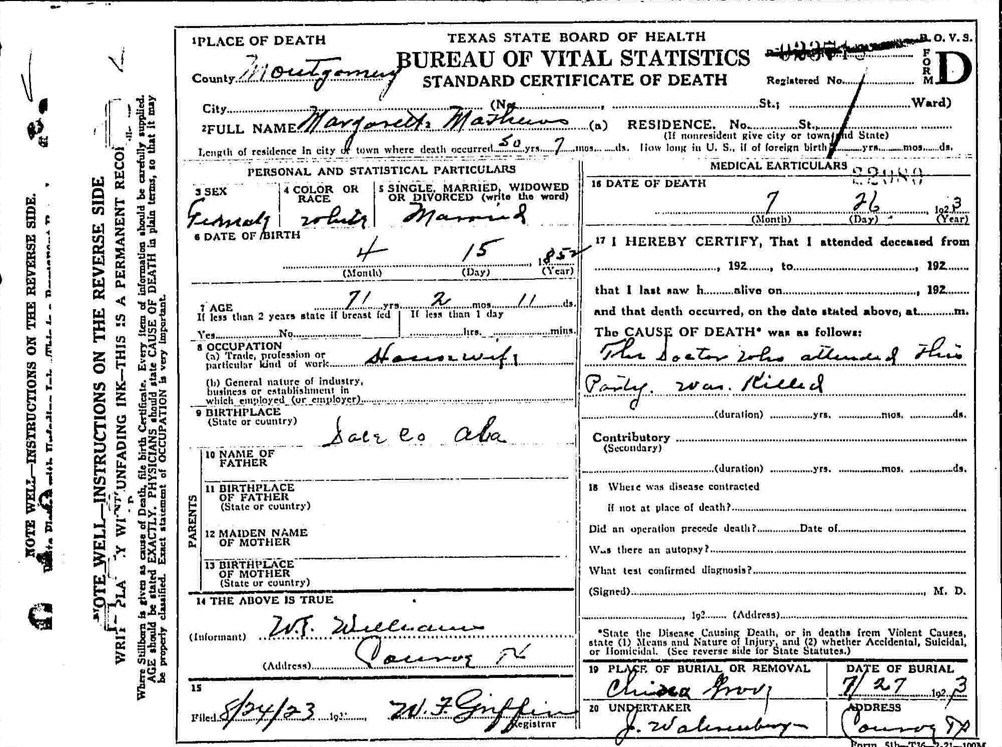
On December 20, 1908, the Ohio Department of Health took over vital statistics registration. Standardized death certificates were issued statewide. If your ancestor passed away in Montgomery County after this date, a copy of their official certificate should exist at the state level, while local copies may be held by regional health districts.
Did Your Ancestor Suffer a Tragic Fate? Where to Look
Standard death certificates provide cause of death, but tracing a truly tragic event—such as an industrial accident, a violent crime, or a fatal epidemic—requires digging deeper into collateral records available in Montgomery County.
Coroner's Inquests and Autopsy Reports
If an ancestor died under suspicious, violent, or accidental circumstances, a coroner investigated the death. The Montgomery County Coroner's Office and local historical archives house historical inquest records. These files frequently contain gripping details, witness testimonies, and medical examiner notes that bring a tragic event into sharp focus.

Historic Local Newspapers
In the 19th and early 20th centuries, local newspapers like the *Dayton Daily News* or the *Dayton Journal* covered local tragedies extensively, often with sensational detail. A standard death certificate might simply list "peritonitis" or "accidental drowning," but a contemporary newspaper article could provide a full-page spread describing a factory explosion at the National Cash Register (NCR) company or a devastating carriage accident on Main Street.
- Check digital newspaper repositories like Chronicling America or NewspaperArchive.
- Visit the Dayton Metro Library’s local history collection for microfilm access to Dayton-area papers.
- Search for the ancestor's surname combined with terms like "fatality," "accident," "inquest," or "suddenly."
Local Hospital and Asylum Records
Montgomery County was home to major regional institutions, including historical medical centers and psychiatric facilities like the Dayton Asylum for the Insane (later Dayton Psychiatric Hospital). If an ancestor passed away while institutionalized, their cause of death and medical history might be preserved in specialized institutional archives, though privacy restrictions and historical record loss can present hurdles.
Navigating Modern Access and Archives
Accessing Montgomery County death records depends largely on the age of the record and current Ohio public records laws.
Public vs. Restricted Records
In Ohio, death records are considered public records, but access rules vary by timeframe:
- Historical Records (Open Access): Death certificates older than 50 years (and pre-1908 probate records) are generally open to the public and accessible via the Ohio History Connection or local archives without restriction.
- Recent Records (Restricted Access): Death certificates less than 50 years old typically require specific familial relationships or a proven genealogical interest to obtain certified copies, though uncertified informational copies may be easier to secure through the local health department.
Key Repositories for Montgomery County Research
To conduct a thorough search, familiarize yourself with these primary local and state resources:
- Montgomery County Probate Court: Holds historical marriage, birth, and early death records (1867–1908).
- Public Health - Dayton & Montgomery County: Handles vital statistics for recent local deaths.
- Dayton Metro Library (Local History Room): Excellent for city directories, historical maps, cemetery transcriptions, and local newspaper archives.
- Ohio History Connection (Columbus): Houses statewide microfilmed death certificates from 1908 to roughly the mid-20th century.
Putting the Pieces Together
Uncovering the final chapter of an ancestor's life takes patience and cross-referencing. Start with the index databases on platforms like Ancestry.com or FamilySearch to pull baseline dates. Then, pivot to Montgomery County-specific archives, coroner files, and historic newspapers to flesh out the narrative.
Whether your ancestor succumbed to the devastating 1918 influenza pandemic in Dayton, suffered an unfortunate workplace accident, or simply faded quietly into history, exploring Montgomery County death records Ohio transforms a name on a page into a fully realized human story.