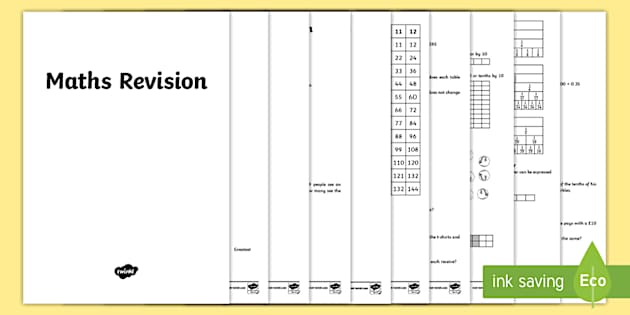
Must Have A4 Maths Revision Sheets for Exams
When preparing for high-stakes mathematics exams, wading through a 400-page textbook often induces more panic than productivity. The secret to effective revision is consolidation: boiling vast syllabuses down into clear, high-yield summaries. Developing and curating a set of must have A4 maths revision sheets is one of the most effective strategies to cut cognitive clutter, trigger visual memory, and master vital formulas before stepping into the exam room.
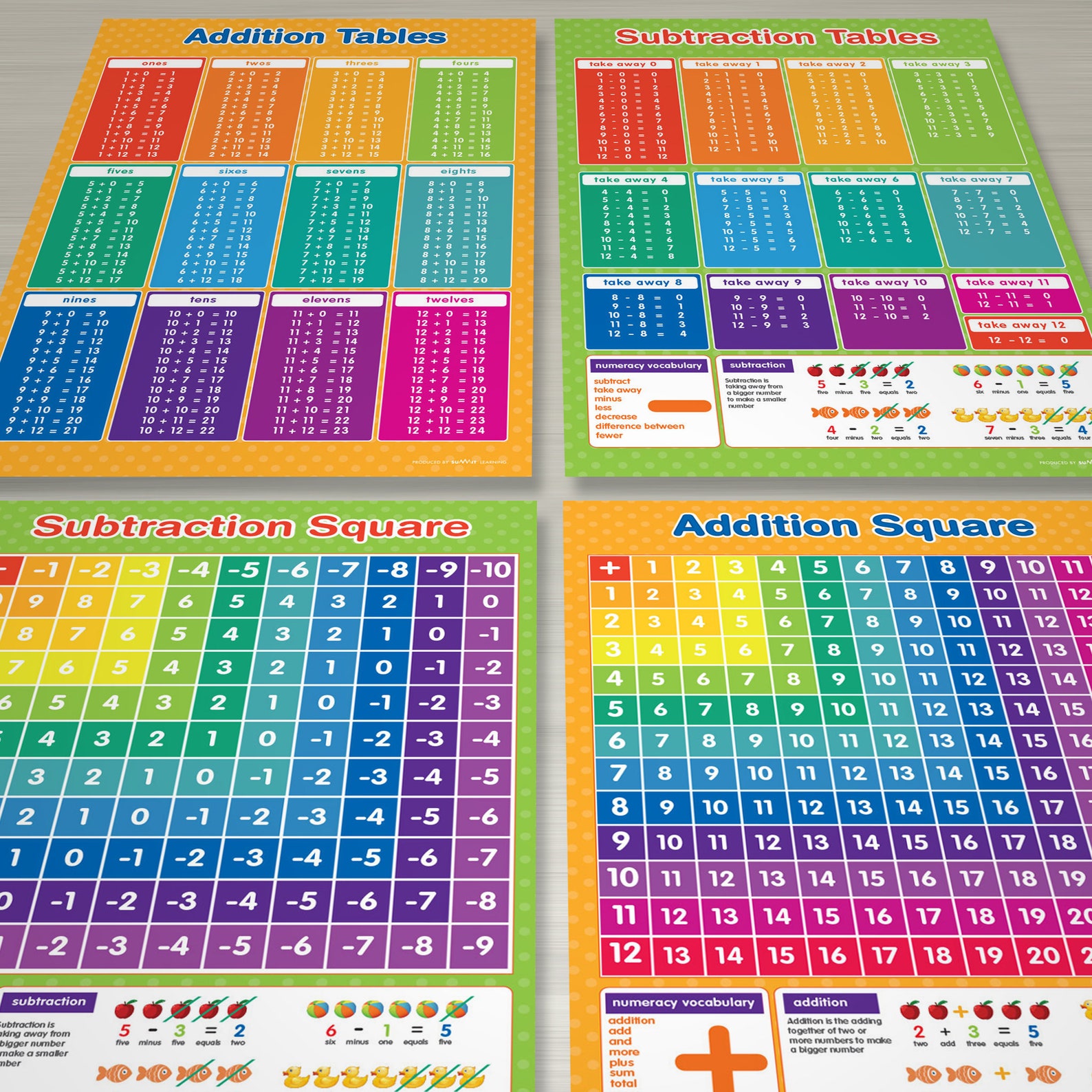
Why the A4 format? A single sheet of paper imposes a natural constraint. It forces you to distinguish between essential core concepts and trivial filler, giving your brain an organized mental map of each topic. Below, we break down the fundamental sheets every student needs, what to include on them, and how to use them for active study.
Why A4 Maths Sheets Outperform Traditional Notebooks
Traditional spiral notebooks often hide vital information behind pages of disjointed rough work. A dedicated single-page overview provides clear structural advantages:
- Spatial Recall: Humans possess powerful visual-spatial memory. Remembering that the Sine Rule was located in the top-right corner of your yellow-accented trigonometry sheet can instantly prompt memory retrieval during an exam.
- Reduced Cognitive Load: Breaking the syllabus into modular single-topic sheets prevents the feeling of overwhelm, making revision feel manageable and organized.
- Quick Reference During Past Papers: Instead of flipping through page after page while working through past exam questions, having a single sheet flat on your desk lets you quickly verify steps and cement method patterns.
The Essential Must Have A4 Maths Revision Sheets
While specifications vary across exam boards—such as GCSE, IGCSE, or A-Level—certain foundational topics always demand dedicated attention. Here are the five sheets that every mathematics student should assemble.
1. The Algebra & Functions Command Center
Algebra represents the spine of secondary and advanced mathematics. A messy algebraic sheet leads to careless errors, so clarity is paramount here.
- Quadratic Rules: The quadratic formula, completing the square steps, and the discriminant ($b^2 - 4ac$) rules for real, repeated, or imaginary roots.
- Factorisation Patterns: Difference of two squares ($a^2 - b^2 = (a-b)(a+b)$) and common expansion identities.
- Laws of Indices: Multiplication, division, negative powers, and fractional powers written with explicit examples alongside algebraic variables.
- Rearranging Complex Formulas: A three-step checklist for making a variable the subject when it appears twice (e.g., clear fractions, collect terms on one side, factorise).
2. Trigonometry & Non-Right-Angle Geometry
Geometry marks are frequently lost because students apply right-angled rules to non-right-angled triangles. This sheet should be heavily visual.
- The Basic Triangle: Clear diagrams for SOH CAH TOA, alongside exact trigonometric values for $0^\circ, 30^\circ, 45^\circ, 60^\circ,$ and $90^\circ$.
- Advanced Triangles: The Sine Rule (for sides and angles), the Cosine Rule (standard and rearranged for angles), and the area formula ($\frac{1}{2}ab\sin C$).
- Circle Theorems: Tiny, clean diagrams displaying the core circle rules (angle at the centre, angles in the same segment, cyclic quadrilaterals, alternate segment theorem).
- Vector Basics: How to represent parallel vectors, vector addition, and finding midpoints or ratios along a vector line.
3. Probability Trees & Statistical Distributions
Statistics questions often penalize students not for computation, but for misinterpreting phrasing. Your statistics sheet should focus heavily on rules and interpretation.
Video: 🎀✏️ it girl *MATH notes* -how to take aesthetic & efficient notes/flashcards p.1 (study vlog, tips)

- Core Probability Rules: Mutually exclusive events ($P(A \cup B) = P(A) + P(B)$) versus independent events ($P(A \cap B) = P(A) \times P(B)$).
- Tree Diagrams & Venn Diagrams: A miniature worked model showing conditional probability ("without replacement") pitfalls.
- Averages & Spread: Formulas for the mean from grouped frequency tables, finding medians and quartiles, and how outliers are calculated ($Q_1 - 1.5 \times \text{IQR}$).
- Histograms: The golden formula: $\text{Frequency Density} = \frac{\text{Frequency}}{\text{Class Width}}$.
4. Number Sense, Surds & Percentages
Designed primarily for non-calculator papers, this sheet safeguards the easy marks that determine grade boundaries.
- Surd Manipulation: Rules for simplifying radicals, expanding double brackets with roots, and rationalising denominators with binomial surds (e.g., multiplying by $a - \sqrt{b}$).
- Percentage Multipliers: Clear conversion charts for percentage increases, decreases, and compound interest calculations over $n$ years.
- Standard Form: Calculation conventions, adding/multiplying scientific notations, and rules on significant figures.
- Bounds & Errors: Determining upper and lower bounds for truncated vs. rounded numbers, alongside division rules where maximum values require the formula $\frac{\text{Upper Bound}}{\text{Lower Bound}}$.
5. Graphs, Transformations & Calculus
For students tackling higher tier or further mathematics, visual coordinate geometry and basic calculus are prime candidates for an A4 reference page.
- Graph Shapes: Mini-plots of linear, quadratic, cubic, reciprocal ($y = \frac{k}{x}$), and exponential graphs.
- Function Transformations: The definitive table for $f(x + a)$, $f(x) + a$, $f(-x)$, and $-f(x)$, highlighting which affect the $x$-axis (opposite direction) and $y$-axis.
- Calculus Essentials: The power rule for differentiation ($nx^{n-1}$), finding stationary points, setting $\frac{dy}{dx} = 0$, and using the second derivative test to classify maximums and minimums.
How to Format an A4 Revision Sheet for Maximum Retention
Dumping text onto paper haphazardly creates visual static. Follow this four-quadrant structure to make your sheets clear and usable:
- The Rule/Formula Box (Top Left): State the mathematical laws in clear, standard algebraic notation.
- The Pitfall Warning (Top Right): Highlight the most common mistakes examiners comment on (for example: forgetting negative signs inside brackets or failing to flip inequality signs when dividing by negatives).
- The Model Solution (Bottom Left): One fully worked, step-by-step example showing proper notation, layout, and units.
- Exam Checklist (Bottom Right): A quick three-point checklist to run through when verifying answers for that topic.
How to Use Your A4 Sheets Actively
Simply looking at a revision sheet provides the illusion of competence without embedding real retention. To truly master the material, you must turn these sheets into active study tools.
Try the "Blurting" Method: Pick one of your A4 sheets (e.g., Trigonometry), read through it for two minutes, flip it upside down, and take out a blank piece of paper. Try to reconstruct the layout, formulas, and diagrams entirely from memory. Once finished, compare the reconstruction with your original sheet in a different coloured pen. The missing elements highlight your precise knowledge gaps.
Additionally, use your sheets as a diagnostic tool during past-paper practice. Every time you have to glance down at your A4 sheet to recall an identity, make a small pencil tally mark next to that formula. If a particular rule ends up with four or five tallies, you have identified an area that requires dedicated practice questions.
Final Thoughts
The real value of an A4 revision sheet lies in its brevity. By consolidating sprawling textbooks into concise, structured one-page summaries, you train your mind to focus on underlying principles, eliminate common errors, and build the calm, systematic approach needed to earn top grades on exam day.