Must Have Daily Focus Printables for Deep Work
Between endless Slack pings, browser tabs fighting for attention, and task managers buzzing with reminders, modern workdays often feel fragmented before they even begin. While digital tools excel at storing complex project backlogs, they frequently fail at the exact moment you sit down to execute. That is why integrating a few must have daily focus printables into your morning routine can create an immediate, grounded shift in how you work.
A physical printable strips away notification loops and cognitive friction. Putting pen to paper forces a level of commitment that clicking a checkbox simply cannot replicate. Below, we break down why analog focus tools work, the foundational printable formats you should consider, and how to build a friction-free daily workflow around them.
Why Analog Planning Beats Digital Distraction
Every time you unlock your phone or switch windows to check an electronic to-do list, you invite distraction. A quick look at your digital calendar frequently morphs into ten minutes of checking unread emails or scanning social media feeds. This phenomenon, known as attention residue, drains mental stamina and prevents deep work.
A dedicated focus printable acts as a physical boundary. It sits open beside your keyboard, serving as an immutable contract for the day. You cannot open a new tab on a sheet of paper. Furthermore, cognitive research shows that the act of writing by hand improves information retention, sharpens prioritization, and provides a tangible sense of closure when an item is crossed out.
The 5 Must Have Daily Focus Printables for Peak Productivity
You do not need a bloated 40-page organizer to run an effective day. Most high performers thrive on lightweight, hyper-focused templates. Here are the core printable styles that yield the greatest return on focus.
1. The "Rule of 3" Priority Sheet
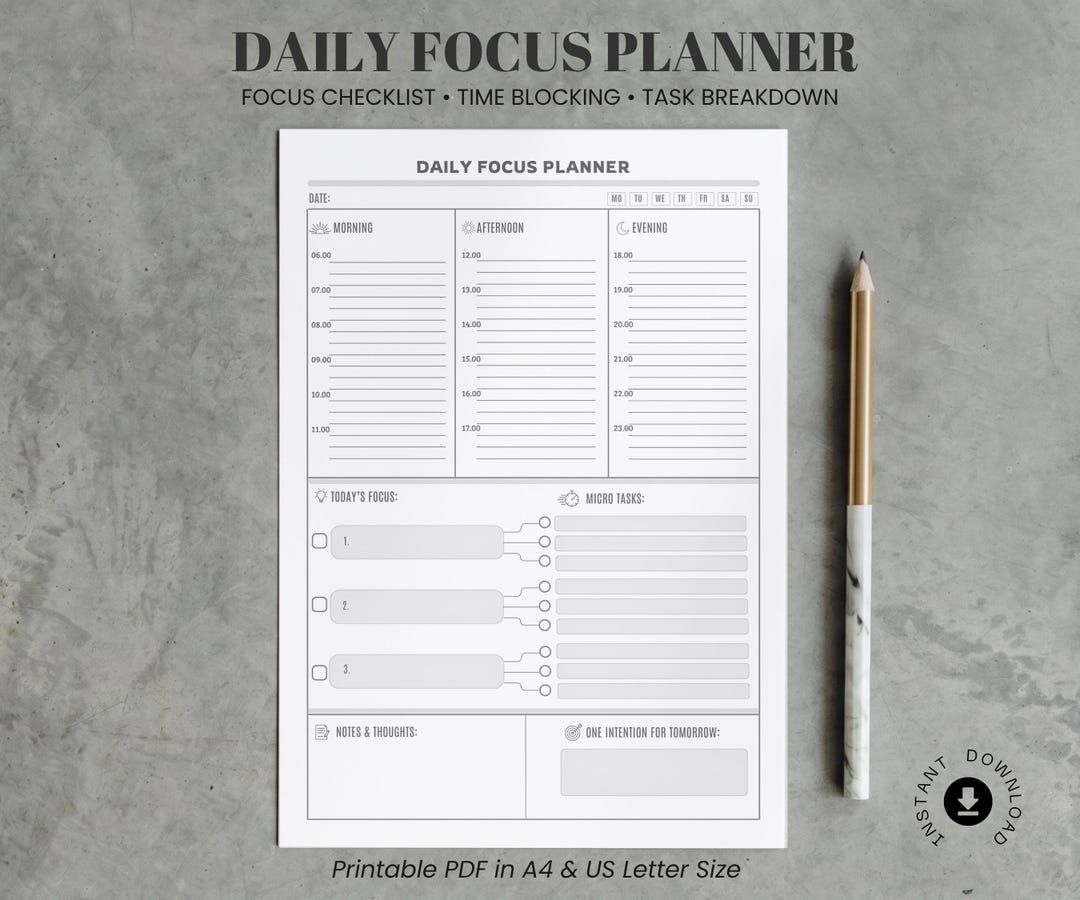
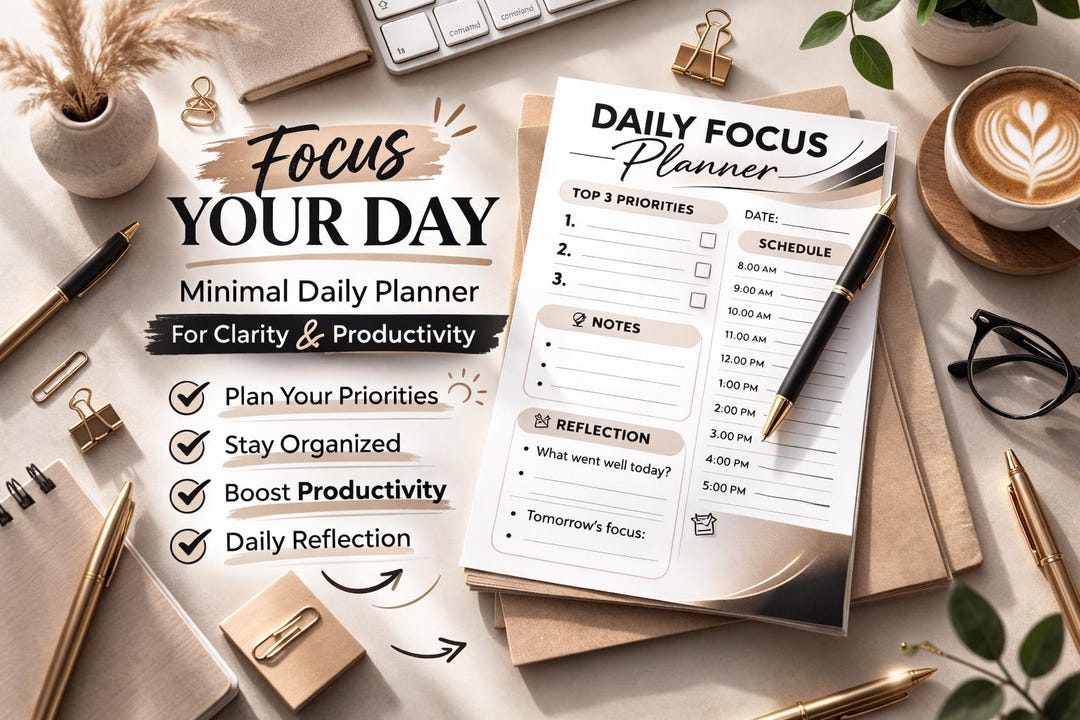
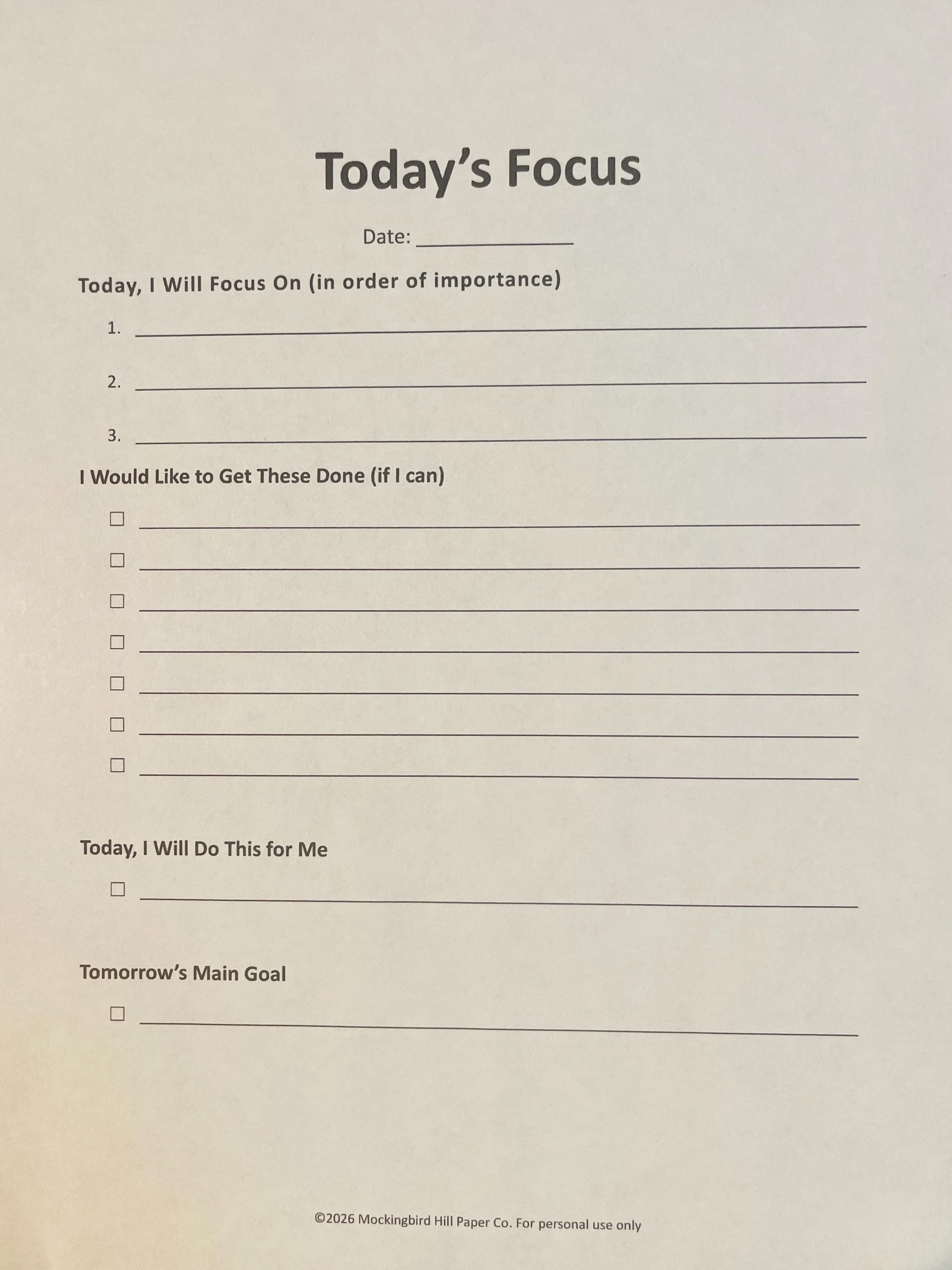
The biggest planning mistake is attempting to tackle twenty items in an eight-hour window. The "Rule of 3" printable forces radical prioritization by providing three prominent, numbered slots at the top of the page for your non-negotiable outcomes.
- Top Section: Three critical outcomes that define a successful day.
- Secondary Section: Four to five maintenance or administrative tasks to complete only after the core three are done.
- Distraction Box: A small blank quadrant where you jot down random thoughts or urges (e.g., "order coffee beans," "reply to Mike") so they leave your head without derailing your current sprint.
2. The Time-Blocking Grid
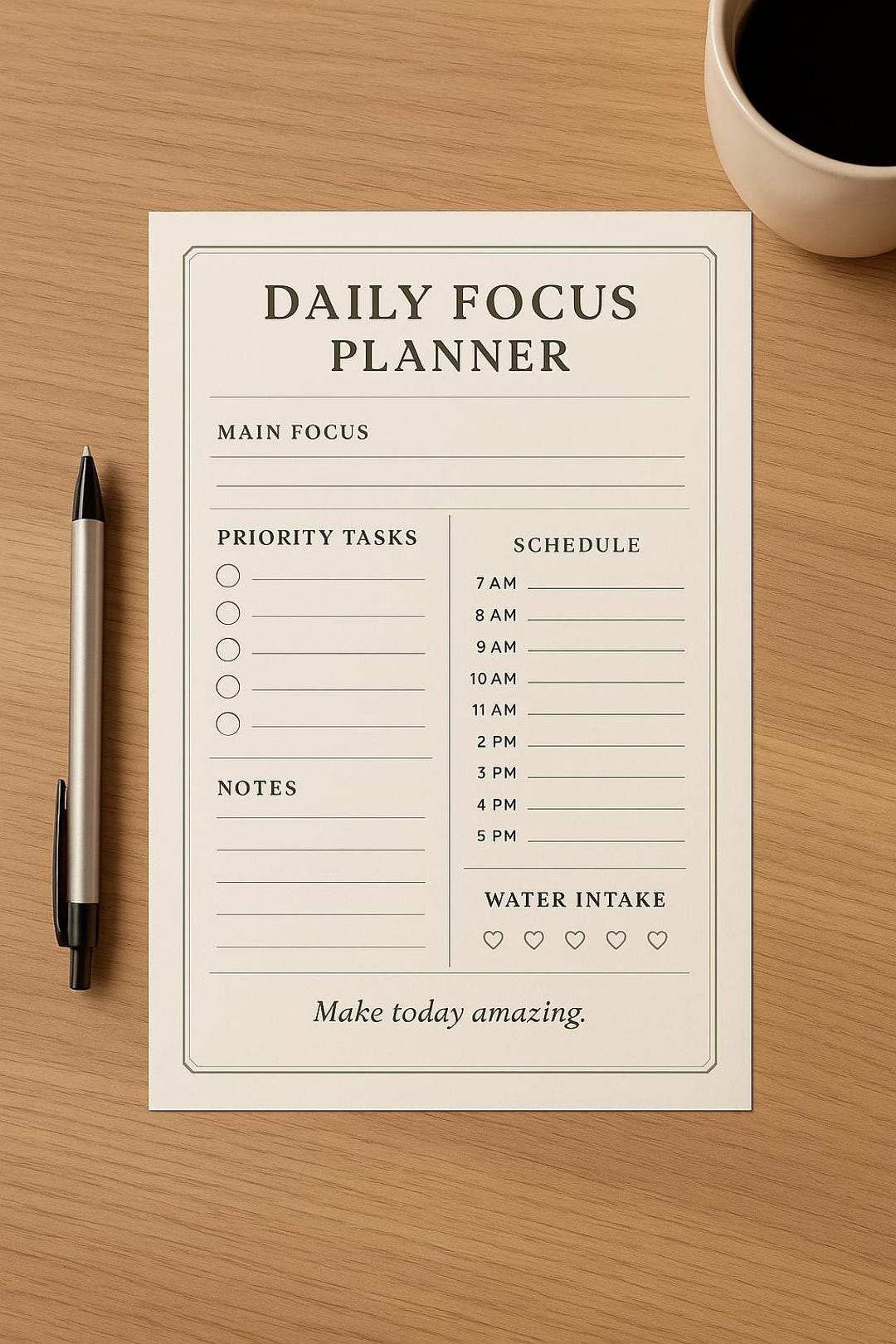
Task lists tell you what to do, but time blocks dictate when you will do it. A time-blocking printable divides your day into hourly or half-hourly increments, typically running from 7:00 AM to 6:00 PM.
By physically shading or boxing out chunks of time for specific objectives, you combat Parkinson's Law—the tendency for work to expand to fill the time allotted for its completion. Seeing visually that you only have a single two-hour window for creative drafting immediately discourages sluggish pacing.
3. The Eisenhower Matrix Workspace
If your workload is constantly hijacked by urgent emergencies, an Eisenhower Matrix daily sheet is critical. This layout divides your page into four quadrants:
- Urgent & Important: Crises, pressing deadlines, and mission-critical work (Do immediately).
- Not Urgent & Important: Strategic planning, deep focus work, skill development, and health (Schedule intentionally).
- Urgent & Not Important: Interruptions, some phone calls, and non-critical requests (Delegate or batch).
- Not Urgent & Not Important: Time-wasters, busywork, and aimless browsing (Eliminate).
Filling out this printable each morning prevents you from mistaking noise for genuine value.
4. The Pomodoro & Interval Tracker
For professionals who struggle with afternoon slumps or procrastination, an interval tracker provides momentum. This printable features rows of 25-minute work blocks paired with 5-minute break indicators.
Before you begin a session, write your singular objective inside the interval row. Set a physical timer, put your head down, and color in the block once finished. Tracking your actual completed focus sprints provides clear, visual proof of productivity that compounds over the week.
5. The End-of-Day Shutdown Docket
Productivity is not just about starting fast; it is about ending clean. An evening shutdown printable provides a repeatable ritual that signals to your brain that the workday is officially over.
Key elements on this printable include:
- A checklist confirming inbox triage and calendar review for tomorrow.
- A space to log key wins and completed projects.
- A brief "open loops" section to capture unresolved issues so you do not ruminate on them during dinner or family time.
Anatomy of an Effective Focus Template
When designing or choosing printables to download, beware of over-designed layouts cluttered with excessive quotes, decorative illustrations, or dozens of arbitrary metric trackers. A functional sheet should prioritize whitespace and utility.
Look for templates that include:
- High Contrast, Minimalist Design: Clean lines, subtle grays, and ample writing space maximize legibility.
- Dedicated Parking Lot / Brain Dump Area: Unplanned interruptions are inevitable. A clean space to write down unexpected requests keeps them from interrupting your active task.
- Habit and Hydration Checkpoints: Simple icons or check-boxes along the margin allow you to log basics (water intake, movement, breaks) without taking focus away from the main agenda.
How to Implement a 10-Minute Daily Focus Routine
The finest printable in the world is useless if it sits in a drawer. Build a consistent rhythm to ensure your printable becomes the nerve center of your daily workflow.
Step 1: The Morning Alignment (5 Minutes)
Before launching your email client or checking team messaging channels, print your sheet (or pull a fresh page from your binder). Identify your top three priorities for the day. Cross-reference your digital calendar and map those priorities into distinct time blocks on your printable. Once your plan is on paper, keep it flat on your desk beside your keyboard.
Step 2: The Midday Recalibration (2 Minutes)
At lunchtime, glance at your printable. Have emergencies thrown your morning off course? Do not panic. Simply draw a line through tasks that no longer fit the reality of your day, renegotiate your afternoon time blocks, and recommit to finishing your remaining primary objective.
Step 3: The Evening Archive (3 Minutes)
At the end of your day, mark off your finished tasks. File the completed sheet into an archive folder or discbound notebook. This physical act of filing gives you a satisfying sensory signal that work is finished, and it creates a weekly paper trail you can review every Friday to evaluate your focus trends.
Paper and Printing Recommendations
Using standard, flimsy 20 lb copy paper often leads to marker bleed-through and tearing. To create a tactile experience you actually look forward to using, consider the following specifications:
- Paper Weight: Choose 28 lb or 32 lb paper (105 to 120 GSM). This weight prevents ghosting from fountain pens, gel pens, and highlighters.
- Binding Options: A slim clipboard keeps your current daily sheet flat and prominent on your workspace. Alternatively, an A5 or letter-sized discbound notebook lets you flip, reorganize, and archive sheets effortlessly.
- Print Setup: Set your printer settings to "Actual Size" (100%) rather than "Fit to Page" to preserve margins and clean grid proportions.
Take Control of Your Workday
Productivity does not require expensive software subscriptions or convoluted automation systems. More often than not, meaningful work comes down to picking three vital tasks, setting aside undisturbed time to complete them, and refusing to let distractions dictate your day. By introducing simple, purpose-built focus printables into your workflow, you create the clarity and boundaries needed to accomplish your best work.