Must Have Ethiopian Bible 88 Books for Daily Focus
For readers seeking deeper spiritual roots and historical context, exploring the must have Ethiopian Bible 88 books for daily focus provides a perspective rarely found in standard Western Bibles. Preserved for centuries by the Ethiopian Orthodox Tewahedo Church in the ancient liturgical language of Ge'ez, this expansive canon offers a holistic, contemplative vision of scripture. While standard Western Protestant editions contain 66 books and Catholic editions contain 73, the broader Ethiopian tradition preserves rare writings that illuminate the worldview of early Christianity and Second Temple Judaism.

Understanding the Ethiopian Biblical Canon
The Ethiopian canon is renowned for its breadth and historical preservation. While many Western scholars reference the traditional count of 81 books, modern comprehensive English printings often compile related works, canonical commentaries, and secondary pastoral texts to form an 88-book collection. This collection encompasses both the narrower canon (books accepted universally for standard liturgical reading) and the broader canon (additional texts used for monastic instruction, ecclesiastical governance, and theological reflection).
Ethiopia adopted Christianity as a state religion in the early fourth century under King Ezana of Aksum. Because of its geographic insulation and sovereign development, the Ethiopian Church preserved complete texts that were elsewhere discarded, suppressed, or lost to antiquity. For modern readers, these volumes do not replace fundamental scriptures; rather, they expand historical understanding and enrich daily personal devotion.
Key Unique Books Found in the 88-Book Canon
What sets the Ethiopian collection apart from other global traditions is the survival of complete apocalyptic and historical narratives that were foundational to early Christian writers.
1. The Book of Enoch (1 Enoch / Henok)
Perhaps the most famous inclusion, 1 Enoch was revered by early church fathers such as Tertullian and is directly quoted in the New Testament Epistle of Jude. While only fragments of Enoch survived in Aramaic and Greek among the Dead Sea Scrolls, the complete text was preserved entirely through the Ge'ez Ethiopian tradition. Enoch offers an extensive vision of cosmic order, angelology, divine judgment, and the restoration of righteousness, making it a profound text for evening meditation and reflection on divine justice.
2. The Book of Jubilees (Kufale)
Known as the “Lesser Genesis,” Jubilees retells the narrative from Creation to Mount Sinai in 49-year cycles (jubilees). It provides intricate details omitted from the standard Genesis account, illustrating angels interacting with patriarchs and emphasizing sacred time, calendar observance, and covenant faithfulness. Reading Jubilees alongside Genesis provides fresh texture to familiar biblical accounts.
3. The Books of Meqabyan (Ethiopian Maccabees)
Distinct from the Greek Books of Maccabees found in the Catholic and Eastern Orthodox apocrypha, the three Books of Meqabyan are unique to Ethiopia. They recount stories of resistance against idolatry and unwavering loyalty to God, highlighting themes of martyrdom, personal integrity, and resurrection hope. Their straightforward moral lessons make them ideal for quick, focused morning reading.
4. The Broader Canon: Pastoral and Liturgical Writings
Video: EASY-TO-READ FULL-TEXT? Ethiopian Bible in English 88 Books Volume 1 Review Unboxing Gabriel Tesfaye
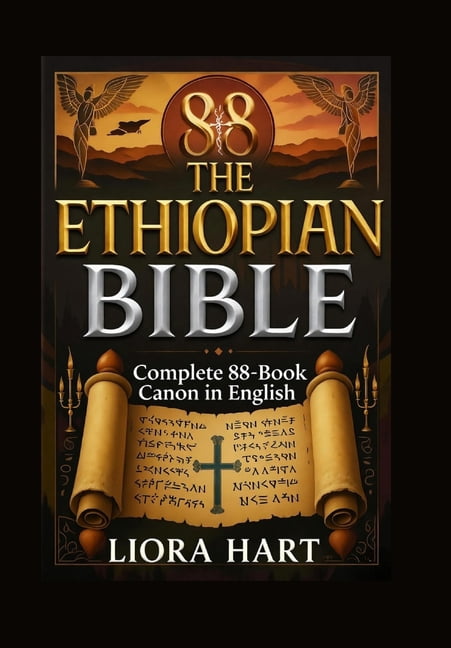
In comprehensive 88-book editions, readers also encounter texts like 4 Baruch (The Paralipomena of Jeremiah), the Ascension of Isaiah, and foundational ecclesiastical texts such as the Sinodos, the Didascalia, and the Book of the Covenant (Meskhafa Kidan). These works provide an extraordinary window into how early believers structured their communal prayer, maintained personal holiness, and understood spiritual warfare.
Why the Must Have Ethiopian Bible 88 Books for Daily Focus Matters
Incorporating these historical scriptures into a modern quiet time brings several practical and spiritual advantages:
- Restoring Second Temple Context: The authors of the New Testament lived in a world saturated with the imagery of Enoch, Jubilees, and prophetic visions. Reading these works demystifies complex New Testament passages concerning spiritual warfare, the Son of Man, and eschatology.
- A Contemplative, Cosmic Horizon: Western devotional habits often center entirely on personal ethics or immediate emotional encouragement. The Ethiopian canon shifts focus toward the cosmic sovereignty of God, the majesty of creation, and humanity's place in a grand spiritual drama.
- Uninterrupted Literary Cohesion: By preserving narratives that bridge the Old and New Testaments without the historical blackout typical of Protestant canons, readers gain a continuous literary narrative tracing redemption history.
How to Build a Daily Focus Routine Around the 88 Books
Approaching a collection of 88 books can feel overwhelming without a clear, sustainable reading framework. Because many of these texts feature dense apocalyptic language and detailed narratives, structured daily reading is essential.
Pairing the Familiar with the Unfamiliar
Avoid diving into complex texts like Enoch or the Sinodos in isolation. Instead, pair them with canonical books you already know well. Consider this balanced morning-and-evening layout:
- Morning (Foundations): Read a chapter from the Gospels or the Psalms to anchor your day in Christ's teachings and prayerful worship.
- Evening (Contemplation): Read one or two sections from 1 Enoch, Jubilees, or Meqabyan. Reflect on the broader themes of divine providence, righteous living, and perseverance under pressure.
Using the Ancient Lectio Divina Method
Rather than treating the extra books as mere academic curiosities, approach them with reflective mindfulness through four classical steps:
- Read (Lectio): Read a short passage slowly, taking in the historical narrative and imagery without rushing to complete chapters.
- Meditate (Meditatio): Focus on a particular phrase, such as Enoch's descriptions of light, peace, or divine order. Ask what that truth communicates about God's character.
- Pray (Oratio): Turn your reflections into an earnest prayer for wisdom, endurance, and alignment with God's will.
- Rest (Contemplatio): Spend two to three minutes in quiet stillness, allowing the magnitude of ancient truths to quiet mental clutter.
Selecting a Quality English Translation
Because interest in the Ethiopian canon has surged, publishers offer various versions online and in print. When choosing an edition for daily spiritual use, keep several quality indicators in mind:
- Source Authenticity: Look for editions that clearly specify translations made directly from Ge'ez manuscripts rather than modern speculative reinterpretations. Academic translations, such as those by Richard Laurence, R.H. Charles, or contemporary Ethiopian liturgical scholars, offer greater textual reliability.
- Clear Book Division: A good edition should clearly demarcate the Old Testament, the broader Old Testament additions, the New Testament, and the ecclesiastical canonical writings.
- Print Legibility and Binding: Because an 88-book volume is inherently large, ensure the print layout, font size, and paper weight support comfortable, sustained reading during daily quiet time.
Final Thoughts
Engaging with the Ethiopian biblical tradition is more than an academic exercise; it is an invitation to sit with an unbroken lineage of Christian devotion that has endured through centuries. By incorporating the 88 books into your daily study, you expand your theological horizons, deepen your reverence for ancient spiritual literature, and find fresh, contemplative focus for everyday life.


