Must Have Toyota Organizer Print Designs & Tips
Toyota vehicles are renowned for reliability, utilitarian design, and robust mechanical engineering. However, anyone who has spent time inside a Tacoma, 4Runner, Tundra, or RAV4 knows that cabin storage can be a mixed bag. Cavernous center consoles turn into bottomless pits of tangled cables and loose change, while door pockets lack practical separation. Finding the must have Toyota organizer print for your specific model bridges the gap between rugged utility and organized convenience, letting you tailor interior storage to your exact daily carry.
Why 3D Printed Organizers Outperform Generic Accessories
While aftermarket retailers sell injection-molded plastic inserts, 3D printing provides distinct advantages for vehicle organization:
- Exact Vehicle Tolerances: Enthusiast-designed digital models account for the subtle tapers, curves, and cable passthroughs unique to specific Toyota trim levels and model years.
- Modular Customization: Instead of being locked into a fixed grid, open-source designs allow you to integrate ecosystem standards like Gridfinity or add custom cutouts for specific accessories like radios, multi-tools, or garage remotes.
- Rapid Replacement and Color Matching: If your storage needs change or an insert breaks under heavy trail use, printing a replacement costs only a few dollars in material. You can also match the exact aesthetic of your interior trim using textured print beds and matte filaments.
The Must Have Toyota Organizer Print Upgrades by Model
The global 3D printing community has tackled nearly every interior quirk across Toyota’s lineup. Below are the most functional, highly rated printable mods categorized by vehicle family.
1. Toyota Tacoma & 4Runner: Taming the Deep Console
The center consoles in third-generation Tacomas and fifth-generation 4Runners are notoriously deep. Without dividers, items sink to the bottom and become impossible to retrieve while driving.
- Two-Tier Sliding Trays: A drop-in upper tray that rests on the console lip gives you quick access to sunglasses, pens, and wallets while preserving full access to the lower cavern.
- Interlocking Lower Grids: Flat-pack interlocking divider walls segment the lower bucket into four or six zones, preventing items like flashlights, first-aid pouches, and tire deflators from sliding around during trail rides.
- Coin Drawer Fuse Cover: One of the most popular functional prints for Tacomas replaces the flat coin-tray/fuse-box access door near the driver’s left knee with a functional pull-down coin pocket.
2. Toyota RAV4: Dashboard and Console Enhancements
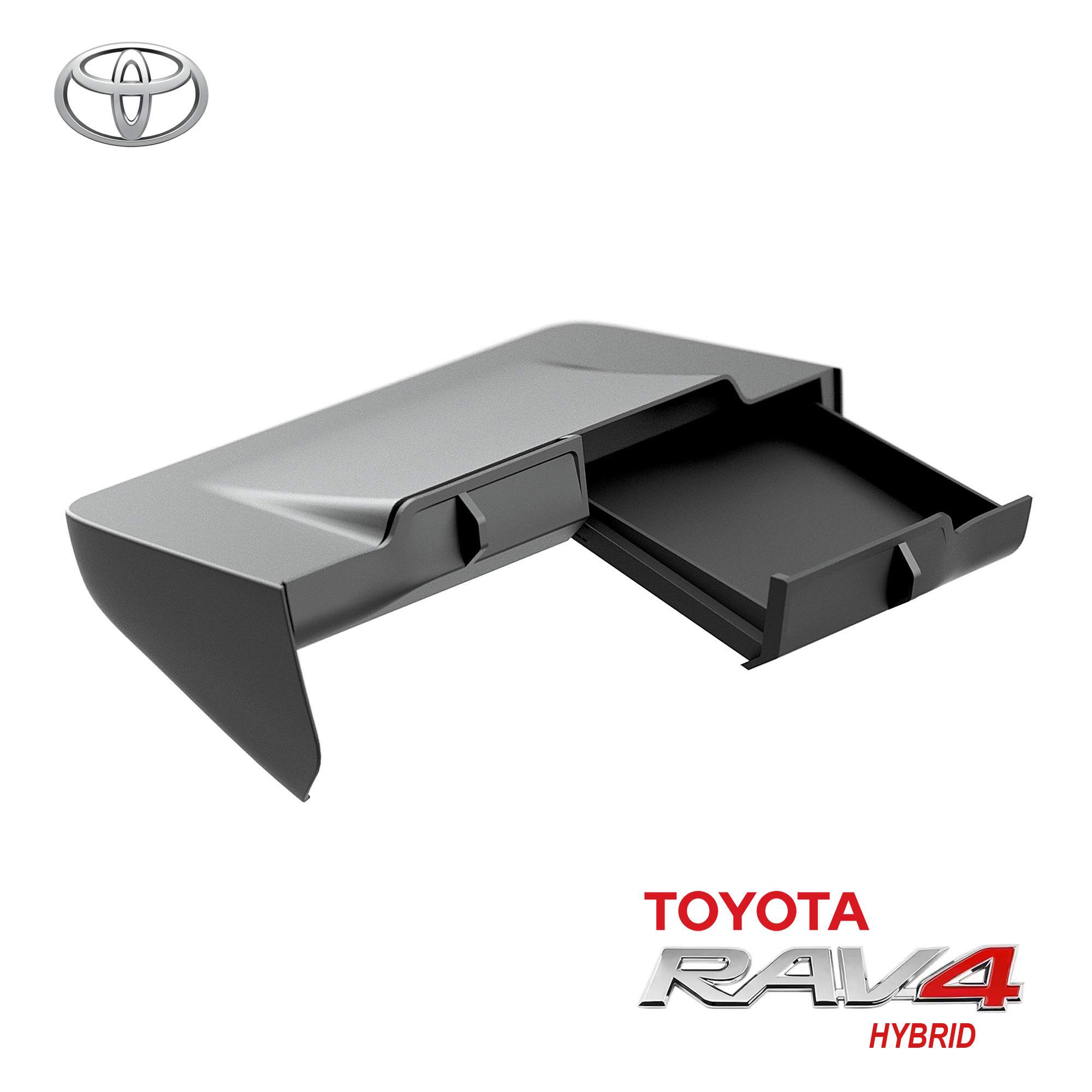
The fifth-generation RAV4 features an open dash shelf on the passenger side and above the climate controls. While convenient, the slick plastic floor allows items to slide and rattle on sharp turns.
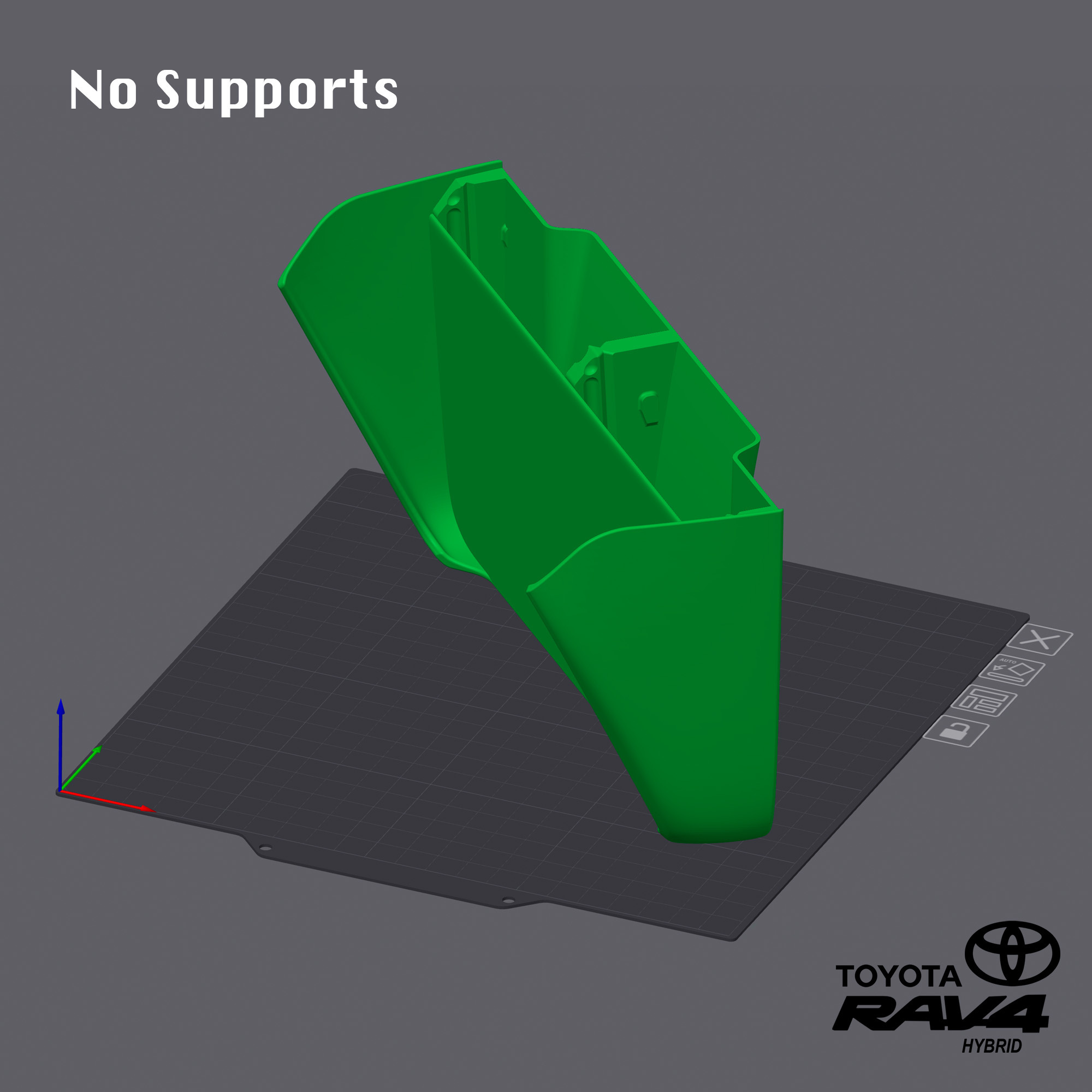
- Glove-Shelf Bins: Contoured modular bins insert neatly into the passenger dashboard recess, dividing the space into distinct slots for phones, keyfobs, and charging cables without sliding out during hard acceleration.
- Console Shifter Trays: Printable wedge organizers sit alongside the shift knob, utilizing dead space to cradle modern smartphones upright for easy viewing and cable access.
3. Toyota Tundra: Commercial-Grade Cab Storage
Modern Tundras offer expansive cabin width, making organization a question of volume management rather than space conservation.

- Oversized Cup Holder Inserts: Factory cup holders frequently fail to support 32 oz and 40 oz insulated water bottles. Stepped adapter prints lock into the factory cup holder slots, securing wide-bottom drinkware without tipping.
- Under-Seat Storage Dividers: For owners with rear-seat under-storage, tall printable partition walls prevent recovery straps, jumper cables, and hitches from clattering together.
Filament Selection: Why PLA Will Fail in Your Toyota
Before sending an organizer model to your slicer, choosing the right material is critical. Automotive interiors experience brutal thermal extremes that destroy standard 3D prints.
The Problem with PLA
Polylactic Acid (PLA) has a glass transition temperature of approximately 55°C to 60°C (131°F to 140°F). On an 85°F summer day, the interior of a vehicle parked in direct sunlight can easily surpass 65°C (150°F), with dashboard temperatures climbing higher. Under these conditions, PLA parts will soften, warp, droop, and permanently deform under their own weight.
Recommended Automotive Filaments
- PETG (Polyethylene Terephthalate Glycol): With a heat deflection point around 75°C to 80°C, PETG is the minimum baseline for interior car parts. It handles mild summer heat well, offers slight flexibility to resist brittle failure, and prints without an enclosed chamber.
- ABS / ASA (Acrylonitrile Styrene Acrylate): ASA is the gold standard for automotive printing. It resists temperatures up to 95°C to 100°C and features exceptional UV resistance, preventing fading or degradation from sunlight passing through vehicle glass. Note that printing ASA requires an enclosed printer and adequate ventilation.
- Carbon Fiber Filled Nylons (PA-CF): For high-wear mounting brackets, phone clamps, or structural dividers, filled nylons provide exceptional rigidity and thermal thresholds exceeding 120°C, though they require hardened steel nozzles and dry storage.
Slicing Strategies for Cabin Durability
A printed organizer inside a moving vehicle is subject to constant vibration, mechanical shock, and temperature cycling. Adjust your slicer settings to ensure structural longevity:
- Increase Wall Counts: Structural strength in FDM printing comes primarily from the outer perimeter walls, not the infill. Use at least 4 perimeters (walls) to ensure the tabs, lips, and dividers do not snap along layer lines when loaded with gear.
- Opt for Gyroid Infill: Choose a 20% to 30% Gyroid or 3D Honeycomb infill pattern. These patterns provide uniform, isotropic strength in all directions, resisting shear stress better than standard rectilinear grids.
- Use Textured PEI Sheets: Printing with a textured build plate imparts a matte, pebble-like finish to bottom surfaces. When oriented correctly, this hides layer lines and mimics the textured matte plastic surfaces used throughout Toyota cabin interiors.
Finishing Touches for a Factory Look
To eliminate interior cabin noise and achieve an OEM appearance, incorporate minor post-processing steps. Line the bottom of your printed bins with adhesive-backed thin craft foam, automotive felt, or laser-cut EVA rubber. This dampens the annoying rattles caused by metal keys, coins, or multi-tools vibrating against rigid plastic walls while driving over rough pavement.
By pairing the right heat-resistant filament with a purpose-built model, you can transform your Toyota's storage compartments into functional, rattle-free, custom storage solutions built to last the life of your vehicle.