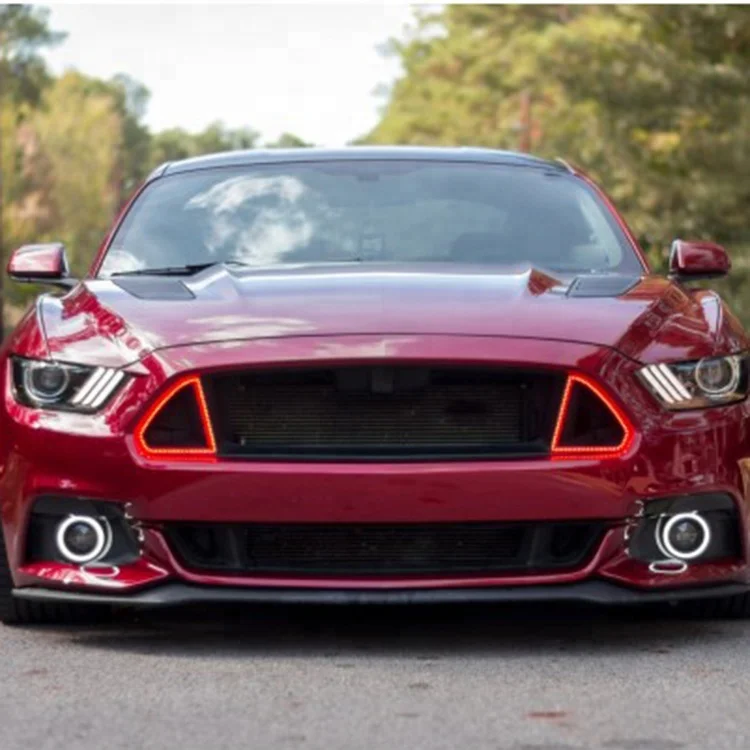
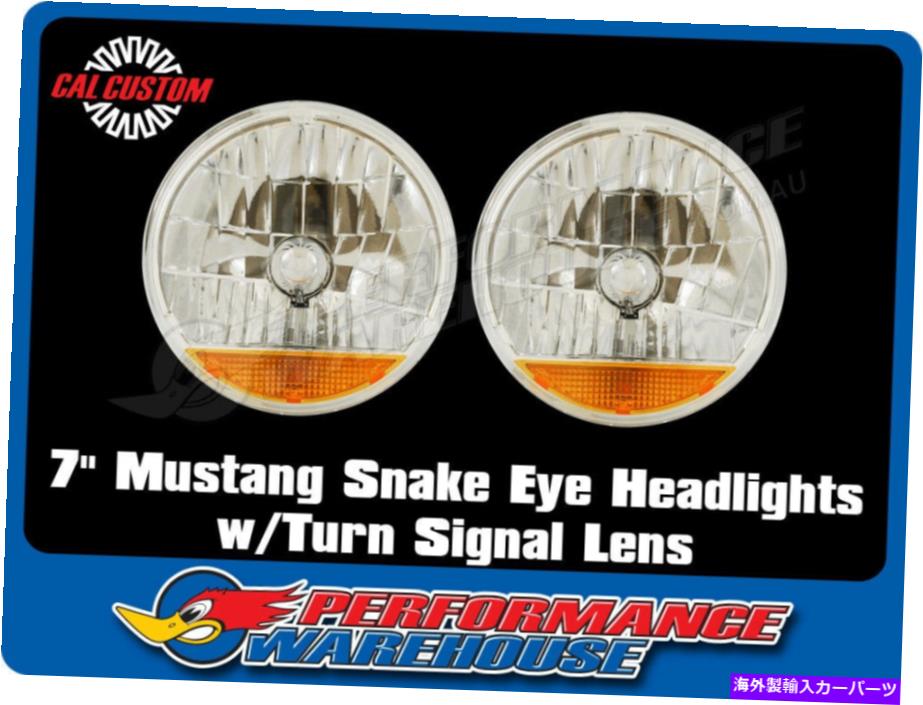
Mustang Snake Eye Headlights: Upgrades, Fitment & Guide
Few visual modifications alter the road presence of a Ford Mustang quite like a modernized front-end lighting setup. For owners seeking a sharper, more venomous look than factory halogen or basic LED assemblies offer, upgrading to mustang snake eye headlights gives the front fascia an unmistakably predatory stance. Inspired by Shelby cobra motifs, exotic supercars, and high-intensity projector designs, these aftermarket housings blend aggressive aesthetics with dramatically improved night-driving visibility.

Whether you drive a classic modern S197 (2005–2014) or an S550 (2015–2023), replacing stock headlights requires a solid understanding of optic types, fitment variations, wiring requirements, and street-legality standards. This guide covers everything you need to know before buying and installing a set.
What Are Snake Eye Headlights?
The term “snake eye” refers to headlight assemblies characterized by distinctive, focused projector lenses combined with sharp daytime running light (DRL) accents. Instead of a standard round bulb behind a diffuse reflector, a snake eye setup typically uses one of two design approaches:
- Slit-Style DRL Accents: LED light tubes or halos that frame the main beam with an angular, sloped contour resembling a viper’s slit pupil.
- Demon Eye / Etched Projectors: Bi-LED or HID projector lenses featuring custom honeycomb or slit-pattern etching on the glass, often backlit by a secondary low-wattage accent LED (often red, amber, or color-shifting RGB).
Beyond styling, these headlights utilize modern optical engineering. Premium units house high-output LED chips behind precise glass projectors that create a razor-sharp cutoff line, throwing light down the road without blinding oncoming drivers.
Popular Styles and Optical Variations
Not all snake eye lights are created equal. The market offers several functional and aesthetic configurations depending on your performance expectations and budget.
1. Bi-LED Projector Units
Bi-LED systems use dedicated onboard LED chips for both low and high beams within a single optical unit. A mechanical shutter or electronic driver switches the output pattern between a low-beam cutoff and full-field illumination. Bi-LED headlights offer instant startup (no warm-up time), low power consumption, and operating temperatures significantly lower than older Xenon HID setups.
2. Tri-Bar Hybrid Housings
Particularly popular for 2015+ models, these housings blend Mustang heritage with the snake eye aesthetic. They maintain the iconic three vertical gills—often functioning as sequential turn signals—while centering an aggressive, darkened projector shroud that creates the “gaze” of the snake eye.
3. Multi-Color RGB and App-Controlled Systems
Show-car builds frequently favor assemblies featuring color-changing LEDs behind the projector shroud. Controlled via Bluetooth smartphone apps, these allow you to switch the parking or display lighting to red, green, blue, or dynamic chasing patterns. However, running these colors while driving on public highways carries strict legal restrictions.
Choosing the Right Mustang Snake Eye Headlights
To avoid low-quality replica units that fail after a few car washes, evaluate potential upgrades using the following technical benchmarks:
DOT / SAE Certification
Always verify that the headlights carry embossed DOT (Department of Transportation) and SAE (Society of Automotive Engineers) markings on the outer polycarbonate lens. Non-certified lights often produce scatter-heavy beams that fail vehicle inspections and pose dangerous glare risks to other motorists.
Polycarbonate Durability and UV Coatings
Sunlight oxidizes cheap automotive plastics rapidly. Look for housings built with UV-treated polycarbonate lenses. High-grade assemblies include anti-fog coatings on the interior and scratch-resistant hard-coats on the exterior to preserve clarity over years of highway driving.

Housing Ingress Protection (IP Rating)
Condensation is the primary enemy of aftermarket lighting. Premium assemblies carry an IP67 or IP68 waterproof rating, featuring high-grade butyl rubber seals and one-way breathable membrane vents (such as Gore-Tex patches) that let moisture vapor escape without allowing liquid water to enter.
Plug-and-Play Wiring Harnesses
Avoid units that require cutting or tapping into factory headlight looms unless you are experienced with automotive electrical work. Quality snake eye lights are engineered with OEM-spec pin connectors that link directly to your Mustang's factory harness, complete with integrated resistors to prevent canbus hyper-flashing on turn signals.
Generational Fitment Considerations
Ford altered the front-end architecture of the Mustang across different generations. Selecting the correct fitment for your specific model year is critical.
S197 Generation (2005–2009 & 2010–2014)
The early S197 (2005–2009) features simple round buckets, making snake eye upgrades reliant on halo-wrapped projectors. The facelifted 2010–2014 models possess a narrower, more integrated headlight shape. Note that 2013–2014 models came from the factory with HID projectors, meaning aftermarket units for these years require ballasts compatible with factory D3S bulbs or internal conversion drivers.
S550 Generation (2015–2017 vs. 2018–2023)
Ford updated the S550 front bumper, hood line, and fenders in 2018. Headlights designed for a 2015–2017 Mustang will not physically bolt into a 2018–2023 bumper without leaving unsightly body gaps or causing mounting tab misalignment. Confirm whether the aftermarket manufacturer built the unit specifically for your pre- or post-facelift chassis.
Installation: What the Process Involves
Swapping Mustang headlights is a manageable DIY project that typically takes two to three hours using basic hand tools. Here is a general breakdown of the process:
- Bumper Cover Removal: On modern Mustangs, you cannot slide the headlight housings out from the front without dropping the front bumper cover. Remove the upper radiator shroud pins, disconnect the lower splash shield screws (usually 7mm and 8mm), and unbolt the corner fasteners inside the wheel wells.
- Unbolting the Assemblies: Each headlight is secured by three or four mounting bolts (commonly 10mm). Remove these carefully to prevent dropping hardware into the subframe.
- Disconnecting Connectors: Release the primary wiring harness clips. If your new snake eyes feature optional DRL tap wires, route these cleanly toward the under-hood fuse box using an add-a-fuse tap rather than splicing bare wires.
- Bench Testing: Before reinstalling the bumper, connect the new housings and cycle through parking lights, low beams, high beams, hazards, and sequential turn signals to confirm proper operation.
- Reassembly: Realign the bumper cover carefully, ensuring even panel gaps along the fenders and hood latch before tightening all fasteners down.
Aiming and Leveling Your New Headlights
Improperly aimed headlights negate the safety benefits of high-grade optics and create severe glare for opposing traffic. Once installed, park the Mustang 25 feet away from a flat wall on level ground. Measure the height from the ground to the center of your projector lens. On the wall, your low beam cutoff line should sit roughly 2 inches below that measured height to ensure adequate forward throw without blinding other drivers. Use the vertical adjustment screw located on the back of the aftermarket housing to dial in the beam level.
Legal Regulations for Custom Lighting
While the aggressive look of custom optics is undeniable, keep street compliance in mind. Most jurisdictions strictly enforce the following rules:
- Forward-facing lights while in motion must be white or selective amber/yellow.
- Red or blue lights visible from the front of the vehicle are strictly reserved for emergency vehicles in almost every state and country. Display these colors exclusively at car shows or on private property.
- High-output cutoff shields must prevent light spill into oncoming traffic lanes.
Conclusion
Mustang snake eye headlights provide an optimal blend of menacing exterior styling and high-performance night vision. By selecting a DOT-compliant housing engineered with durable UV-treated polycarbonate, robust moisture venting, and direct plug-and-play fitment, you can completely redefine your car's front profile while preserving long-term electrical reliability.