Neck Tattoo Filler Ideas: Hottest Trend You Can't Ignore
When turning standalone pieces into a unified, high-impact aesthetic, looking into neck tattoo filler ideas: the hottest trend you can't ignore is the best way to elevate your collection. For years, the neck was reserved exclusively for standalone showstoppers—a singular roaring panther, an outstretched moth, or bold gothic lettering across the throat. Today, the conversation has changed. Collectors and artists are embracing filler work on the neck to bridge the awkward gaps between collarbones, jawlines, and traps, creating a seamless, tapestry-like flow.

Choosing filler for the neck requires significantly more intention than filling an arm or leg. The neck twists, creases, and sits in constant public view. Below, we break down why neck filler is dominating contemporary tattoo culture, the most versatile design styles to consider, and critical placement advice from professional artists.
Neck Tattoo Filler Ideas: The Hottest Trend You Can't Ignore
What makes neck filler such a dominant movement right now? In large part, it is driven by the rise of the "patchwork" aesthetic evolving into full-body integration. Collectors who spent years accumulating disparate pieces on their chest, back, and arms are now meeting in the middle: the neck. Leaving random empty patches between heavy torso work and jawline-adjacent ink often breaks the visual rhythm of the body.
Furthermore, modern tattooing has advanced in both technique and equipment. Finer needle groupings, superior rotary machines, and nuanced shading techniques allow artists to work in the delicate, high-movement skin of the neck without causing the blown-out edges that historically deterred people from intricate background work. Neck filler is no longer just dark smudges or rushed shading—it has become an artistic discipline in its own right.
Top Neck Tattoo Filler Styles and Concepts
The golden rule of filler is simple: it must elevate your primary tattoos, not compete with them. Here are the top styles dominating the scene and how they perform on neck anatomy.
1. Sacred Geometry and Dotwork Stippling
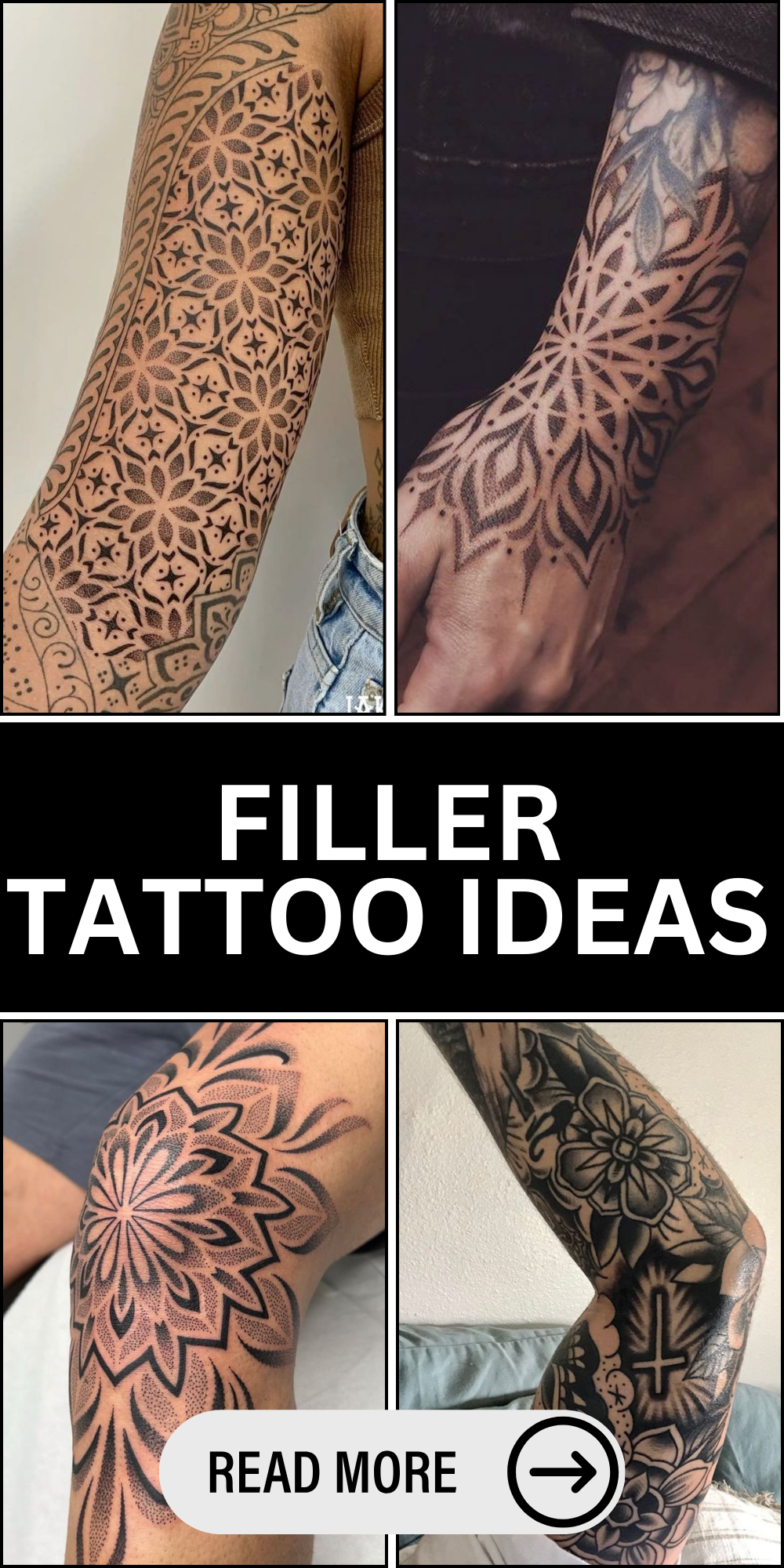
Dotwork and geometric patterns are arguably the most adaptable fillers in modern tattooing. Using differing dot densities (stippling), an artist can fade dark areas seamlessly into bare skin near the jawline or earlobes.
- Mandala Transitions: Half-mandalas tucked underneath existing throat pieces provide a structured, architectural frame.
- Hexagonal and Honeycomb Meshes: These can warp and distort naturally with the movement of your neck muscles without looking deformed.
- Gradient Dotwork: Stippled shading allows for soft, breathable edges that prevent the filler from looking like an abrupt, blocky border.
2. Traditional Wind Bars, Smoke, and Finger Waves
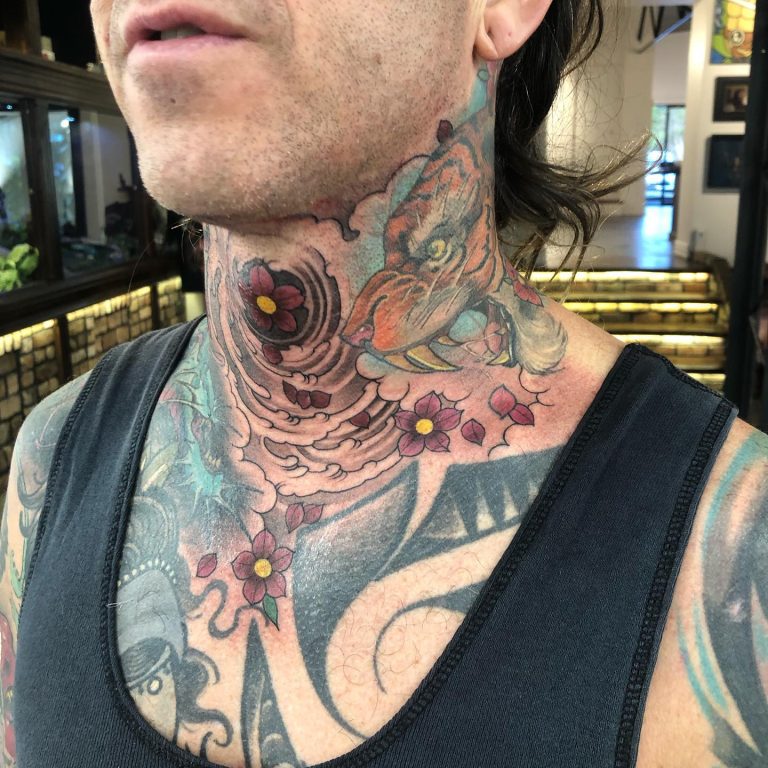
If your existing collection leans heavily toward Japanese Irezumi or American Traditional, classic background motifs remain unbeatable. They are inherently designed to wrap around musculature and tie disconnected motifs together.
- Finger Waves and Water Sprays: Perfect for side-neck placement, curling naturally around the ear and trailing down toward the collarbone.
- Black Wind Bars: Bold, dark, and graphic, these add undeniable power and contrast, especially behind bright, color-saturated focal pieces.
- Stylized Smoke Trails: Soft grey wash smoke offers an organic way to wander through tight negative spaces between tattoos without overwhelming the eye.
3. Organic Botanical Vines and Floral Filigree
Video: Neck tattoo ideas | #necktattoo | Fashion Event

The natural curves of creeping vines, thorny brambles, and baroque filigree mimic the vertical lines of the sternocleidomastoid muscle (the large muscle running down each side of the neck). These organic elements can snake between larger tattoos, filling narrow channels with leaves, berries, or intricate scrollwork. Because botanical shapes lack rigid symmetry, they hold up exceptionally well to the skin stretching that occurs when turning your head.
4. Heavy Blackwork and Blast-Over Textures
For collectors embracing brutalist or heavy blackwork aesthetics, dense fillers make an aggressive, confident statement. Solid black panels with raw negative space cutouts, rough brushstroke effects, or heavy crosshatching create striking contrast against older, settled ink. This approach is particularly effective if you are working with faded tattoos or poorly spaced flash that needs visual cohesion.
5. Micro-Motifs: Stars, Sparkles, and Droplets
If you prefer a lighter, more scattered approach, micro-motifs provide filler without continuous ink coverage. Traditional star-and-dot combinations, medieval spark clusters, or falling droplets allow you to balance negative space while keeping the overall look open and breathable.
Anatomy and Placement: Working with the Neck's Movement
Designing neck filler is an anatomical challenge. The neck undergoes continuous expansion, contraction, and rotation. An idea that looks balanced on a flat stencil sheet can warp drastically the moment you look over your shoulder.
- The Side Neck: This area handles directional designs best. Fillers here should flow diagonally along the muscle line, guiding the viewer's eye from the jaw down to the clavicle.
- The Throat (Anterior Neck): Symmetry or intentional organic asymmetry works best here. Avoid rigid, horizontal grid patterns across the Adam's apple, as swallowing and tilting the head will distort straight lines.
- The Nape (Back of Neck): The back of the neck is flatter and wider, making it ideal for denser, symmetrical pattern-work that bridges the upper back into the hairline.
Important Considerations Before Getting Neck Filler
Before committing your neck real estate to background work, keep these practical realities in mind:
- Contrast Is Crucial: If your primary tattoos are dark and heavily saturated, choose a lighter, airier filler style like grey wash or stippling. If your centerpieces are delicate fine-line, dense black filler might swallow them whole.
- The Healing Curve: The neck moves constantly, meaning aftercare demands vigilance. Swelling can be significant, and scabbing is more prone to cracking due to movement. Opt for breathable, medical-grade adhesive bandages if your artist recommends them, or keep aftercare moisturizers extraordinarily light.
- Pain and Sensation: Filling the neck involves tattooing over bony landmarks (the collarbones and spine) and hyper-sensitive tissue (the throat and lymph node zones). Filler sessions often involve repetitive whip-shading or packing, which can be challenging to sit through.
Work Freehand for the Best Results
While stencils are mandatory for precise geometric shapes, the absolute best neck fillers are frequently drawn directly onto the skin with surgical markers. A skilled artist will ask you to sit straight, turn your head, tilt down, and look upward while they map out the flow lines.
By tailoring the design directly to your unique musculature in real-time, freehand filler guarantees that every curve, leaf, or shadow works in harmony with your body. When executed with precision, neck filler transforms isolated tattoos into a unified, breathtaking composition you will wear with pride.