Neighbor's Drainage Killing Your Lawn in Licking County
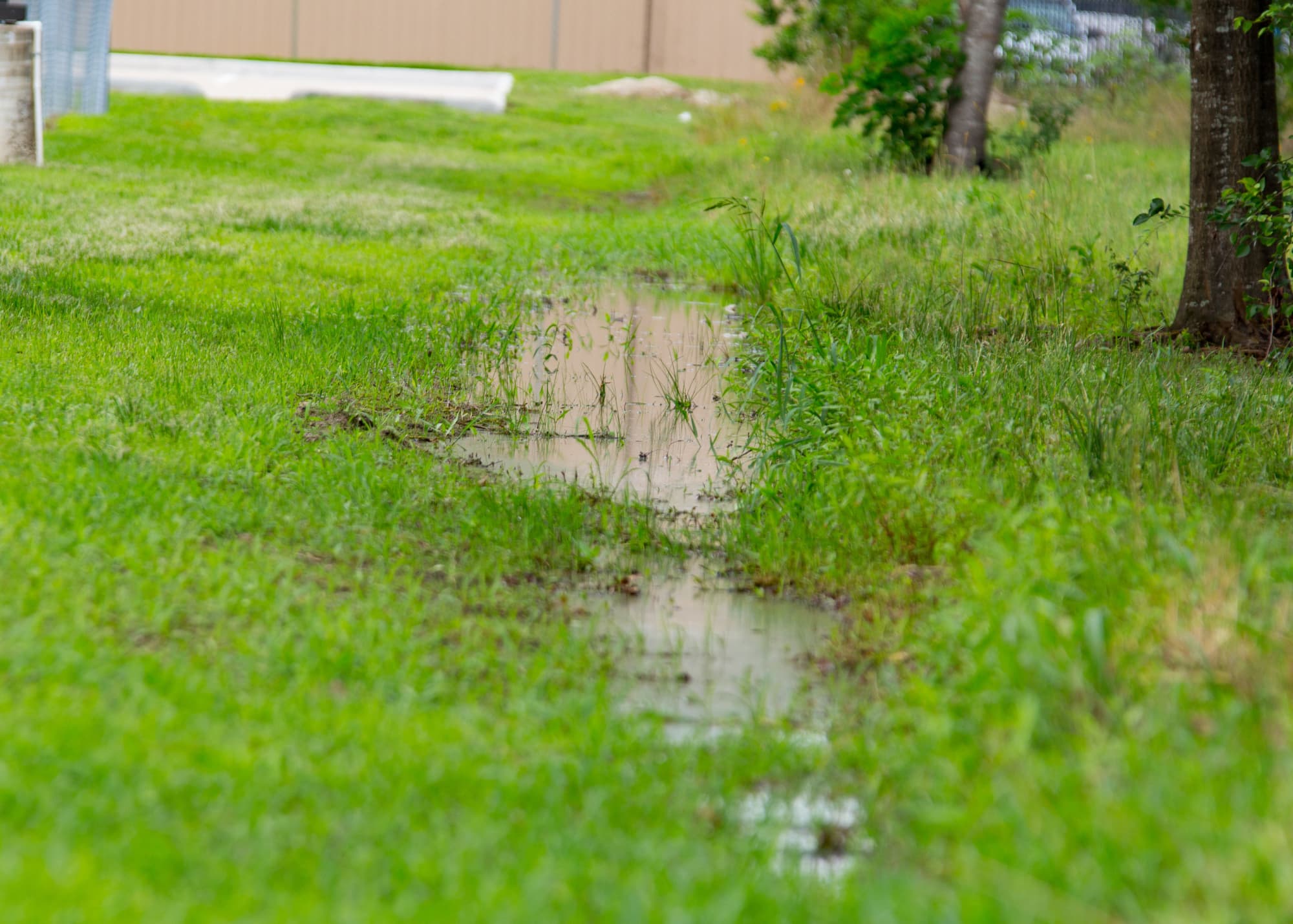
Few things are as frustrating for a homeowner as watching a lush, green yard turn into a soggy, dying mud pit through no fault of your own. If you are dealing with a neighbor's water drainage killing your lawn in Licking County, Ohio, you are likely facing a mix of property damage, ruined landscaping, and awkward neighborhood dynamics. Between Ohio's heavy spring rains and seasonal thunderstorms, poorly managed stormwater runoff can quickly overwhelm an adjacent property.
Understanding your rights under Ohio drainage law, knowing local Licking County resources, and finding practical ways to divert the water can save your grass and preserve your relationship with your neighbor.
Understanding Ohio Water Drainage Laws
Before you talk to your neighbor or take any legal steps, it is essential to understand how Ohio law handles surface water runoff. Ohio generally follows the 'reasonable use' rule regarding surface water, which has evolved from the older 'common enemy' doctrine.
- The Reasonable Use Rule: Under this legal standard, a landowner is permitted to alter the natural flow of surface water on their property, but only in a way that is reasonable and does not cause unnecessary or substantial damage to neighboring properties.
- The Common Enemy Doctrine (Historical Context): Historically, water was viewed as a common enemy, and landowners could legally block or redirect it however they saw fit. However, modern Ohio courts heavily restrict this if it causes severe, unreasonable harm to an adjacent homeowner.
- Illegal Alterations: A neighbor generally cannot collect water via gutters, sump pumps, or artificial grading and purposefully channel it in a concentrated stream directly onto your property to your detriment.
If your neighbor has installed a sump pump discharge pipe right at your property line or regraded their backyard to funnel every drop of rain straight toward your foundation or lawn, they may be crossing the legal threshold of unreasonable use.
Licking County Regulations and Resources
Licking County, Ohio, spans a mix of suburban developments—such as those in New Albany, Pataskala, and Reynoldsburg—and vast rural townships like Granville, Heath, and Newark. Where you live dictates which local office has jurisdiction over drainage issues.
If you live within a city or village corporation limit, the local municipal engineering department may have specific ordinances prohibiting property owners from discharging stormwater onto neighboring lots or public rights-of-way. In unincorporated townships, the options can be more limited, as county officials typically only intervene if the drainage issue affects public infrastructure, county roads, or established public drainage ditches.
You can contact the Licking County Soil and Water Conservation District (LCSWCD) for general guidance on watershed management. While they typically do not arbitrate private neighbor disputes, they can offer valuable advice on local soil conditions, grading standards, and natural water management techniques suited for Central Ohio clay soils.
Step-by-Step Guide to Resolving the Issue
Fixing a dying lawn caused by a neighbor's runoff requires a strategic, step-by-step approach that balances diplomacy with self-preservation.
1. Document Everything
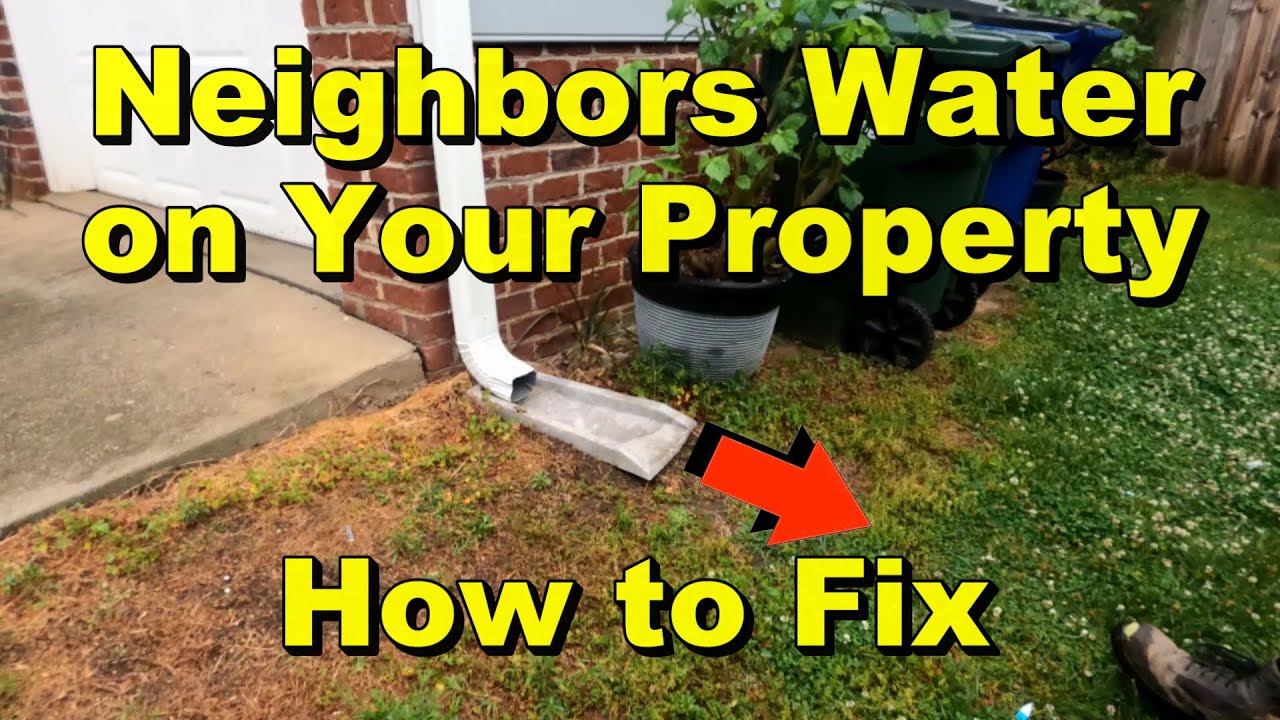
Before having any conversations, gather solid evidence. Take clear photos and videos during and immediately after heavy rainstorms showing where the water originates, how it flows across the property line, and the damage it is doing to your grass. Keep a log of dates when puddling occurs and how long the soil stays saturated.
2. Have a Calm Conversation
Many neighbors are genuinely unaware that their sump pump line or landscaping changes are causing problems next door. Approach them politely:
- Choose a neutral time to talk, not while it is actively storming and flooding your yard.
- Show them the photos and explain how the water is pooling or eroding your lawn.
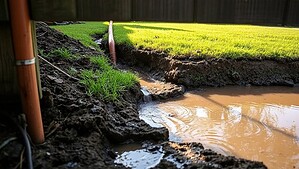
- Ask if you can work together to find a simple redirection solution, such as extending a buried corrugated pipe further out into the yard or toward a designated storm drain.
3. Propose Practical Mitigation Strategies
Sometimes, the easiest way to solve the problem is to handle the water once it crosses onto your property, especially if your neighbor is uncooperative or financially strapped. Consider these solutions:
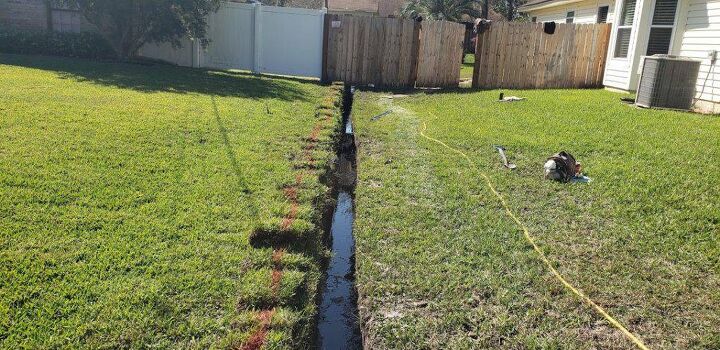
- French Drains: A gravel-filled trench with a perforated pipe that intercepts subsurface water and redirects it safely away from dying turf.
- Dry Creeks: A shallow, rock-lined ditch that naturally guides surface runoff through your yard without eroding the soil.
- Regrading: Creating a gentle swale in your lawn to guide water around high-traffic or vulnerable grass areas.
- Amending Central Ohio Clay: Licking County is notorious for heavy clay soil that resists drainage. Core aeration, topdressing with compost, and planting deep-rooted turfgrass can drastically improve infiltration.
4. Consult Professionals
If the neighbor is hostile or uncooperative, bring in a licensed local landscaper or drainage contractor. They can provide a formal assessment and a written estimate for mitigation. Having a professional report also sets the groundwork if you need to escalate the matter legally.
5. Legal Action as a Last Resort
If property damage is severe—such as threatening your home's foundation or killing entire sections of established landscaping—you may need to consult a real estate attorney in Licking County. A lawyer can send a formal demand letter outlining the legal liabilities of unreasonable water diversion. Often, a letter from an attorney is enough to prompt a stubborn neighbor to fix their grading or reroute their sump pump.
Protecting Your Lawn's Health in the Meantime
While you work on a permanent drainage solution, take steps to keep your grass alive in the waterlogged zones. Aerate compacted soil to let oxygen reach the roots, avoid mowing when the ground is completely saturated to prevent tearing up the turf, and consider overseeding with resilient, moisture-tolerant grass varieties once the worst of the seasonal rains pass.