Newsom and Christian Murders: Full Case Breakdown
In January 2007, the city of Knoxville, Tennessee, was shaken by one of the most brutal crimes in its modern history. Known widely across the nation as the Newsom and Christian murders, the horrifying carjacking, assault, and killing of young couple Christopher Newsom and Channon Christian devastated their families and sparked profound changes in the state’s legal and judicial landscape.

More than a decade and a half later, the case remains a subject of intense study among criminologists, legal scholars, and true-crime historians. Beyond the raw brutality of the acts committed, the legal aftermath—marked by multiple trials, a disgraced presiding judge, and groundbreaking victim-rights legislation—remains an enduring chapter in American criminal justice.
The Victims: Lives Cut Tragically Short
Channon Gail Christian, 21, was a senior at the University of Tennessee majoring in sociology. Known for her bright personality, academic drive, and devotion to her family, Christian had a wide circle of friends and was preparing for life after graduation.
Christopher Newsom, 23, was a talented carpenter and an athletic, charismatic young man who shared a close bond with his family. The two had been dating for a relatively short time, but friends and relatives noted a deep and genuine connection between them.
On Saturday evening, January 6, 2007, Newsom drove to an apartment complex off Washington Pike in Knoxville to pick up Christian before heading out to a friend's birthday gathering. They never arrived.
The Events of January 6–7, 2007
As Christian and Newsom sat talking in Christian’s Toyota 4Runner in the apartment parking lot, they were ambushed by armed individuals. The perpetrators forced the couple into the back of the SUV at gunpoint and transported them across town to a small rental house at 2156 Chipman Street, leased by Lemaricus Davidson.
Inside the house, both victims endured unspeakable physical and sexual assaults at the hands of multiple assailants.
- Christopher Newsom: Newsom was bound, blindfolded, and brutally beaten before being taken from the residence to nearby railroad tracks. There, he was shot three times, and his body was set on fire in an effort to conceal physical evidence. His remains were discovered by a passing train crew the following afternoon.
- Channon Christian: Christian remained held captive inside the Chipman Street house for hours following Newsom’s murder. She was subjected to continuous sexual abuse and chemical assaults, as the perpetrators attempted to bleach her body to destroy DNA. She was eventually placed in a trash can inside a hallway closet, where she succumbed to asphyxiation.
The Investigation and Arrests
Knoxville Police Department investigators quickly pieced together the evidence once Christian’s abandoned 4Runner was located several blocks from Chipman Street on January 8. Inside the vehicle, forensic specialists recovered fingerprints and an envelope that led detectives directly to the rental property leased by Lemaricus Davidson.
On January 9, law enforcement executed a search warrant on 2156 Chipman Street, where they discovered Christian’s body inside the home. A coordinated, multi-state manhunt followed, quickly leading to the arrest of five suspects:

- Lemaricus Devall Davidson: The mastermind and primary tenant of the Chipman Street residence.
- Letalvis "Fluffy" Cobbins: Davidson’s half-brother, who had traveled from Kentucky to Knoxville.
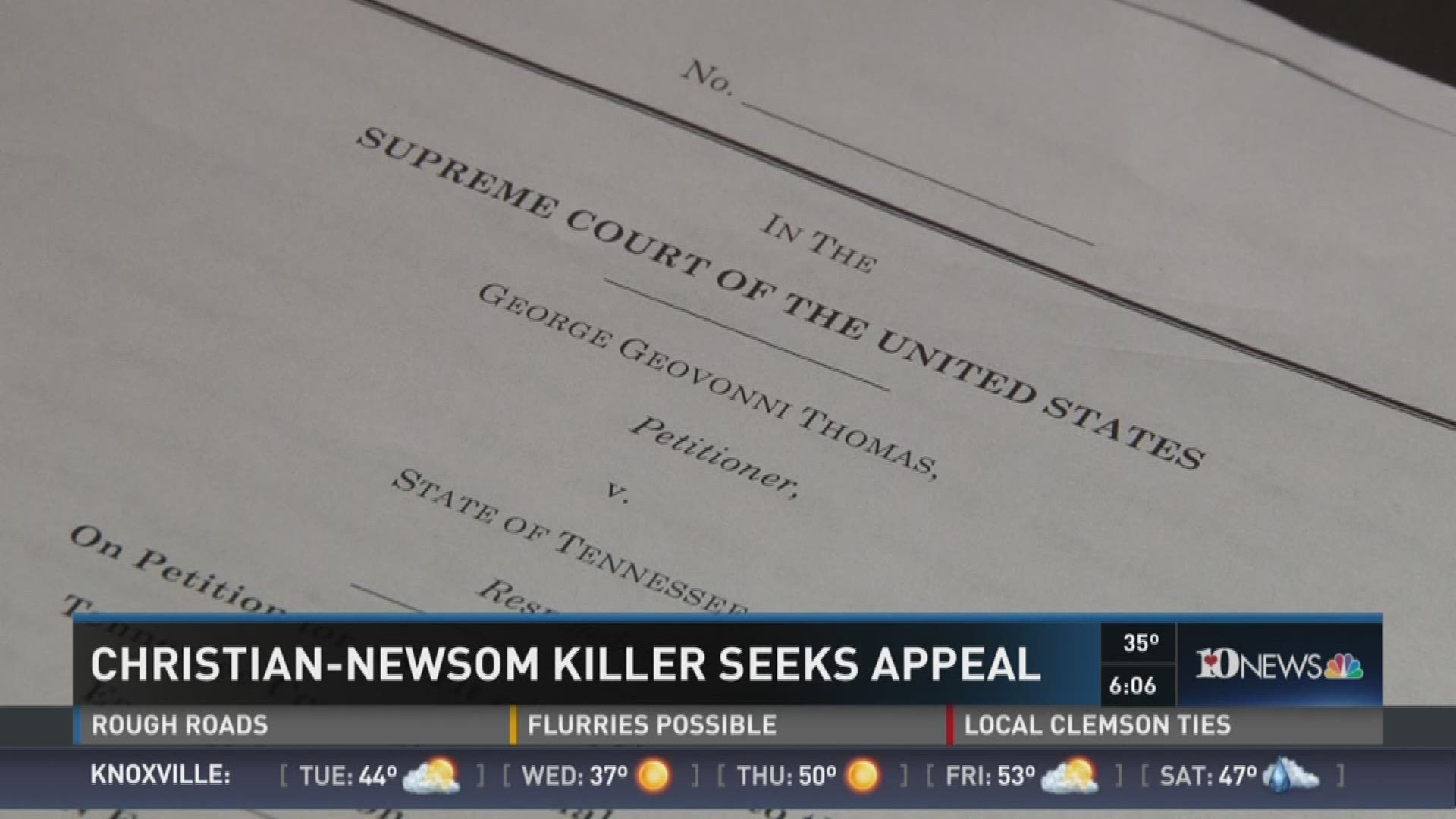
- George Geovonni Thomas: A childhood acquaintance who arrived with Cobbins.
- Vanessa Coleman: Cobbins’ girlfriend, present at the residence during the crimes.
- Eric DeWayne Boyd: A Knoxville resident who assisted Davidson during his initial flight from police.
The Trials Following the Newsom and Christian Murders
Between 2009 and 2010, the defendants faced state criminal trials in Knox County, with juries selected from outside jurisdictions due to massive local media coverage. The proceedings resulted in extensive convictions:
- Lemaricus Davidson: Convicted of multiple counts of first-degree murder, aggravated kidnapping, and aggravated rape. He was sentenced to death.
- Letalvis Cobbins: Found guilty of felony murder, kidnapping, and rape; sentenced to life in prison without the possibility of parole.
- George Thomas: Convicted on multiple counts and originally sentenced to life without parole.
- Vanessa Coleman: Convicted of lesser charges, including facilitation of murder, kidnapping, and rape, receiving a 53-year prison sentence.
The Judicial Scandal and Retrials
Just when the families believed the judicial ordeal was over, a massive scandal upended the verdicts. In January 2011, presiding Knox County Criminal Court Judge Richard Baumgartner stepped down from the bench amid an internal investigation. It was revealed that Baumgartner had been suffering from a severe, untreated addiction to prescription opioids and had engaged in criminal conduct, including buying pills from a felon on probation in his court.
Because Baumgartner had acted as the "thirteenth juror" in reviewing the convictions, the defense argued that his impairment compromised the fairness of the trials. In late 2011, Senior Judge Jon Kerry Blackwood ordered new trials for Cobbins, Thomas, and Coleman, while Davidson’s death penalty appeal was held for further review.
The ruling forced the Christian and Newsom families to endure the excruciating process of relitigating the crimes. Subsequent trials upheld the majority of the convictions:
- Vanessa Coleman was retried in 2012, reconvicted of facilitation charges, and sentenced to 35 years.
- George Thomas was retried in 2013, received life with the possibility of parole after striking an agreed resolution, though his term remains extraordinarily long.
- Lemaricus Davidson’s death sentence was eventually reaffirmed by the Tennessee Supreme Court, which determined the trial evidence against him was so overwhelming that the judge’s misconduct did not affect the outcome.
Finally, in 2018, federal authorities brought Eric Boyd—initially only convicted federally of accessory after the fact—before a Knox County grand jury on state murder charges. In 2019, Boyd was found guilty of first-degree murder, kidnapping, and rape, receiving two consecutive life sentences plus 90 years.
Legislative Impact and Legacy
The profound grief and relentless advocacy of the Christian and Newsom families led to major legal reforms in Tennessee. Disturbed by systemic failures and delays within the judicial system, the families lobbied state lawmakers for structural change.
Their efforts contributed directly to the passage of stricter standards for judicial oversight, enhanced victims’ rights measures, and reforms regulating the "thirteenth juror" rule in Tennessee criminal procedure. Both families also established scholarship funds in honor of Christopher and Channon at the University of Tennessee and regional trade programs, ensuring their names represent opportunity and generosity rather than only tragedy.
Conclusion
The Newsom and Christian murders stand as an indelible reminder of the devastating impact of violent crime on families and communities. Through sheer persistence across nearly two decades of trials, reversals, and legal battles, the families of Christopher Newsom and Channon Christian secured accountability for all five individuals involved, leaving a legacy of legal reform that continues to shape Tennessee’s judicial system today.