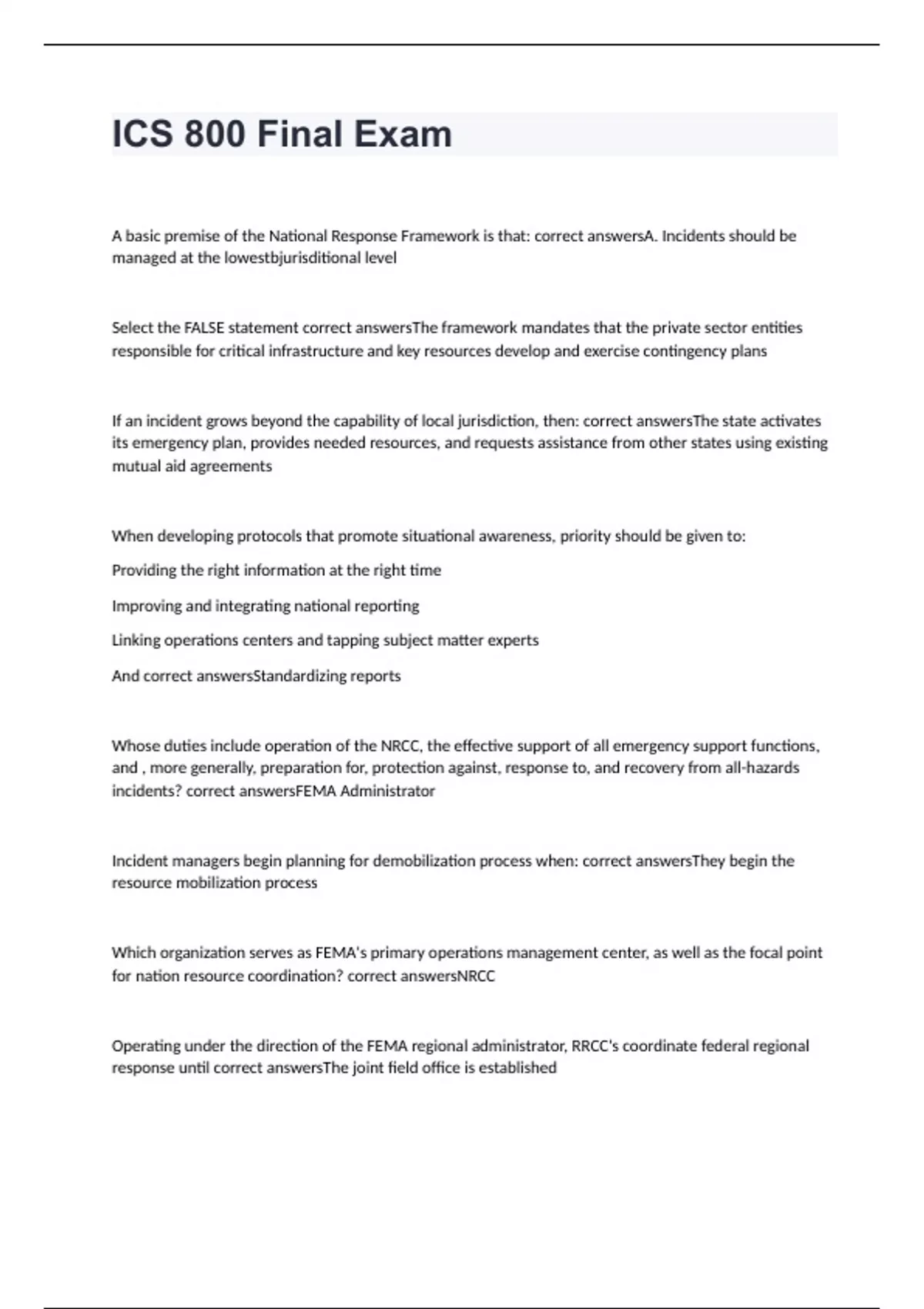
NIMS ICS 800b Answers & Study Guide
Passing the Federal Emergency Management Agency (FEMA) independent study courses is a mandatory requirement for many professionals working in emergency management, public safety, and government sectors. Among these, the National Response Framework (NRF) course—historically known as IS-800.B and currently updated to IS-800.D—is one of the most widely taken modules. While searching for quick ics 800b answers online might seem like an easy shortcut, truly understanding the core concepts of the National Response Framework is the only reliable way to pass the final exam and apply these principles in a real-world disaster scenario.
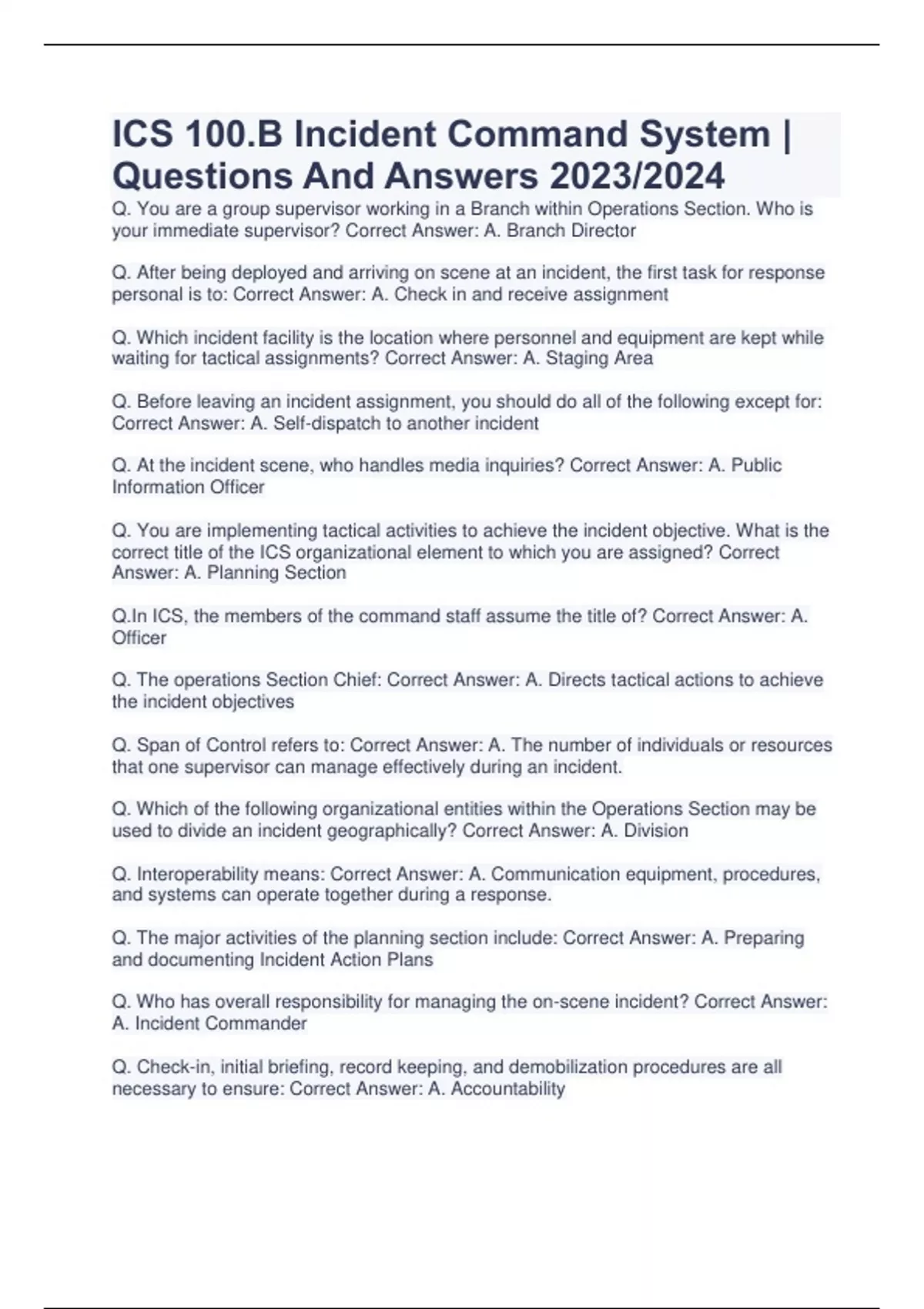
Understanding the National Response Framework
Before diving into exam preparation, it helps to understand what the course actually teaches. The IS-800 course introduces participants to the foundational doctrines of the National Response Framework. The NRF is a guide that details how the United States responds to all types of domestic incidents, ranging from small-scale local emergencies to catastrophic natural disasters and terrorist attacks.
The framework operates on the fundamental premise that incident management starts at the local level. When local capabilities are exceeded, assistance is requested from tribal governments, state governments, and ultimately the federal government. The curriculum emphasizes scalability, flexibility, and standardized coordination.
Core Principles of the NRF
Exam questions heavily test your grasp of the guiding principles that define how response partners work together. Familiarizing yourself with these concepts will help you navigate tricky scenario-based questions on the test.
- Tiered Response: Incidents are handled at the lowest possible jurisdictional level, escalating only when local resources are overwhelmed.
- Engaged Partnerships: Effective response requires leadership and unity of effort across all levels of government, the private sector, non-governmental organizations (NGOs), and individual citizens.
- Unity of Effort: This relies on coordinating different agencies and organizations toward a common goal without undermining individual organizational authorities.
- Readiness to Act: Response partners must constantly train, exercise, evaluate, and adapt their plans to maintain readiness.
Key Roles and Responsibilities
A significant portion of the test evaluates your knowledge of who does what during an emergency. You should pay close attention to the specific responsibilities assigned to various entities.
Video: NIMS 800 Exam 2026 Prep 🚨 ICS 800 Final Review Questions & Answers | Pass FEMA IS-800 First Try

Local, Tribal, and State Government Roles
Local and tribal governments have direct responsibility for the safety and welfare of their communities. Local incident commanders utilize the Incident Command System (ICS) to manage on-scene operations. When local resources fall short, the local chief executive can declare a state of emergency and request assistance from the state. Governors then coordinate state resources and, if necessary, request federal assistance through the President.
Federal Department and Agency Roles
At the federal level, the Department of Homeland Security (DHS) has overall responsibility for coordinating domestic-incident management. Within DHS, the Federal Emergency Management Agency (FEMA) manages federal coordination structures. Other federal departments act as primary or supporting agencies depending on the emergency type, utilizing Emergency Support Functions (ESFs) to group capabilities.
Navigating the Exam Successfully
The FEMA independent study exams are open-book, and students can access course materials directly while taking the test. However, simply looking up every answer in real time can be challenging due to the strict time limit. Here are a few strategies to help you pass:
- Download the PDF Version: Before starting the online test, download the complete course document as a PDF. This allows you to use keyword searches (Ctrl+F or Cmd+F) to quickly locate relevant sections and definitions during the exam.
- Review the Unit Summaries: Each unit concludes with a summary of key takeaways. Reading these summaries carefully before attempting the exam saves valuable time.
- Take Notes on Terminology: Pay close attention to definitions involving ESFs, coordinating structures, and joint information systems. Many exam questions test exact definitions rather than conceptual theories.
- Complete the Practice Knowledge Checks: Do not skip the interactive review questions embedded throughout the online modules. They are often very similar to the questions that appear on the final exam.
Final Thoughts
Relying exclusively on unverified answer keys found on random forums can lead to failing the exam, as questions and answer choices are frequently randomized or updated by FEMA. By taking the time to review the course material, understand the tiered response structure, and utilize the searchable PDF guide provided by FEMA, you can easily pass the exam on your first attempt and gain practical knowledge for your emergency management career.