NMFC Number Calculator: How to Classify Freight
Shipping Less-Than-Truckload (LTL) freight requires precision. Unlike full truckload shipping, where you pay for the entire vehicle, LTL carriers base their pricing on how much space your goods take up, how heavy they are, and how difficult they are to transport. This system relies entirely on the National Motor Freight Classification (NMFC) system.
Because looking up codes manually in the massive NMFTA rulebook can be tedious and confusing, shippers rely on an NMFC number calculator to simplify the process. This guide explains how freight classification works, why accurate coding matters, and how to use digital tools to find your correct freight class.
What Is an NMFC Number and Why Does It Matter?
The National Motor Freight Traffic Association (NMFTA) assigns every type of commodity shipped via LTL an NMFC code. This code corresponds to one of 18 specific freight classes, ranging from Class 50 (the densest and cheapest to ship) to Class 500 (the lightest and most expensive).
Freight classification is not based solely on weight. The NMFTA evaluates four distinct characteristics, often referred to as the transportability of the goods:
- Density: The weight-to-size ratio of the shipment measured in pounds per cubic foot (PCF).
- Stowability: How easily the freight can be packed into a trailer alongside other goods (e.g., hazardous materials, odd shapes, or excessive length affect stowability).
- Handling: The care required to load, secure, and unload the cargo.
- Liability: The risk of theft, damage, breakage, or spoilage during transit.
When you use an online NMFC number calculator, the tool processes these physical specifications to recommend the appropriate freight class and code.
How to Use an NMFC Number Calculator
Most modern third-party logistics (3PL) providers and freight shipping platforms feature built-in classification tools. While an official NMFC code requires a subscription to the NMFTA's ClassIT database, a standard shipping calculator can estimate your class based on exact measurements.
To get the most accurate results from a calculator, you will need to gather specific data about your shipment:

- Exact Dimensions: Measure the length, width, and height of each pallet or package in inches. Include the pallet itself in your measurements.
- Total Weight: Weigh the shipment accurately using a certified scale. Include packaging, shrink wrap, and pallets.
- Commodity Description: Know exactly what product you are shipping. Raw materials often differ significantly from finished retail goods.
- Packaging Type: Indicate whether the goods are boxed, crated, bundled, or on a pallet.
Calculating Density Step-by-Step
Since density is the primary driver of freight class for most commodities, understanding the math helps you verify your calculator's output:
- Step 1: Calculate the total volume in cubic inches (Length × Width × Height). If you have multiple pieces, multiply the volume of one piece by the total number of pieces.
- Step 2: Convert cubic inches to cubic feet by dividing the total by 1,728.
- Step 3: Divide the total weight of the shipment in pounds by the total volume in cubic feet. This gives you your pounds per cubic foot (PCF).
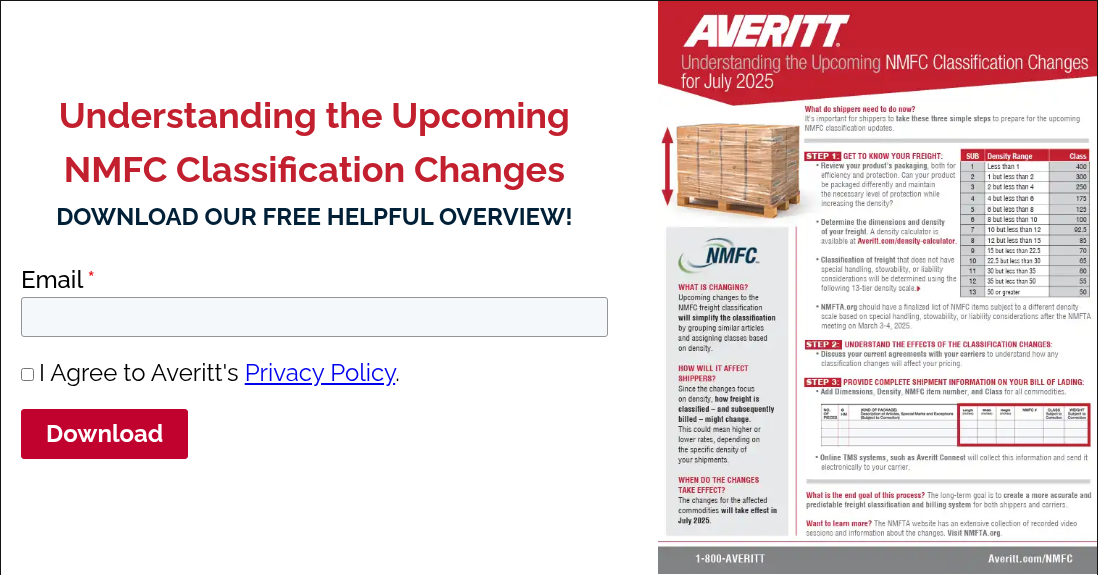
- Step 4: Match your PCF to the standard NMFC density scale. For example, a density under 1 PCF usually falls under Class 500, while a density greater than 50 PCF falls under Class 50.
Common Mistakes to Avoid When Classifying Freight
Guessing your freight class or relying on rough estimates is one of the quickest ways to damage your shipping budget. Avoid these common pitfalls when determining your NMFC code:
- Ignoring Packaging: Measuring only the product without the pallet or crate alters the density calculation, leading to an incorrect class.
- Failing to Update Codes: NMFTA periodically updates its commodity classifications and density guidelines. Always verify current codes rather than relying on last year's paperwork.
- Using Generic Descriptions: Stating that you are shipping "machinery" is too broad. Different types of machinery carry drastically different NMFC numbers and liability risks. Be as specific as possible.
The Cost of Getting Your NMFC Number Wrong
If you miscalculate your freight class or enter the wrong NMFC number, the consequences usually appear weeks after delivery. Carriers routinely audit LTL shipments by re-weighing and re-measuring cargo at their terminals.
If the carrier discovers a discrepancy, they will issue a reclassification and inspection fee along with a higher freight bill. These retroactive charges can destroy your profit margins on customer orders and strain relationships with your shipping partners. Using a reliable NMFC number calculator before booking your load protects you from these surprise adjustments and ensures smooth transit from origin to destination.
Summary
Getting your freight classification right is a foundational part of efficient LTL shipping. By gathering accurate dimensions, calculating true density, and utilizing a trusted NMFC number calculator, you can secure accurate rates, prevent costly carrier rebills, and keep your supply chain running smoothly.