North Carolina Dove Season: Dates & Hunter's Guide
For generations of sportsmen, the arrival of September marks more than just the close of summer; it signals the annual kickoff of the North Carolina dove season. Opening day is a revered Southern tradition where family and friends gather around sunflower fields, millet patches, and corn stubble to test their wingshooting skills against one of North America's fastest game birds. Whether you are a lifelong hunter or stepping into the field for the first time, navigating season dates, legal regulations, and field strategies is essential for a productive shoot.

North Carolina Dove Season Dates and Split Structure
The North Carolina Wildlife Resources Commission (NCWRC) sets migratory game bird frameworks in compliance with federal guidelines. To maximize hunting opportunities across different migration waves, the state divides the dove season into three distinct segments or splits.
- First Split (September – October): The most popular segment kicks off on Labor Day weekend and extends into early October. This split offers peak bird activity over freshly cut agricultural fields and managed wildlife plots.
- Second Split (November): Typically open for two to three weeks surrounding the Thanksgiving holiday. Migratory birds pushed down from northern states begin mixing with resident populations.
- Third Split (December – January): Running from mid-December through late January, the late season caters to die-hard waterfowlers and upland hunters looking for cold-weather shoots over harvested winter crops.
Shooting hours across all three splits begin 30 minutes before sunrise and run until sunset. Hunters no longer need to wait until noon on opening day, a regulation change that allows for full-day hunting throughout the entire season.
Bag Limits and Legal Dove Species
Proper identification in the field is vital, as bag limits apply to specific species. In North Carolina, the daily bag limit is 15 mourning and white-winged doves, taken either as a single species or in aggregate. The possession limit is three times the daily bag limit (45 birds).
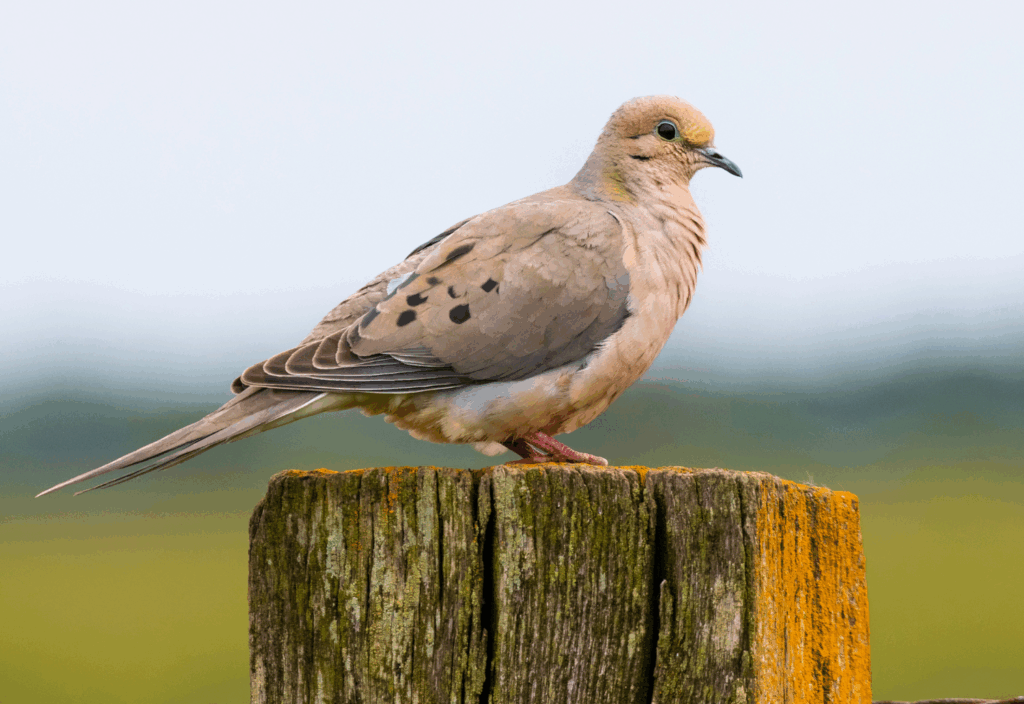
Mourning doves make up the vast majority of birds harvested in the state. However, hunters should be aware of other species:
- Eurasian Collared-Doves: An invasive species distinguished by their larger size, squared-off tail, and black neck collar. They do not count toward your daily bag limit of mourning doves, but they may only be taken during open dove season and must remain identifiable if added to your cooler.
- White-Winged Doves: Occasionally spotted in coastal and eastern counties. These count toward the daily 15-bird limit.
- Non-Game Doves: Common ground doves are protected non-game songbirds and cannot be legally harvested.
Licensing and Certification Requirements
Before heading to the field, ensure your paperwork is up to date. You must carry both physical or digital proof of your credentials while hunting.
- State Hunting License: Residents need a valid Inland, Coastal, or Comprehensive hunting license. Non-residents must possess a non-resident hunting license.
- HIP Certification: The Harvest Information Program (HIP) survey is free but mandatory for all migratory bird hunters. Completing it assigns a HIP validation number to your license profile.
- Game Lands Privilege: If you plan to hunt on any NCWRC-managed public game land, verify whether your base license includes Game Lands privileges; otherwise, an add-on stamp is required.
Understanding State and Federal Baiting Laws
Nothing ruins a hunt faster than inadvertently setting up over an illegally baited field. Both state wildlife officers and federal game wardens strictly enforce baiting laws under the Migratory Bird Treaty Act.
In simple terms, it is illegal to hunt doves over placed, scattered, or exposed grain, salt, or other feed intended to lure birds into an area. If a field has been baited, it cannot be legally hunted until 10 full days after all bait has been completely removed.
What Is Considered Legal?
- Hunting over standing crops (sunflowers, corn, sorghum, millet).
- Hunting over agricultural fields harvested according to standard regional farming practices.
- Hunting over wildlife food plots that have been manipulated—such as bush-hogged, disced, or burned—provided the grain was grown on-site and not imported or redistributed artificially.
Top Public Game Lands for Dove Hunting in NC
While private agricultural leases are prime real estate, North Carolina maintains excellent managed dove fields on public game lands across the state. Some locations require a special permit, while others are open on designated days.
1. Butner-Falls of Neuse Game Land (Piedmont)
Located near the Triangle, Butner-Falls of Neuse offers several managed dove fields planted in millet, sunflowers, and corn. Opening week typically requires a drawn permit, but select fields open to the general public later in the season.
Video: NC Opening Dove Season 2025
2. Sandhills Game Land (South Central)

Spanning multiple counties in the Sandhills region, this massive property features numerous agricultural lease openings and designated wildlife fields. The sandy terrain and wiregrass ecology provide natural flight corridors for migrating doves.
3. Suggs Mill Pond and Bladen Lakes (Coastal Plain)
Coastal plain game lands often feature fertile soils that support dense food plots. These fields provide high bird volume during early September, though checking water levels and field reports on the NCWRC website beforehand is recommended.
4. Caswell Game Land (Northern Piedmont)
Caswell offers rolling topography interspersed with agricultural fields. It is a favored destination for Piedmont hunters looking for managed public fields within driving distance of Greensboro and Winston-Salem.
Gear, Shot Size, and Field Tactics
Consistently putting doves in your game bag requires preparation, proper shotgun setup, and field awareness.
Choke and Shot Selection
A 12-gauge or 20-gauge shotgun is the standard choice for southern dove hunting. Early in the season, birds fly closer and react less nervously to hunters. An Improved Cylinder choke paired with #7.5 or #8 lead shot (1 to 1-1/8 oz loads) offers an ideal pattern. Later in the season, as birds get wary and fly higher, stepping up to a Modified choke with #7.5 shot delivers the necessary pattern density at 35 to 45 yards.
Note: If you are hunting on a waterfowl impoundment or designated federal refuge, non-toxic shot (such as steel or bismuth) is mandatory. Ensure your shotgun magazine holds no more than three shells total, using a plug if necessary.
Field Setup and Decoy Strategy
Doves are creatures of habit. Set up along fence rows, dead tree lines, or drainage ditches that parallel their line of flight. If birds are feeding in the center of the field, position yourself along shaded perimeter cover with the sun at your back.
Decoys can dramatically tilt the odds in your favor. Place static decoys on low-hanging dead branches or along fence lines to create confidence. Adding a spinning-wing or motion decoy near the center of your shooting lane draws cruising doves into range from surprising distances.
Managing Heat and Canine Safety
Early September hunting in North Carolina regularly brings temperatures in the upper 80s and 90s. If you hunt with a retriever, prioritize their safety:
- Carry at least one gallon of fresh water specifically for your dog.
- Set up in shaded field edges rather than exposed brush piles.
- Watch for signs of heat stress (heavy panting, glazed eyes, brick-red gums, or sluggish returns), and cut the hunt short if temperatures spike.
Final Thoughts
Dove season is the gateway to fall hunting in North Carolina. By checking your regulations, scouting productive flyways, and practicing sound wingshooting fundamentals, you can enjoy one of the state's finest outdoor sporting traditions. Double-check your license, plug your shotgun, bring plenty of hydration, and enjoy opening day in the field.