OSRS Leagues Drop Rates: Full Multipliers & Loot Guide
Old School RuneScape is famous for its grueling grinds, but seasonal Leagues turn that philosophy on its head. With hyper-accelerated experience gains, potent relics, and massively boosted unique loot chances, understanding how osrs leagues drop rates work is essential for planning an efficient run. Grinding a rare boss weapon at base game rates can take weeks, but under League mechanics, your drop chances skyrocket as you progress through tasks.

Whether you are aiming for your first Twisted Bow in Chambers of Xeric or hunting rare Slayer drops to complete League tasks, this guide breaks down how the drop rate multipliers function, what items are affected, and how to structure your boss grinds around relic progression.
How Drop Rate Multipliers Work in OSRS Leagues
In standard OSRS, rare item drops are rolled against a fixed denominator—such as 1/512 for an Abyssal Whip or 1/5,000 for a God Wars Dungeon hilt. In Leagues, these probabilities are boosted through passive drop rate multipliers tied directly to your Relic Tier progression.
The multiplier directly divides the drop's denominator (or multiplies your success roll). For instance, if you have unlocked a 5x multiplier:
- A 1/512 drop becomes approximately 1/102.4.
- A 1/128 drop becomes approximately 1/25.6.
- A 1/3,000 boss pet roll drops to 1/600.
This mathematical advantage transforms multi-day grinds into quick sessions, allowing players to obtain complete sets of endgame gear within the time-limited structure of the game mode.
How OSRS Leagues Drop Rates Scale by Relic Tier
Historically across Leagues—including Trailblazer and Trailblazer Reloaded—multipliers are unlocked passively as you earn League Points and progress through the relic tiers. While early tiers prioritize inventory management and skilling buffs, mid-to-late tiers unlock aggressive drop scaling.
Tier 1 to Tier 3 (1x Multiplier)
During the early game, unique drop rates remain at standard base rates (1x). These tiers are designed for establishing your account, completing quest requirements, and powering up your baseline combat and skilling stats. Rushing high-variance boss drops during these early tiers is generally inefficient.
Tier 4 (2x Multiplier)
At Tier 4, the initial drop rate boost activates, cutting the effective denominator of rare items in half. Bosses with moderately low drop rates (such as Barrows brothers or the Dagannoth Kings) become significantly more attractive at this threshold.
Tier 5 (3x Multiplier)
Reaching Tier 5 brings a 3x multiplier. Rare items are three times more common than in the main game. This is the sweet spot where targeted Slayer unique hunts (like Black Masks, Abyssal Whips, and Tridents) become fast, high-probability grinds.
Tier 6 (4x Multiplier)

At Tier 6, drop rates hit 4x base values. At this point, endgame boss encounters—including the Theatre of Blood, Tombs of Amascut, and the Desert Treasure II bosses—begin yielding high volumes of unique drops over relatively short sessions.
Tier 7 and Tier 8 (5x Multiplier)
The endgame tiers award the maximum 5x drop rate multiplier. At 5x, even the most elusive chase items in the game are realistically attainable within a few dozen raids or boss kills. This tier represents the peak farming window for unique collection log slots and mega-rare weapons.
What Drops Are Affected by League Multipliers?
The drop multiplier applies broadly across the game, but it does not alter every single item roll. Knowing which tables are modified prevents wasted time.
Affected Drop Tables
- Boss Uniques: Weapons, armor, hilts, and signature loot from major encounters (God Wars Dungeon, Zulrah, Vorkath, Muspah, Cerberus, etc.).
- Raid Uniques: Unique loot distributions in Chambers of Xeric, Theatre of Blood, and Tombs of Amascut.
- Slayer Monster Uniques: Items such as Dark Bows, Abyssal Whips, Dragon Boots, and Occult Necklaces.
- Pet Drops: In modern iterations like Trailblazer Reloaded, pet drop rolls also receive the active League multiplier, making pet hunting a realistic League goal.
- Champion Scrolls: Multipliers drastically reduce the standard 1/5,000 threshold, allowing swift task completion.
Unmodified or Specially Handled Drops
- Standard Resource Drops: Bones, coins, common runes, herbs, and basic skilling supplies generally drop at their standard rates and quantities unless modified by specific gathering relics.
- Tertiary Guaranteed Drops: Guaranteed milestone items (such as Vorkath's head at 50 killcount) still follow standard threshold rules, though the 1/50 rare roll on earlier kills is boosted.
- Clue Scrolls: Clue scroll drop rates are typically managed independently via passive league traits or specific relics (such as Clue Hunter or stackable clue perks) rather than the standard combat unique multiplier.
Raid Drop Mechanics in Leagues
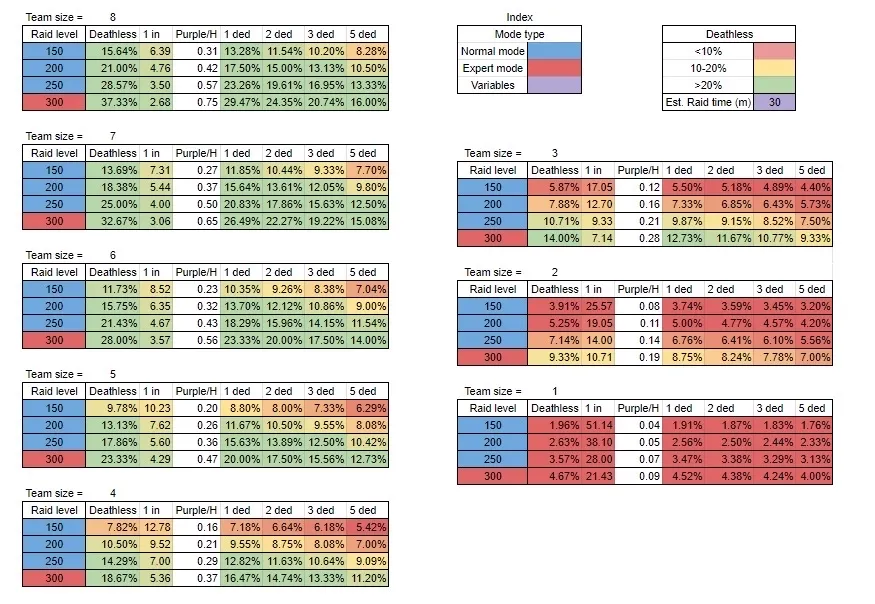
Raids in OSRS use point-based systems to determine whether a "purple" (unique item) is awarded upon completion. When the League multiplier is applied to raids, it scales the points-to-unique conversion rate.
In Tombs of Amascut (ToA), scaling invocation levels combined with a 4x or 5x multiplier allows players to exceed an 80% to 100% chance of seeing a unique item in solo expert raids. Similarly, high-point solo or small-team Chambers of Xeric (CoX) runs frequently yield purples almost every completion at maximum tier.
Because raid scaling makes uniques extraordinarily common at higher tiers, it is heavily recommended to save prolonged raid grinds until you have unlocked at least the 4x or 5x multiplier.
Strategic Tips to Optimize Your Boss Grinds
- Delay Boss Farming Until Tier 5+: Avoid spending dozens of hours at Zulrah or God Wars Dungeon while sitting at a 1x or 2x drop rate. Complete skilling and general region tasks first to push into higher tiers where your combat hours yield far greater value.
- Synergize with Combat Masteries: Combine boosted drop rates with tier-unlocked combat masteries (like ranged attack speed reductions or 100% accurate special attacks). Faster kill times multiplied by enhanced drop rates yield exponential upgrades per hour.
- Target Multi-Drop Bosses Early: When you hit Tier 5, prioritize bosses with multiple impactful upgrades on their table. For instance, Zulrah yields the Blowpipe, Magic Fang, and Serpentine Visage—meaning any purple chest or kill has a high likelihood of giving a useful progression boost.
- Watch Out for Burnout on Dry Streaks: Even with a 5x multiplier, RNG remains probabilistic. A 1/100 item can still take 300 kills if you are unlucky. Keep your task list diversified so you can pivot if a particular boss refuses to cooperate.
Final Thoughts
OSRS Leagues drop rates provide a refreshing shift from the base game's multi-hundred-hour grinds. By understanding when your multipliers activate and which tables are enhanced, you can plan an optimal route through your region choices, complete your collection logs, and unlock your combat potential with maximum efficiency.