Ouchi Radiation Photos: Truth vs. Myth Explained
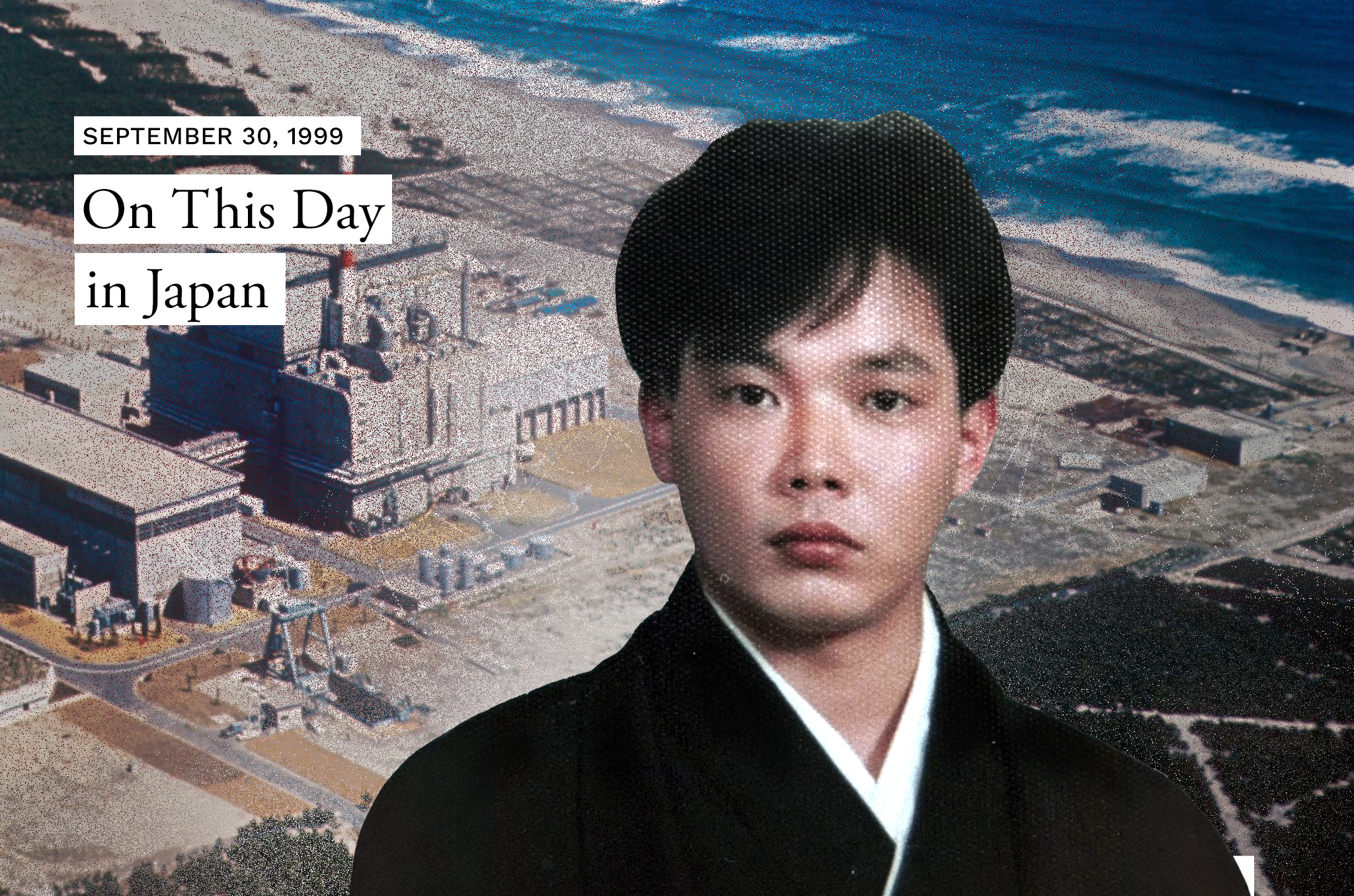
On September 30, 1999, Japan experienced its worst civilian nuclear disaster prior to Fukushima: the Tokaimura criticality accident. At the center of this tragedy was Hisashi Ouchi, a 35-year-old technician who absorbed an unprecedented dose of ionizing radiation. In recent years, morbid internet searches for ouchi radiation photos have surged across social media, forums, and shock sites. However, much of what circulates online under his name is a blend of gruesome misinformation, misattributed medical imagery, and sensationalized urban legends. Understanding what actually happened requires separating verified medical documentation from viral fiction.
The Tokaimura Criticality Accident: What Happened?
The disaster occurred at a nuclear fuel conversion test facility operated by JCO in Tokaimura, Ibaraki Prefecture. In an effort to meet tight deadlines, the plant had adopted non-standard, dangerous operating procedures. Workers were manually dissolving uranium oxide powder in nitric acid using stainless steel buckets, bypassing critical safety protocols designed to prevent a nuclear chain reaction.
Hisashi Ouchi and his colleague Masato Shinohara were pouring a seventh batch of enriched uranyl nitrate solution into a precipitation tank. Suddenly, the volume reached critical mass. A blinding blue flash of Cherenkov radiation filled the room, accompanied by a blast of gamma and neutron radiation. Gamma radiation alarms sounded immediately. Ouchi, who was leaning directly over the funnel holding the solution, absorbed an estimated 17 to 20 sieverts (Sv) of radiation. For context, an acute dose of 4 to 5 Sv is typically lethal to 50% of healthy adults without intervention. Ouchi had just sustained the highest recorded dose of radiation absorbed by a human being in a single industrial accident.
The Viral Hoax: Debunking Infamous Ouchi Radiation Photos
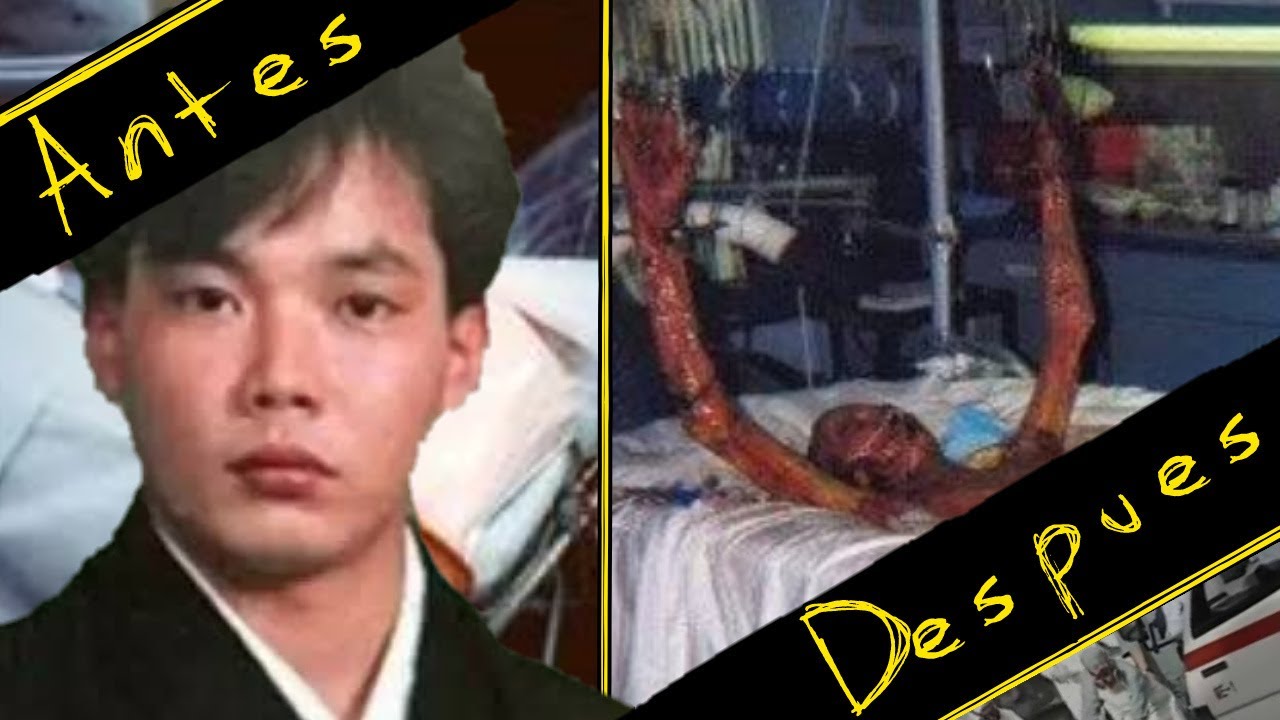
Anyone searching online for photos of Ouchi's condition will almost certainly encounter an image of an individual suspended horizontally in a white hospital sling. In the photo, the patient appears completely devoid of skin, with deeply charred or eroded muscle tissue, an amputated limb, and visible skeletal structures. This image is routinely labeled as "Hisashi Ouchi on Day 83."
This attribution is entirely false.
- The Origin of the Photo: Medical archives and forensic investigations have confirmed that this infamous image depicts a pediatric burn victim treated at a specialized burn unit—widely cited as a severe electrical or thermal burn case from the United States or Latin America.
- Physical Discrepancies: The patient in the viral photograph is clearly missing a lower limb due to surgical amputation, a procedure that was never performed on Ouchi. Furthermore, the dimensions of the body and bed correspond to a young patient, not a 35-year-old adult male.
- Hospital Setting: The equipment, rigging, and clinical setting shown in the image do not match the Intensive Care Unit at the University of Tokyo Hospital, where Ouchi spent the vast majority of his 83 days.
Japanese medical privacy laws are among the strictest in the world. The medical team caring for Ouchi did not release graphic, full-body clinical photographs to the public. The circulating shock photos are mislabeled artifacts of internet sensationalism, designed to generate clicks at the expense of historical and medical accuracy.
What Radiation Actually Did to Hisashi Ouchi
The true physical reality of Ouchi’s condition was deeply tragic, but it did not resemble the instantaneous decomposition often claimed on internet forums. Acute Radiation Syndrome (ARS) operates at a microscopic, cellular level before progressing outward.
1. Complete Genetic Destruction
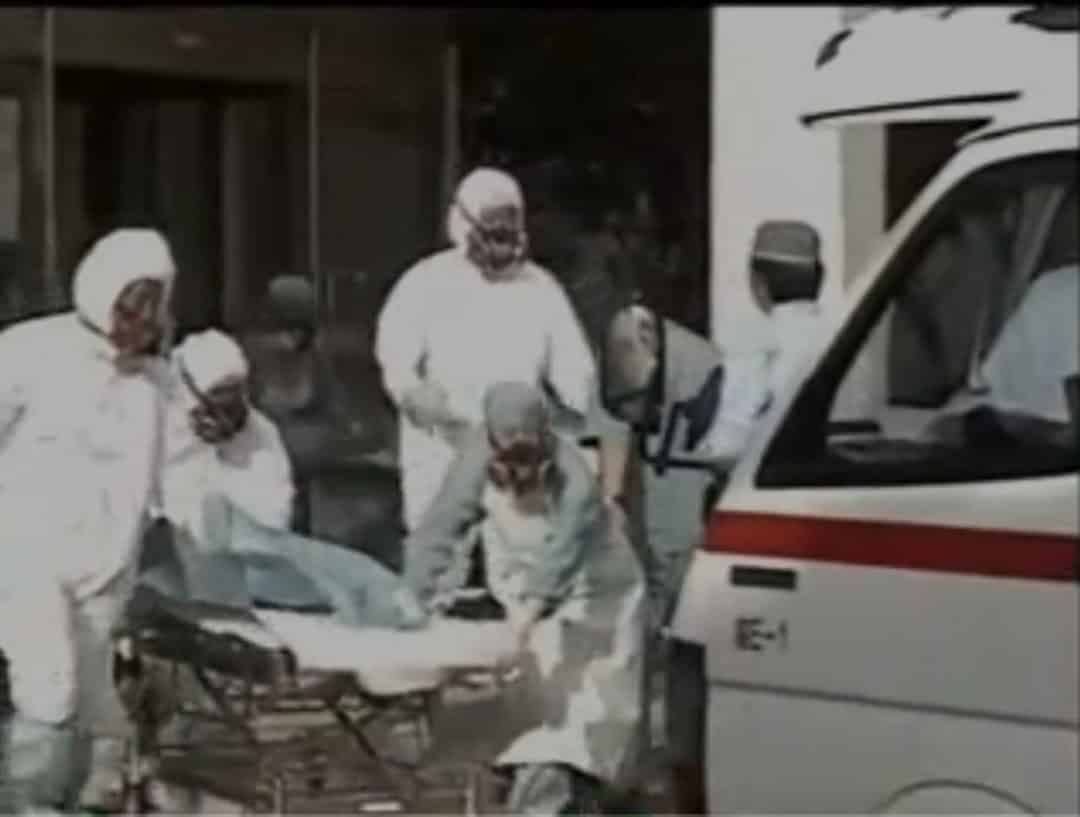
When emergency responders brought Ouchi to the National Institute of Radiological Sciences, he was initially conscious, talkative, and showed relatively few external injuries other than localized redness and swelling on his hands. This phenomenon is known clinically as the "walking ghost phase" or latent phase of ARS.
However, when doctors examined his bone marrow and blood cells, they made a horrifying discovery: the immense influx of neutron radiation had shattered his 23 pairs of chromosomes into unidentifiable fragments. His body had completely lost the genetic blueprint required to produce new cells.

2. The Collapse of the Hematopoietic System
Without functional chromosomes, cell division halted entirely. Within a week, his white blood cell count plunged to near zero, leaving him completely vulnerable to infection. To save his life, his sister volunteered to donate peripheral blood stem cells—the first time such a transplant had ever been attempted on a criticality accident victim. While the transplant initially showed signs of success, radiation retained within his tissues eventually mutated and killed the newly donated cells as well.
3. The Breakdown of the Skin and Epithelium
Unlike thermal burns, which destroy tissue from the outside in, ionizing radiation halts the rapid turnover of epithelial cells. As Ouchi's existing surface skin cells naturally died, no new cells were produced to replace them. Over several weeks, his outer layer of skin gradually peeled away without regenerating.
His doctors resorted to advanced artificial skin grafts, constant bandaging, and daily fluid management to mitigate massive fluid leakage. He lost up to 10 liters of fluids and blood per day through his exposed tissues and gastrointestinal tract, requiring dozens of daily transfusions.
The Medical Timeline: 83 Days of Struggle
Ouchi’s treatment lasted nearly three months, documented meticulously by his medical team in the book A Slow Death: 83 Days of Radiation Sickness by the NHK TV crews who covered the event.
- Days 1–10: Admission, initial disorientation, rapid drop in lymphocytes, and diagnosis of complete chromosome destruction.
- Days 11–27: Peripheral blood stem cell transplantation. Severe gastrointestinal failure begins, causing massive internal hemorrhaging.
- Days 28–58: Respiratory difficulties develop; he is placed on a mechanical ventilator. His skin begins sloughing off completely, requiring continuous dressings.
- Day 59: Ouchi suffers a cardiac arrest due to systemic stress and electrolyte imbalance. Resuscitation efforts restore his heartbeat, but his brain and organs suffer further ischemic damage.
- Days 60–83: Multi-organ failure accelerates. On December 21, 1999, his family and medical team agreed to a Do Not Resuscitate (DNR) order. He died of multi-organ failure on Day 83.
Legitimate Documentation: What Actually Exists?
While the graphic shock images online are fabricated, legitimate, non-sensational documentation of the case does exist:
- Chromosomal Micrographs: Medical papers published by the University of Tokyo team include authentic microscopic photos of Ouchi’s shattered chromosomes, which are taught globally as a benchmark example of acute radiation damage.
- Initial Arrival Footage: Archival news footage exists showing Ouchi walking into the hospital shortly after the accident, highlighting the stark contrast between his outwardly calm initial appearance and his terminal internal condition.
- Clinical Diagrams: Published medical journals feature anatomical diagrams illustrating the distribution of the neutron dose across his torso and hands, providing an accurate scientific picture of the damage.
Conclusion: Respecting Reality Over Sensation
The tragedy of Hisashi Ouchi was a defining moment in modern nuclear safety, prompting sweeping regulatory overhauls in Japan and worldwide. Reducing his experience to misattributed, graphic shock images ignores the severe regulatory failures that led to the Tokaimura accident and strips away the dignity of a worker caught in an unprecedented industrial nightmare.
When examining cases of extreme radiation exposure, relying on peer-reviewed medical accounts rather than viral imagery ensures that the real lessons of the Tokaimura criticality incident—industrial accountability, worker protection, and biological reality—are never forgotten.