Pablo Escobar’s Shadow is El Chapo’s Rise
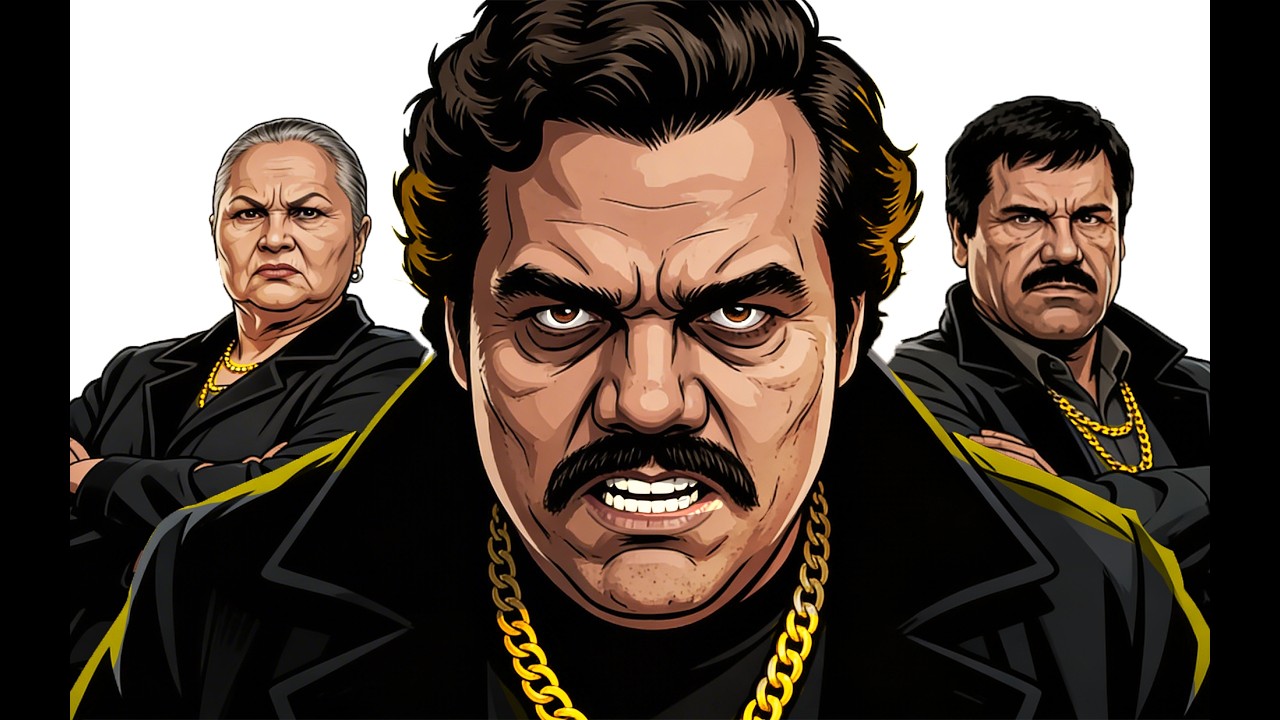
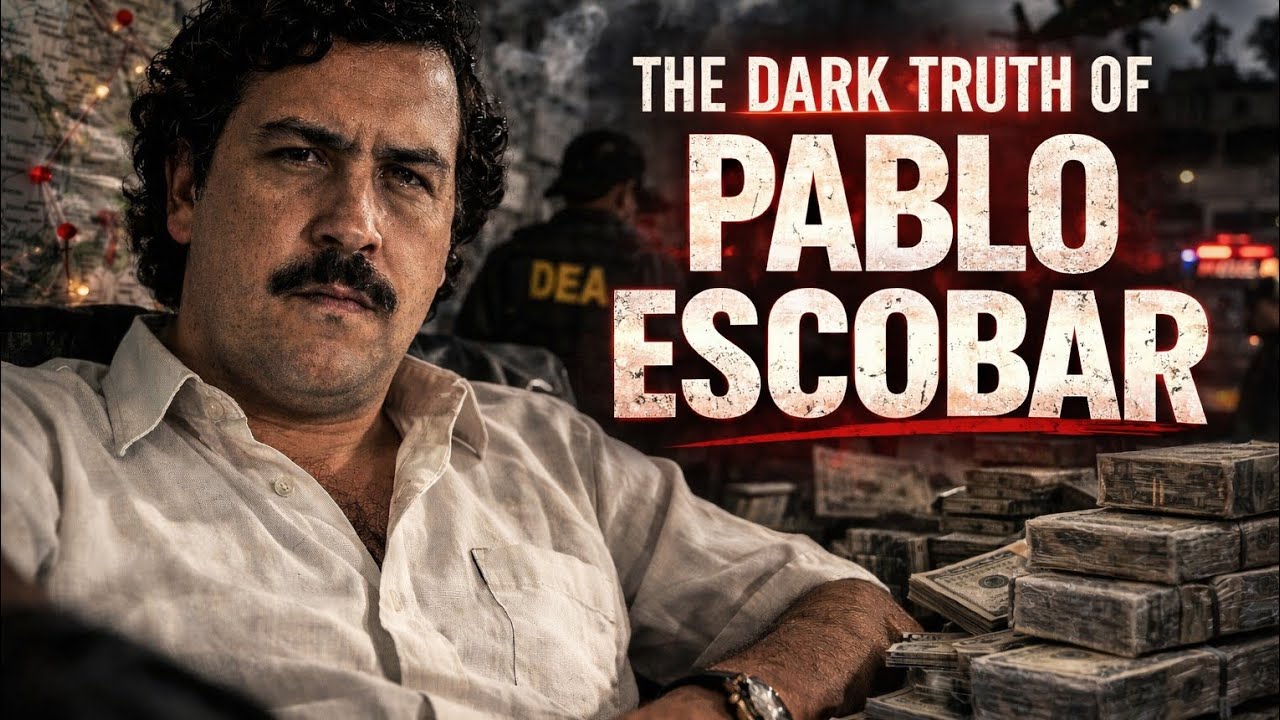
When Colombian security forces shot down Medellín kingpin Pablo Escobar on a rooftop in December 1993, law enforcement agencies around the world declared a historic victory. The prevailing theory inside Washington and Bogotá was simple: decapitate the cartel, eliminate the central kingpin, and cripple the global cocaine trade. History, however, proved that illicit markets abhor a vacuum. In reality, Pablo Escobar’s shadow is El Chapo’s rise—the dark truth revealed by modern geopolitical analysis is that destroying the Colombian monopolies merely handed the keys of the global drug trade to Mexico’s most ruthless logistics mastermind.

Joaquín “El Chapo” Guzmán did not build the Sinaloa Cartel in spite of Escobar’s demise; he built it because of it. By dissecting the strategic blunders, logistical bottlenecks, and structural flaws that brought down the Medellín empire, Guzmán engineered a decentralized, corporate-style syndicate that eclipsed its predecessors in both scale and longevity.
The Caribbean Blockade: How Geography Shifted West
Throughout the late 1970s and 1980s, Escobar’s supply chain relied heavily on maritime and aerial corridors passing through the Caribbean basin. Smugglers ferried cocaine directly from Colombia’s northern coast through the Bahamas, Puerto Rico, and southern Florida. Planes landed directly on remote Florida landing strips, and cigarette boats dropped waterproof bales off the coast of Miami.
By the late 1980s, the United States responded by creating the South Florida Task Force, deploying advanced radar, naval cutters, and airborne surveillance. The Caribbean corridor became functionally impassable. Desperate to move tons of cocaine piling up in Andean warehouses, Colombian traffickers turned to established Mexican contraband networks that had spent generations smuggling alcohol, cannabis, and heroin across the southwestern border.
Initially, Mexican smugglers—including the nascent leaders of what would become the Guadalajara and Sinaloa cartels—operated merely as contractors. They charged a flat fee of roughly $1,500 to $2,000 per kilogram to carry Escobar’s product across the Rio Grande. But this subordinate relationship did not last long.
Pablo Escobar’s Shadow is El Chapo’s Rise—The Dark Truth Revealed
The turning point in the relationship between Colombian producers and Mexican smugglers came down to liquidity and leverage. As pressure mounted on the Medellín Cartel, Escobar faced an acute cash flow crisis. Frozen accounts, seized properties, and ballooning war expenditures meant the Colombians could no longer consistently pay their Mexican couriers in cash.
The solution altered the geopolitical balance of power forever: instead of cash, Mexican operators demanded up to 50% of the cocaine itself as payment for transport services. This arrangement, known as the producto split, transformed Mexican smugglers from paid delivery drivers into direct wholesalers.
Where Escobar cast a long shadow of violent intimidation, El Chapo identified an enormous commercial opening:
- Direct Market Access: With half of every shipment under his control, Guzmán established his own distribution cells in major American cities, including Chicago, Los Angeles, and New York.
- Exponential Profit Margins: Mexican syndicates were no longer making a modest transit fee; they were reaping the retail markup inside the United States, earning tens of thousands of dollars per kilogram.
- Producer Dependency: The Colombians still held the coca fields, but they had lost their connection to American buyers. Escobar had built the demand, but Guzmán now owned the customer pipeline.
The Strategic Divergence: Ego vs. Corporate Logistics
Escobar’s downfall stemmed largely from his unchecked political ambitions and reliance on direct terror against the state. Escobar sought public adoration, ran for public office in Colombia, constructed housing developments for the poor, and eventually declared outright war against the government when extradition threatened his empire. He assassinated presidential candidates, bombed passenger airliners, and detonated car bombs in populated city centers. This overt terrorism forced the Colombian state and international intelligence agencies to prioritize his total elimination.

El Chapo studied Escobar’s trajectory and chose a radically different doctrine. Rather than challenging the state openly, Guzmán focused on co-opting it silently through institutional corruption. Guzmán remained in the background for decades, preferring the persona of a rural businessman over that of a national revolutionary.
Logistical Innovation over Shock Value
While Escobar spent millions funding domestic guerrilla operations and private armies, El Chapo invested in civil engineering and distribution logistics:
- Cross-Border Subterranean Tunnels: Starting with his first major tunnel in Agua Prieta in 1989, Guzmán hired professional engineers to build air-conditioned, rail-equipped underground pathways that rendered border fences useless.
- Commercial Concealment: Guzmán pioneered the industrial concealment of cocaine inside sealed cans of jalapeños, legitimate cross-border refrigerated produce shipments, and maritime shipping containers.
- Compartmentalized Organization: Unlike the top-heavy Medellín syndicate, the Sinaloa Cartel was structured as a federation of allied factions, making it resilient to the arrest or death of individual capos.
The Global Empire That Eclipsed Medellín
By the time Escobar was killed in 1993, the era of the pure Colombian cartel was over. The Cali Cartel fell shortly after, fracturing Colombian cocaine operations into smaller, regional groups commonly referred to as cartelitos. These smaller entities possessed neither the manpower nor the infrastructure to dictate terms to foreign partners.
The Sinaloa Cartel stepped into this vacuum, dictating market prices directly to the Andean suppliers. Over the next two decades, El Chapo expanded operations far beyond the Americas. Sinaloa established procurement hubs in South America, distribution rings throughout North America and Europe, and synthetic chemical sourcing pipelines stretching directly into East and Southeast Asia.
Escobar’s historical notoriety remains high due to his flamboyant brutality and media presence, but by every economic metric—volume moved, operational lifespan, and geographic diversification—El Chapo’s criminal network surpassed Medellín’s historic peak.
The Peril of the Kingpin Strategy
The transition of power from Escobar to El Chapo offers a sobering lesson in international counter-narcotics policy. The “kingpin strategy”—the systematic pursuit and elimination of high-profile criminal leaders—often yields high-profile press conferences while destabilizing illicit supply chains in ways that spur worse violence.
Escobar’s destruction solved an immediate crisis for the Colombian state, but it decentralized the underlying business, pushing distribution into hands that were harder to trace and more structurally entrenched. When El Chapo was ultimately extradited to the United States in 2017 and sentenced to life imprisonment, the cycle repeated itself: Sinaloa fractured into warring factions while newer, more aggressive groups like the Jalisco New Generation Cartel (CJNG) expanded to fill the void.
Pablo Escobar’s legacy was not the end of modern drug trafficking; it was its blueprint. In stepping out of Escobar’s shadow, El Chapo modernized the global black market, leaving behind a systemic, corporate infrastructure that remains deeply entrenched long after both men left the world stage.