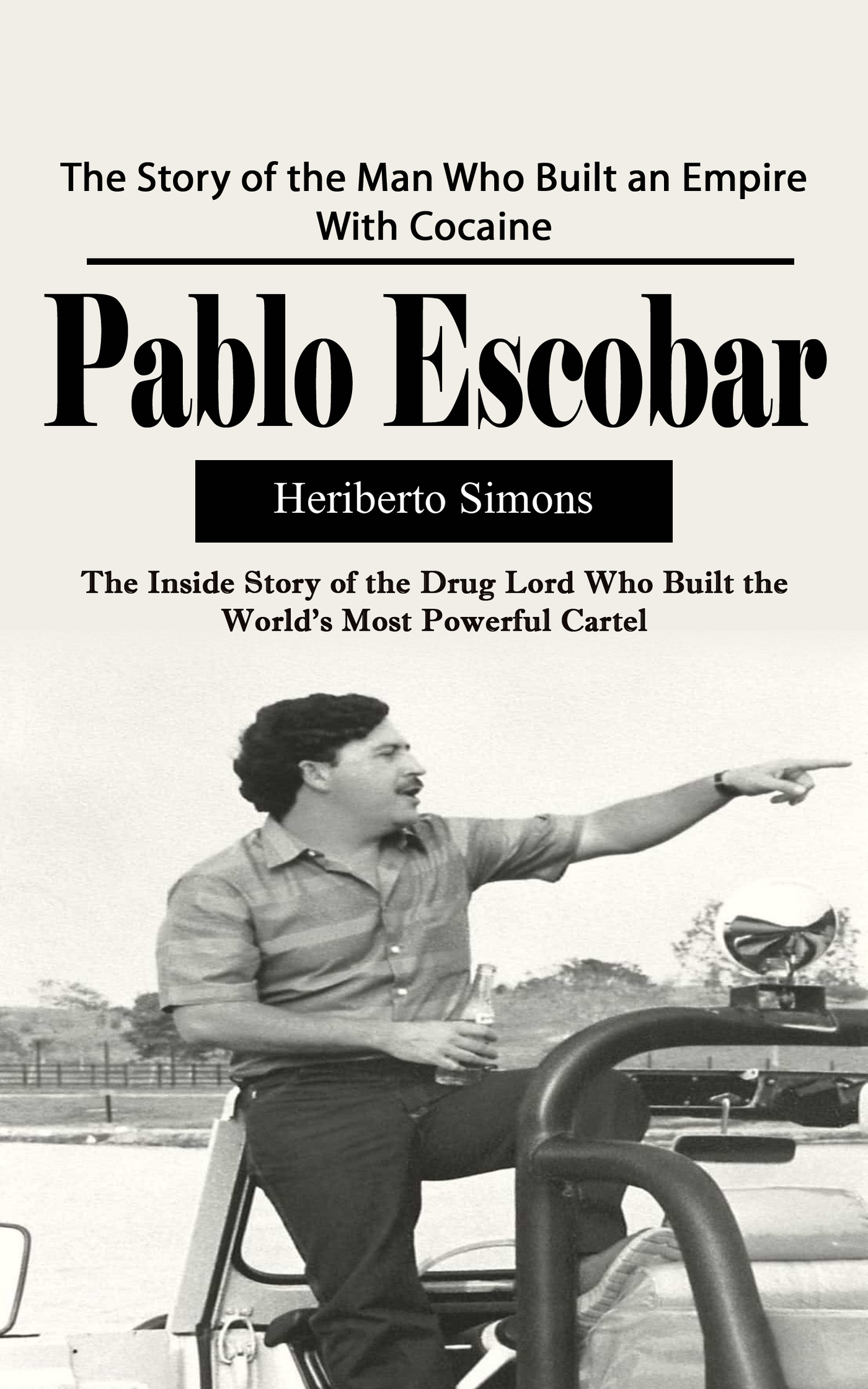
Pablo Escobar: The Godfather of Cocaine & El Chapo
When people think of the global drug trade, two names instantly dominate the conversation: Pablo Escobar and Joaquín "El Chapo" Guzmán. Operating in different eras and through different organizational structures, these two men redefined organized crime. Yet, their legacies are not just defined by their immense wealth, violence, and state-defying power—they are also bound by a surprising, lesser-known historical connection.

Understanding how these two titans of the underworld intersect provides a fascinating window into the evolution of the modern cartel system. From the humid jungles of Colombia to the rugged mountains of Sinaloa, the drug trade underwent a massive transformation, with Escobar laying the foundation that El Chapo would later build upon.
The Rise and Fall of Pablo Escobar: The Godfather of Cocaine—And His Strange Link to El Chapo!
To understand the connection between these two men, we must first look at the man who invented modern narco-trafficking on an industrial scale. In the late 1970s and 1980s, Pablo Escobar forged the Medellín Cartel into a ruthless, multi-billion-dollar empire. At its peak, his organization supplied an estimated 80% of the cocaine consumed in the United States.
Escobar was not merely a criminal; he operated as a parallel state. He built neighborhoods for the poor, funded soccer teams, and ran for public office, earning the populist moniker "Robin Hood." However, his philanthropic facade masked unprecedented brutality. Car bombs, assassinations of presidential candidates, and the downing of a commercial airliner ultimately made him public enemy number one, culminating in his death on a Medellín rooftop in 1993.
How the Medellín and Sinaloa Cartels Intersected
While Escobar ruled Colombia, a young Joaquín Guzmán Loera was cutting his teeth in Mexico. In the 1980s, the dominant Mexican trafficking network was the Guadalajara Cartel, led by Miguel Ángel Félix Gallardo. At this time, Mexican cartels were not the primary producers of cocaine; rather, they operated as logistics providers and smugglers for Colombian cartels looking to move product across the U.S.–Mexico border.
This is where the direct pipeline between Escobar and the future leader of the Sinaloa Cartel was born.
The Aviation Pipeline
Video: Pablo Escobar’s Rise & Fall | The Godfather of Cocaine (full documentary) | FRONTLINE (PBS)

Before El Chapo became famous for his sophisticated cross-border drug tunnels, he mastered the art of aerial logistics. Working under Félix Gallardo, Guzmán was tasked with coordinating the transport of Colombian cocaine—produced by Pablo Escobar’s cartel—from Central America and Mexico into the United States.
- Escobar’s chemists manufactured the cocaine in the jungles of Colombia.
- Planes piloted by trusted operatives flew the cargo north to hidden airstrips in Sinaloa and Sonora, Mexico.
- Guzmán oversaw the ground logistics, ensuring the product was safely stored and prepped for the final dash across the U.S. border.
This partnership was so lucrative and efficient that it earned Guzmán the nickname *El Rápido* (The Fast One) for his ability to move shipments quicker than anyone else in the business.
The Strange Meeting That Shaped Cartel History
Perhaps the most compelling link between the two men is the alleged personal contact they shared during the height of the Medellín Cartel's power. Historical accounts and testimonies from former cartel associates suggest that El Chapo traveled to Colombia in the late 1980s to meet with Escobar directly.
At the time, Escobar was a global celebrity-criminal, while Guzmán was an ambitious regional boss. Meeting the Godfather of Cocaine was a rite of passage and a crucial business summit. During these negotiations, they solidified smuggling routes that would outlive Escobar by decades. While Escobar's empire collapsed due to his decision to wage an all-out war against the Colombian government, El Chapo learned a valuable lesson: keep a lower profile, bribe officials systematically, and focus on supply chain dominance.
Legacy: From the Godfather to the Modern Era
Pablo Escobar left behind a blueprint for global narcotics trafficking, but his methods were notoriously volatile. He wanted fame, political power, and public adoration. El Chapo Guzmán, by contrast, adopted a more corporate, decentralized approach that allowed the Sinaloa Cartel to survive and thrive long after Escobar’s demise.
Despite their different approaches to leadership, the lineage of modern cartel power flows directly from Colombia to Mexico. Without the foundational cocaine empire built by Pablo Escobar, El Chapo would not have had the springboard needed to become the world's most notorious trafficker of the 21st century.
Ultimately, the strange link between Pablo Escobar and El Chapo reveals a continuous thread in the history of organized crime—one forged in the clouds of clandestine airstrips, cemented by billions of dollars, and sustained by an endless global demand for narcotics.