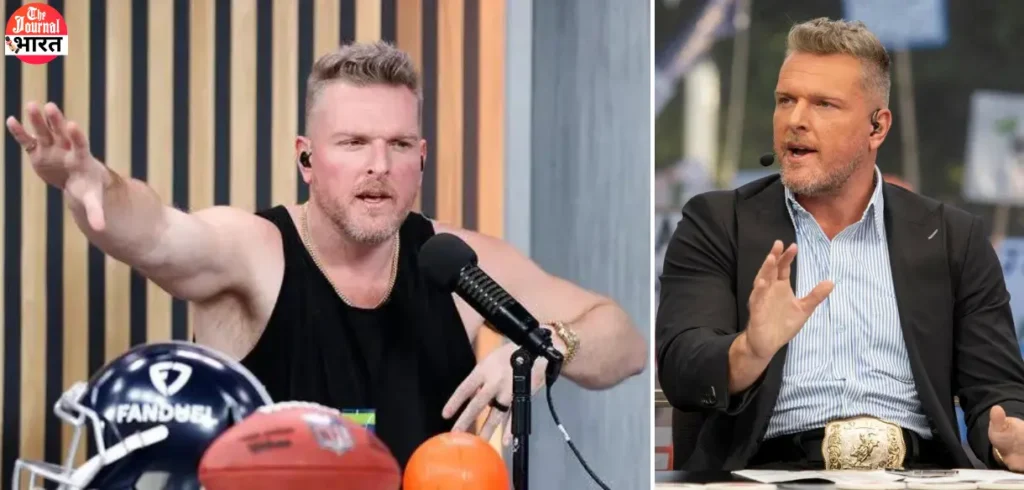
Pat McAfee's Wealth Journey: Humble to Billionaire?
When Pat McAfee walked away from a multimillion-dollar NFL contract in 2017, critics called it career suicide. An All-Pro punter in his athletic prime retiring to start a podcast seemed absurd to traditional sports media observers. Yet, looking back at the trajectory of his business empire, tracking Pat McAfee’s wealth journey – from humble beginnings to billionaire status speculation – reveals one of the most brilliant, high-stakes bets in sports entertainment history.

Today, McAfee is not merely a retired athlete with a microphone; he is a media mogul running an independent production powerhouse. While the label "billionaire" is often thrown around casually in modern sports discourse, McAfee's rapid ascent from working-class Pennsylvania to holding the reins of nine-figure media partnerships offers a masterclass in modern digital equity.
The Humble Beginnings: A $100 Poker Game
Before the lucrative contracts, custom suits, and private jets, McAfee was an overlooked athlete from Plum, Pennsylvania. Raised in a working-class household, his entry into elite collegiate athletics almost didn't happen due to financial constraints.
In high school, McAfee was an accomplished soccer player who picked up placekicking. To catch the eye of college scouts, he needed to attend a high-profile kicking camp in Miami, Florida. Lacking the funds to travel, McAfee took a daring gamble: he borrowed $100, competed in an underground poker game, and turned that cash into roughly $1,400. That poker windfall paid for his flight to Miami, where he hit a 65-yard field goal, caught the attention of West Virginia University scouts, and earned a full-ride scholarship.
At WVU, McAfee became a collegiate standout, serving as both punter and placekicker. The Indianapolis Colts selected him in the seventh round (222nd overall) of the 2009 NFL Draft, providing him with his first steady professional paycheck.
The NFL Years: Leaving Millions on the Table
McAfee played eight seasons in Indianapolis, establishing himself as one of the league's premier specialists. He earned two Pro Bowl nods and a First-Team All-Pro selection in 2014. Along the way, he became a fan favorite for his booming kicks, open-field tackles, and outsized charisma.
Over his eight-year NFL tenure, McAfee earned approximately $15 million in gross salary. While significant, standard player taxes, agent fees, and living expenses left him with a solid foundation, not generational wealth. In 2016, McAfee was entering the final years of a contract extension that would have paid him nearly $6 million over the next two seasons.
Instead, plagued by repeated knee surgeries and a fractured relationship with then-general manager Ryan Grigson, McAfee did the unthinkable: he retired at age 29. He walked away from guaranteed NFL millions to join digital media upstart Barstool Sports at a fraction of his football salary.
Building Pat McAfee Inc. (PMI)
McAfee’s tenure at Barstool Sports was short but foundational. It demonstrated that his loyal fanbase, known as "The Boys," would follow him anywhere. In 2018, realizing he needed full creative and financial autonomy, McAfee parted ways with Barstool to launch Pat McAfee Inc. (PMI).
Operating out of Indianapolis rather than New York or Los Angeles, McAfee built a self-contained production ecosystem. He hired his childhood friends, invested heavily in camera equipment and audio gear, and began broadcasting The Pat McAfee Show daily on YouTube. Without network interference, McAfee delivered raw, authentic, and hilarious coverage that appealed directly to younger, digitally native sports fans.
During this period, McAfee also diversified his income through side ventures:
Video: From NFL Punter To $200 MILLION — Pat McAfee's INSANE Life Will SHOCK You..

- WWE: Working as a guest commentator, ring performer, and pay-per-view headliner.
- College GameDay: Bringing his energetic, unfiltered personality to ESPN's flagship pregame show.
- Merchandise and Touring: Selling out live comedy and podcast tours across the country.
The FanDuel Blockbuster: $120 Million
By late 2021, sports betting operators were aggressively competing for customer acquisition following the nationwide legalization of online gambling. McAfee held the most engaged daily sports audience on the internet.
In December 2021, McAfee announced a monumental three-year sponsorship deal with FanDuel worth an estimated $120 million (roughly $30 million annually). The deal was historic because it was not an acquisition; McAfee did not sell his show, his intellectual property, or his company. FanDuel simply secured naming rights and sponsorship integration, while McAfee retained 100% ownership of his brand.
With this deal, McAfee surpassed the annual salaries of nearly every active NFL player, proving that ownership in the digital space could outperform elite athletic compensation.
The ESPN Licensing Agreement: Mainstream Scale
Despite the immense success of the FanDuel partnership, managing distribution, ad sales, and high overhead began to strain PMI's small team. In May 2023, McAfee made another paradigm-shifting move: he agreed to license The Pat McAfee Show to ESPN.
Reported to be a five-year contract worth around $85 million (approximately $17 million annually), the deal raised eyebrows across the sports landscape. While the headline number was lower than his prior FanDuel agreement, the mechanics of the ESPN deal were strategically superior:
- Retained Ownership: McAfee still owns 100% of his company and YouTube channel.
- Reduced Production Friction: ESPN handles extensive back-end logistics, rights clearance, and distribution across linear TV and digital platforms.
- Creative Freedom: McAfee retained final say over his content, maintaining his informal studio environment and daily roster of co-hosts.
Tracking Pat McAfee’s Wealth Journey – From Humble Beginnings to Billionaire Status
Given these massive deals, many fans and commentators have begun tracking Pat McAfee’s wealth journey – from humble beginnings to billionaire status – asking whether he has already joined the ten-figure club. To assess this accurately, it is important to separate gross business contracts from personal net worth.
As of 2024, McAfee is not an active billionaire. His personal net worth is conservatively estimated between $80 million and $120 million. Several financial realities explain the gap between his mega-deals and a ten-figure net worth:
- Heavy Operational Overhead: McAfee finances his multi-million-dollar "ThunderDome" studio in Indianapolis. He pays for production staff, high-end broadcast tech, satellite uplinks, and substantial talent fees (such as paying Aaron Rodgers for weekly appearances).
- Team Compensation: McAfee is widely recognized for distributing millions in bonuses directly to his long-time crew members and staff when major deals close.
- Philanthropy and Taxes: McAfee has personally donated millions to youth sports programs, local domestic violence shelters, and high school athletics across Pennsylvania and Indiana, alongside top-tier federal and state tax rates.
Can Pat McAfee Become a Billionaire?
While McAfee is not a billionaire today, the path to a $1 billion valuation is entirely feasible over the next decade. His wealth creation mirrors the playbook used by media moguls like Joe Rogan and Bill Simmons:
- IP Ownership: Because McAfee owns his show's catalog and trademark, he could eventually sell an equity stake in Pat McAfee Inc. for a staggering multiple.
- Direct-to-Consumer Expansion: Expanding into original programming, unscripted docuseries, and branded merchandise could significantly increase enterprise value.
- Private Equity & Acquisitions: If PMI develops into a boutique network producing multiple podcasts and digital formats, the consolidated media company could easily command a valuation nearing $500 million to $1 billion in an open market acquisition.
Summary: The Playbook for Modern Creators
Pat McAfee's rise from borrowing $100 for an illegal poker game to negotiating nine-figure deals with Disney and FanDuel is one of the most remarkable stories in sports history. By betting on himself, refusing to sell his intellectual property, and prioritizing authentic connection over corporate polish, McAfee demonstrated that talent no longer needs legacy gatekeepers to build enduring, generational wealth.