Pendulum Lab KE and PE Emergency Cheat Sheet
Whether you are staring at a photogate timer ten minutes before your period ends or frantically finishing a lab report at midnight, this Pendulum Lab KE and PE Emergency Cheat Sheet gives you the exact equations, geometric tricks, and conceptual explanations you need right now.
The Fundamental Rule: Conservation of Mechanical Energy
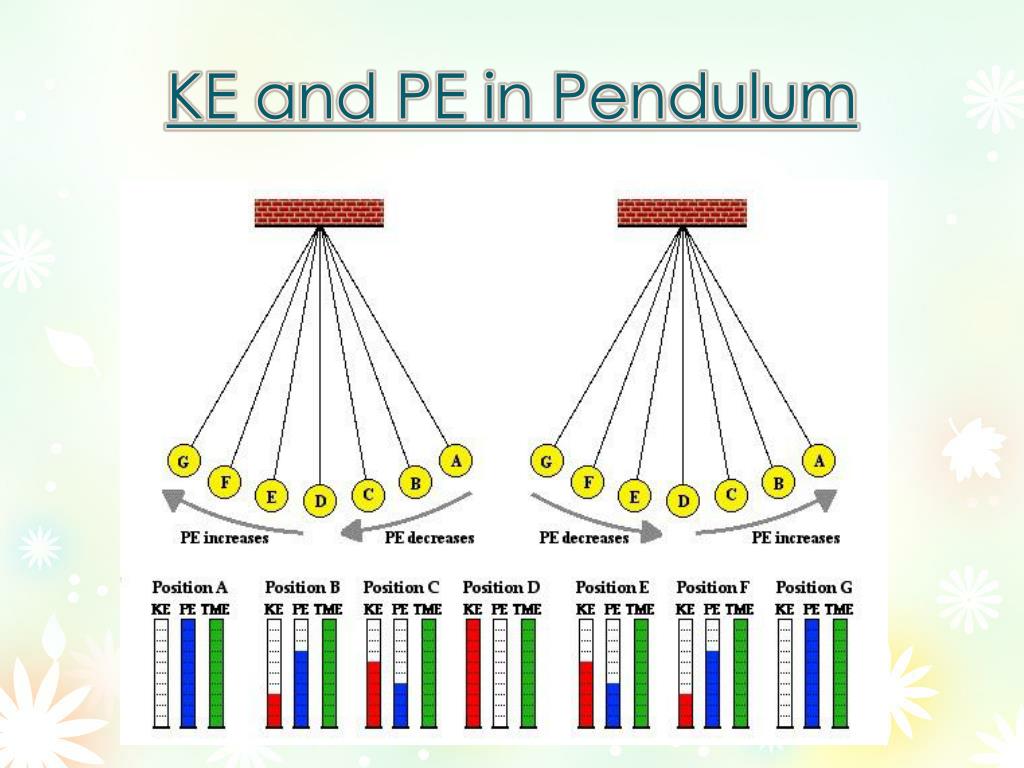
In an ideal simple pendulum—where friction at the pivot and aerodynamic drag are negligible—the total mechanical energy ($E_{total}$) remains constant throughout the entire swing. Mechanical energy simply shifts back and forth between two accounts: gravitational potential energy ($PE$) and kinetic energy ($KE$).
$$E_{total} = KE + PE = \text{constant}$$
- At the Release Points (Maximum Amplitude, $\pm\theta_{max}$): The bob stops momentarily before reversing direction ($v = 0$). Therefore, $KE = 0$ and $PE = PE_{max}$. All system energy is stored as potential energy.
- At the Lowest Point (Equilibrium Position, $\theta = 0$): If you set your zero-height reference ($h = 0$) at this point, then $PE = 0$. The bob swings at its maximum velocity ($v_{max}$), meaning $KE = KE_{max}$. All energy has converted into kinetic energy.
- Anywhere In Between: The pendulum has both height and speed. Total energy is split: $E_{total} = \frac{1}{2}mv^2 + mgh$.
The Essential Formulas
Keep your SI units strictly in meters ($m$), kilograms ($kg$), seconds ($s$), and Joules ($J$).
1. Gravitational Potential Energy ($PE$)
$$PE = mgh$$
- $m$: Mass of the pendulum bob (in kg, not grams).
- $g$: Acceleration due to gravity ($9.80\text{ m/s}^2$ or $9.81\text{ m/s}^2$).
- $h$: Vertical rise above the lowest point (in meters).
2. Kinetic Energy ($KE$)
$$KE = \frac{1}{2}mv^2$$
- $m$: Mass of the bob (in kg).
- $v$: Tangential velocity of the bob at that exact instant (in m/s).
3. Theoretical Maximum Velocity ($v_{max}$)
By equating maximum potential energy at the release height to maximum kinetic energy at the bottom ($mgh_{max} = \frac{1}{2}mv_{max}^2$), mass cancels out completely:
$$v_{max} = \sqrt{2gh_{max}}$$
This is a favorite test and lab report question: Changing the mass of the bob does not change its maximum speed, assuming identical release heights.
Video: Energy of a Pendulum Lab
The Lab Geometry Trick: How to Calculate Height ($h$)

Most physics labs do not give you a direct measurement of the vertical rise $h$. Instead, you measure the length of the string ($L$) and the release angle ($\theta$) using a protractor. Calculating $h$ incorrectly is the number one math mistake in pendulum labs.
Here is how to calculate it properly:
- Measure $L$ from the pivot point to the center of mass of the bob, not just where the string ties to the hook.
- When pulled back to an angle $\theta$, the vertical distance from the pivot to the bob is $L\cos(\theta)$.
- The vertical rise $h$ above the lowest point is the difference between total length $L$ and that vertical component:
$$h = L - L\cos(\theta) = L(1 - \cos(\theta))$$
Substitute this back into the potential energy formula to get:
$$PE = mgL(1 - \cos(\theta))$$
Pendulum Lab KE and PE Emergency Cheat Sheet: At-a-Glance
Use this reference table to sanity-check your data points:
- Highest Points ($+\theta_{max}, -\theta_{max}$):
- Velocity ($v$): $0\text{ m/s}$
- Height ($h$): Maximum ($L(1 - \cos\theta_{max})$)
- $KE$: $0\text{ J}$
- $PE$: Maximum
- Tension in string: $T = mg\cos(\theta_{max})$ (Tension is at its minimum)
- Lowest Point ($\theta = 0$):
- Velocity ($v$): Maximum ($\sqrt{2gh_{max}}$)
- Height ($h$): $0\text{ m}$ (reference datum)
- $KE$: Maximum
- $PE$: $0\text{ J}$
- Tension in string: $T = mg + \frac{mv^2}{L}$ (Tension is at its maximum)
What Energy Graphs Should Look Like
If your lab software (Logger Pro, Vernier Graphical Analysis, or Sparkvue) generated plots, match them against these expected shapes:
Energy vs. Position ($x$)
- $PE$ Curve: Forms a concave-up parabola opening upward, bottoming out at zero when $x = 0$.
- $KE$ Curve: Forms an inverted parabola opening downward, peaking at $x = 0$.
- $E_{total}$ Line: A horizontal flat line sitting directly across the peaks of both curves.
Energy vs. Time ($t$)
Both $KE$ and $PE$ oscillate as squared sinusoidal waves. Notice an important lab quiz trap: Energy oscillates at twice the frequency of the pendulum's motion. In one full pendulum period (left $\rightarrow$ right $\rightarrow$ left), the bob passes through the equilibrium point twice, meaning kinetic energy reaches its maximum twice per cycle.
Troubleshooting: Why Energy Did Not Conserve
If your calculated initial $PE$ does not equal final $KE$ at the bottom, do not panic. Real lab equipment has constraints. Here are the top four legitimate physical errors to write in your error analysis section:
- Aerodynamic Drag and Pivot Friction: Non-conservative forces perform negative work on the system. Mechanical energy is converted into thermal energy (heat) and sound, meaning $KE_{bottom} < PE_{top}$.
- Misaligned Photogates: If your photogate is mounted even a few millimeters above the lowest point of the swing, it records a speed lower than the true $v_{max}$, making measured kinetic energy artificially low.
- Incorrect Length Measurement ($L$): Measuring only the string length while ignoring the bob's radius introduces systematic error into every calculation involving $h = L(1 - \cos\theta)$.
- Large Angle Deviations: If you released the pendulum from angles greater than roughly $20^\circ$, small-angle assumptions no longer hold if you are calculating theoretical periods, though pure conservation of energy ($mgh = \frac{1}{2}mv^2$) remains theoretically valid at any angle as long as air drag is minimal.
Pre-Submission Sanity Checks
- Did you convert bob mass from grams to kilograms? ($50\text{ g} = 0.05\text{ kg}$)
- Is your calculator set to degrees, not radians, before computing $\cos(\theta)$?
- Is your final velocity within a realistic range? (Most classroom pendulums swing between $0.5\text{ m/s}$ and $2.5\text{ m/s}$.)
- Does total energy slightly decrease over time rather than increase? (An increase indicates a calibration or measurement error; a slight decrease confirms realistic friction.)