Pharrell Williams’ $500 Million Ton: Chance or Strategy?
Pharrell Williams stands among a rare class of cultural innovators who have successfully converted artistic ubiquity into a half-billion-dollar commercial empire. From orchestrating chart-topping anthems to commanding the creative direction of Louis Vuitton Men, his footprint across music, fashion, and consumer goods is undeniable. Yet, when analyzing Pharrell Williams’ $500 Million Ton: Was His Fortune Built By Chance or Strategy?, one must look beyond the surface of celebrity glamour to examine the financial architecture that powered his extraordinary accumulation of capital.

While luck often plays a role in breaking down initial barriers, sustaining relevance across four distinct decades demands a disciplined, forward-looking commercial blueprint. Williams did not simply collect royalty checks; he transformed his taste into scalable, high-margin equity.
The Neptunes and the Royalty Foundation
To understand the roots of Williams’ wealth, one must trace back to Virginia Beach in the early 1990s. Alongside childhood friend Chad Hugo, Williams formed The Neptunes, a production duo that revolutionized the sonic texture of pop, hip-hop, and R&B. By August 2003, a survey revealed that The Neptunes had produced nearly 20% of all songs played on British radio and over 40% of tracks on US radio.
In an industry infamous for predatory contracts, Williams and his team exercised early foresight regarding intellectual property:
- Publishing Retention: Rather than taking quick upfront cash advances, Williams negotiated aggressive publishing splits and retained ownership of his master rights wherever possible.
- Producer Points: By securing royalties on total record sales rather than flat production fees, he built an annuity stream that paid out across tens of millions of records sold by artists like Jay-Z, Britney Spears, Nelly, and Snoop Dogg.
- Multi-Format Dominance: When his solo hit "Happy" dominated charts worldwide in 2013 and 2014, it generated substantial mechanical, performance, and synchronization royalties across film, television, and advertising.
Pharrell Williams’ $500 Million Ton: Was His Fortune Built By Chance or Strategy?
The central question surrounding Pharrell Williams’ $500 Million Ton: Was His Fortune Built By Chance or Strategy? finds its answer in how he navigated pivotal industry shifts. Many 1990s super-producers faded as streaming compressed master recording payouts. Williams, however, systematically diversified into high-equity verticals before market downturns could erode his financial base.
Rather than relying on organic fortune, Williams executed a three-pronged playbook: monetize creative authority, convert influence into direct equity, and bridge disparate cultural ecosystems to create proprietary value.
1. The Streetwear Arbitrage: Billionaire Boys Club and Ice Cream
In the early 2000s, luxury fashion and hip-hop culture largely operated in silos. Williams bridged this gap after meeting Tomoaki Nagao (Nigo), the mastermind behind A Bathing Ape (BAPE), during a trip to Japan. Recognizing the untapped potential of premium Japanese streetwear in Western markets, Williams and Nigo co-founded Billionaire Boys Club (BBC) and Ice Cream footwear in 2003.
This was a calculated strategic pivot. Rather than acting as a paid spokesperson for legacy athletic brands, Williams took an equity stake in his own apparel line. By employing artificial scarcity—releasing limited quantities at high price points—he helped pioneer the modern "drop" model that now underpins the multi-billion-dollar luxury streetwear sector.
2. From Brand Ambassador to Creative Director at Louis Vuitton
Williams' long-standing relationship with luxury houses was neither accidental nor passive. He collaborated with Louis Vuitton on custom eyewear as early as 2004 under Marc Jacobs, followed by high-jewelry collections in 2008. He later made history as the first male ambassador to star in a Chanel handbag campaign.
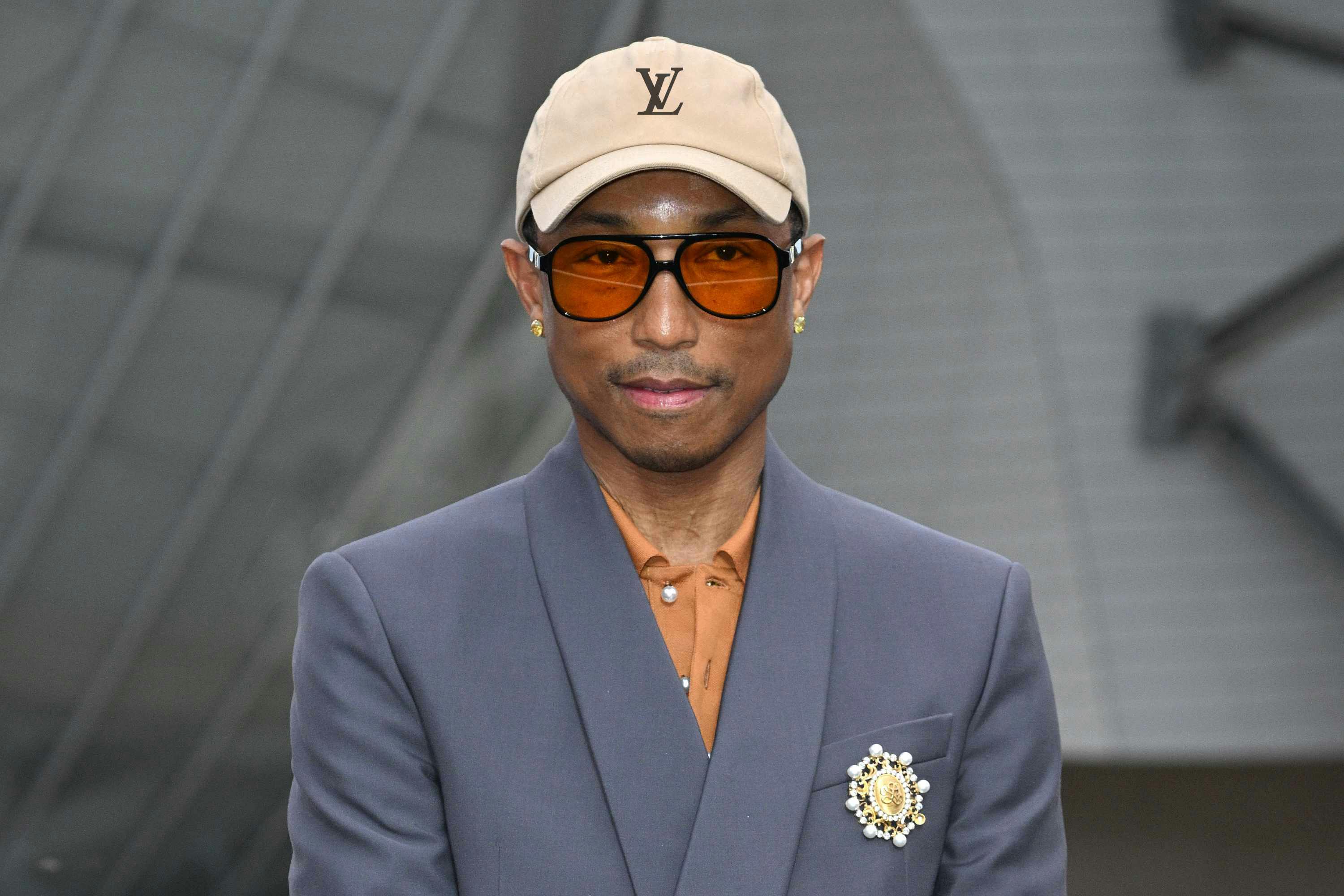
When LVMH appointed Williams as Men’s Creative Director of Louis Vuitton in February 2023—filling the monumental void left by the late Virgil Abloh—it solidified his status not just as an artistic visionary, but as a commercial power broker. The appointment brought substantial compensation, reportedly in the eight-figure range annually, while also positioning him at the center of the world's most powerful luxury conglomerate.
The Modern Portfolio: Wellness, Hospitality, and Humanrace
Williams’ financial maturity is most evident in his contemporary venture portfolio, where he prioritizes sustainable consumer packaged goods (CPG) and lifestyle real estate over standard endorsement deals.
Humanrace: Clean CPG and Sustainable Scale
Launched in late 2020, Humanrace expanded Williams’ footprint into skincare, body care, and footwear. Built with dermatologist Elena Jones, the brand emphasizes refillable packaging, clean ingredients, and gender-neutral appeal. By owning the brand outright alongside private equity partners, Williams positioned Humanrace to capture market share in the rapidly expanding clean beauty market, creating long-term valuation multiples far higher than traditional licensing agreements.
Strategic Real Estate and Hospitality
In partnership with hospitality magnate David Grutman, Williams opened The Goodtime Hotel in Miami Beach in 2021, accompanied by high-end dining concepts like Strawberry Moon and Swan. This move transformed his cultural cachet into appreciating physical assets, generating revenue from tourism, private events, and premium dining.
The Strategic Pillars That Built the Empire
A granular look at Williams' career reveals distinct operating principles that separate his wealth accumulation from pure happenstance:
- Prioritizing Equity Over Endorsements: Early in his career, Williams realized that flat-fee marketing deals enrich corporations while leaving creators vulnerable. His long-term Adidas partnership, BBC ownership, and Humanrace all feature equity or profit-sharing structures.
- Cross-Pollination of Audiences: By moving fluidly between skateboarding, fine art, hip-hop, and European haute couture, he expanded his addressable audience, making himself indispensable to diverse demographics.
- Long-Horizon Relationship Building: His appointment at Louis Vuitton was not a sudden impulse by LVMH Chairman Bernard Arnault; it was the culmination of two decades of trust, mutual respect, and reliable profitability.
Conclusion: Serendipity Opens the Door, Strategy Keeps the Key
Did serendipity play a part in Pharrell Williams’ rise? Undoubtedly. Meeting Chad Hugo in school band camp and crossing paths with Teddy Riley in Virginia were fortuitous events that accelerated his initial entry into the music business.
However, sustaining a top-tier valuation across thirty years while navigating the music, fashion, and luxury industries cannot be credited to fortune alone. Pharrell Williams’ $500 million net worth is the product of deliberate positioning, aggressive IP retention, and the foresight to view culture through the lens of equity ownership.