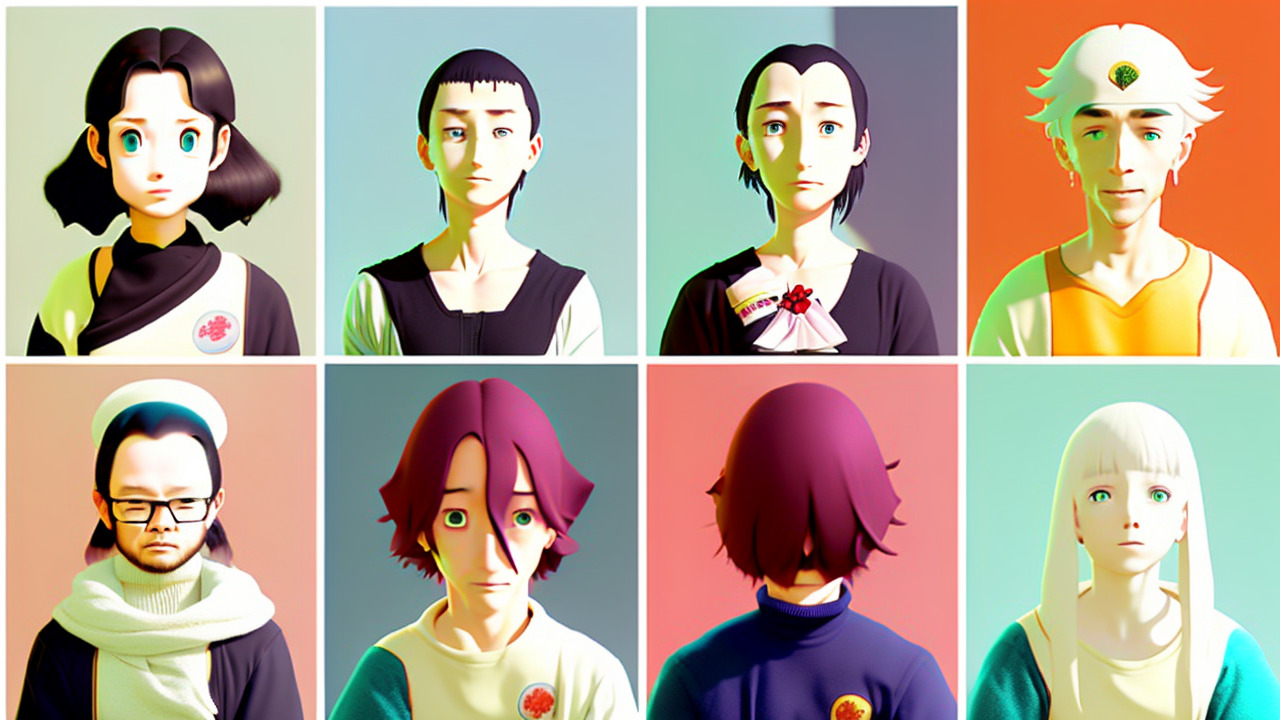
Picrew.come: Evolution of the Avatar & Digital Identity
Every day, millions of internet users type variations like picrew.come into search bars, seeking out Picrew—the Japanese layered-image platform that quietly revolutionized how we present ourselves across social web spaces. What began as an indie illustration tool has evolved into a global cultural phenomenon. Exploring Picrew.come: the evolution of the avatar and what it means for the future reveals how personal representation shifted from rigid corporate templates to fluid, grassroots visual identity.

From Forum Badges to Bespoke Avatars: A Brief History
Digital self-representation has moved through distinct architectural eras since the dawn of the consumer internet:
- Static Icons (1990s–early 2000s): Early web forums and chatrooms relied on low-resolution GIFs, pixel art, or pre-rendered system icons. Users chose from a static menu of prefabricated faces.
- Corporate Customizers (mid-2000s–2010s): Platforms like Gaia Online, Yahoo! Avatars, Nintendo’s Mii, and later Bitmoji introduced modular customization. However, these systems remained confined to proprietary corporate aesthetics and narrow definitions of style, gender, and ethnicity.
- Community-Driven Layering (2018–Present): Platforms like Picrew disrupted the paradigm by decoupling the avatar engine from any single artistic style, allowing independent artists worldwide to build their own bespoke character creators.
By shifting creative authority from centralized design teams to individual illustrators, the avatar transformed from a generic badge into an expressive, personalized work of art.
The Architecture of Picrew: Why the Layered Model Succeeded
At its technical core, Picrew operates on a sophisticated vector-and-raster layering framework. An artist uploads categorized assets—eyes, hairstyles, skin tones, accessories, and background palettes—mapped to coordinated coordinate points. Users then mix, match, recolor, and reposition those assets to assemble a cohesive image.
This decentralized framework solved three fundamental problems that earlier avatar tools could not navigate:
- Aesthetic Fatigue: Instead of being locked into a single cartoonish look (such as Meta’s 3D avatars or Snapchat’s Bitmoji), users can choose from thousands of distinct aesthetics, ranging from 1990s anime nostalgia and soft watercolor realism to retro pixel art and edgy line sketches.
- Speed of Iteration: Independent artists can publish or update an image maker in days, reacting rapidly to subcultural trends, new fashion silhouettes, or niche community memes.
- Micro-Monetization and Visibility: Creators use their generators to build massive followings on platforms like Twitter/X, Instagram, and Patreon, turning free interactive tools into long-term artistic careers.
Picrew.come: The Evolution of the Avatar and What It Means for the Future
When analyzing Picrew.come: the evolution of the avatar and what it means for the future, the most striking finding is social rather than purely technical. Picrew proved that digital identity is fundamentally participatory. Users do not merely want to select an avatar; they want to feel an intimate connection with the visual language used to construct it.
For marginalized groups—including LGBTQ+ communities, neurodivergent users, and individuals with rare physical traits—conventional avatar creators were historically alienating. Default selections rarely accommodated pride flags, asymmetrical physical features, mobility aids, diverse hair textures, or non-binary gender presentations.
Picrew creators filled those gaps intuitively. A user could finally build an avatar displaying vitiligo, wearing hearing aids, holding a specific pride banner, and sporting a non-traditional haircut—all drawn with care by an artist who shares that lived experience. In doing so, Picrew normalized hyper-granular self-representation as a baseline expectation for internet culture.
The Divergence: Hand-Crafted Layers vs. Generative AI
Video: Make Unique Avatars with Picrew!

As synthetic media and generative artificial intelligence advance, the digital avatar space sits at a critical crossroads. AI image generators can output endless photorealistic or stylized profile pictures from simple text prompts, yet millions still prefer hand-curated creators like Picrew. Understanding this preference illustrates what users actually value in an avatar:
- Deliberate Intentionality: In a layered maker, every element—from a specific hair strand to an earring—is selected with conscious intent. AI generation, by contrast, relies on statistical approximation and serendipity.
- Human Connection: Using a Picrew links the user directly to a human creator whose signature or watermark remains tied to the output. It functions as a mutual celebration of artistic labor.
- Community Cohesion: When a specific Picrew maker goes viral within a subculture, mutual recognition creates instant social affinity across social feeds.
Rather than rendering layered creators obsolete, the rise of synthetic imagery has highlighted the emotional value of human-crafted identity assets.
The Next Frontier: Spatial Computing, 3D, and Interoperability
What does the next chapter look like as we transition toward immersive 3D platforms, spatial computing, and decentralized networks? Several clear trajectories are taking shape:
1. 2D Aesthetics Moving into 3D Rigging
Services like VRoid Studio and Ready Player Me are bringing the modular ethos of Picrew into three dimensions. Users want to take the handcrafted, stylistic charm of independent 2D art and translate it into fully rigged 3D models suitable for VRChat, live-streaming as VTubers, or interacting in virtual workspaces.
2. Cross-Platform Identity Portability
Currently, your digital identity remains fragmented: one avatar on Discord, another in a mobile game, and a third on a workplace communication app. The next paradigm demands interoperability. Open avatar standards aim to allow a single digital identity token to translate dynamically between a 2D forum profile, an animated video stream, and a virtual reality room.
3. Modular Micro-Economies for Independent Artists
The success of grassroots creators signals a shift away from closed corporate avatar stores. Future platforms are increasingly designing frameworks where independent artists can sell modular digital wearables—individual jackets, custom eyes, or kinetic accessories—directly to users, creating sustainable micro-economies centered on personal aesthetics.
Conclusion: Identity as an Ongoing Canvas
Whether discovered through a direct link or a mistaken search for picrew.come, the image-making revolution proved that online identity is never static. It is an ongoing, experimental dialogue between users and creators. Avatars are no longer passive masks we wear to hide our real selves; they are deliberate canvases where we explore who we are, who we want to be, and where we belong in a connected world.