Pioneers in Psychology: Who Shaped the Science?
Psychology as we know it today—a blend of empirical research, clinical practice, and cognitive science—did not always exist. For centuries, questions about the human mind, consciousness, and behavior belonged to the realm of philosophy. That changed in the late 19th century when a group of curious thinkers began applying scientific methods to human thought. These pioneers in psychology transformed an abstract inquiry into an empirical science that continues to shape how we understand ourselves.

The Birth of Experimental Psychology
Before the 1870s, studying the mind meant pondering it from an armchair. The shift toward a laboratory-based science happened largely in Germany, where the first wave of psychological innovators established the field's independence.
Wilhelm Wundt (1832–1920)
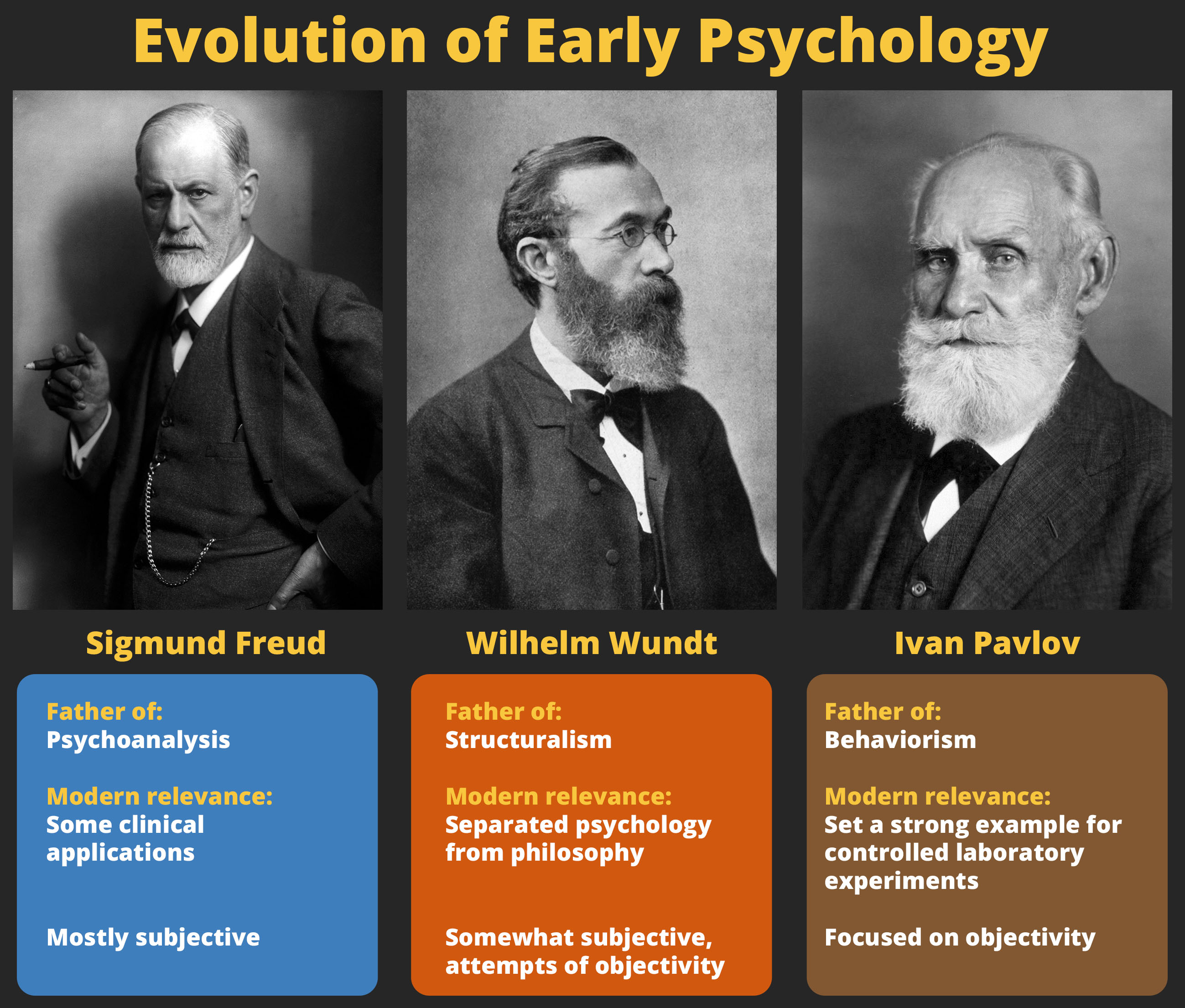
Often hailed as the father of experimental psychology, Wilhelm Wundt opened the world's first psychological laboratory at the University of Leipzig in 1879. Wundt believed that conscious experience could be broken down into basic elements, much like a chemist breaks down a compound. He used a method called introspection, training subjects to carefully observe and report their own sensory experiences in response to standardized stimuli. While introspection proved too subjective for long-term use, Wundt's insistence on controlled laboratory conditions cemented psychology as a legitimate scientific discipline.
William James (1842–1910)
Across the Atlantic, American philosopher and physician William James took a different approach. Influenced by Charles Darwin's theory of evolution, James asked a new question: What is the purpose of consciousness? Rather than dissecting the mind into static parts, James viewed consciousness as a continuous, flowing "stream." His perspective, known as functionalism, explored how mental processes help humans adapt to their environments. His monumental 1890 textbook, The Principles of Psychology, remains a classic in the field.
Key contributions of early functionalism include:
- Shifting focus from internal mental structures to practical behaviors.
- Emphasizing individual differences and real-world applications.
- Paving the way for educational psychology and mental testing.
Unlocking the Unconscious
While experimentalists worked in laboratories, clinical thinkers were listening to patients in medical offices, realizing that conscious thought was only the tip of the psychological iceberg.
Sigmund Freud (1856–1939)
No list of psychological pioneers is complete without Sigmund Freud. A neurologist by training, Freud revolutionized how society viewed mental illness and human motivation. He developed psychoanalysis, a therapeutic approach that emphasized the power of the unconscious mind. Freud proposed that human behavior is driven by repressed memories, hidden desires, and primal conflicts rooted in childhood. Concepts like the ego, superego, defense mechanisms, and the interpretation of dreams entered the cultural lexicon, fundamentally altering Western thought, literature, and art.
The Rise of Behaviorism

By the early 20th century, many scientists grew frustrated with psychoanalysis and introspection, arguing they were too subjective and untestable. This frustration birthed behaviorism, a movement that insisted psychology should focus exclusively on observable, measurable behavior.
Ivan Pavlov (1849–1936)
Though a physiologist by trade, Russian researcher Ivan Pavlov made one of the most significant accidental discoveries in psychological history. While studying the digestive systems of dogs, Pavlov noticed they began salivating before food was even presented, simply at the sound of footsteps. This led to the discovery of classical conditioning—a learning process where a biologically potent stimulus is paired with a previously neutral stimulus to create a learned response.
John B. Watson (1878–1958) and B.F. Skinner (1904–1990)
John B. Watson took Pavlov's findings and applied them strictly to human psychology. Watson famously claimed he could take any healthy infant and train them to become any specialist, regardless of their heritage or inclinations. Later, B.F. Skinner expanded behaviorism with the concept of operant conditioning. Skinner demonstrated how rewards and punishments shape voluntary behavior, creating elaborate experimental chambers ("Skinner boxes") to study reinforcement schedules. Behaviorism dominated American psychology for decades, providing practical tools for education, animal training, and behavioral therapy.
The Humanistic Revolution
By the mid-20th century, some psychologists felt that psychoanalysis viewed humans as prisoners of their past, while behaviorism treated them like automated rats in a maze. A "Third Force" emerged: humanistic psychology.
Carl Rogers (1902–1987) and Abraham Maslow (1908–1970)
Carl Rogers and Abraham Maslow turned the spotlight onto human potential, free will, and personal growth. Maslow introduced the hierarchy of needs, a motivational theory suggesting people strive to reach self-actualization only after their basic physiological and psychological needs are met. Rogers developed client-centered therapy, creating a warm, non-judgmental therapeutic environment built on empathy and unconditional positive regard. These pioneers shifted clinical practice toward empowering individuals rather than merely diagnosing disorders.
The Legacy of Historical Innovations
The foundations laid by these historical figures continue to support modern psychological science. Today's clinicians and researchers integrate these once-competing schools of thought:
- Cognitive-behavioral therapy (CBT) blends behavioral principles with mental processing models.
- Neuroscience bridges the gap between Wundt's biological focus and modern brain-imaging technology.
- Positive psychology directly builds upon the humanistic ideas of Maslow and Rogers.
Understanding the pioneers in psychology helps us appreciate how far the discipline has come. By questioning dogma, running experiments, and listening deeply to human suffering, these figures built a scientific framework that helps millions of people navigate the complexities of the human mind every day.